
By Danielle Paquette, The Washington Post
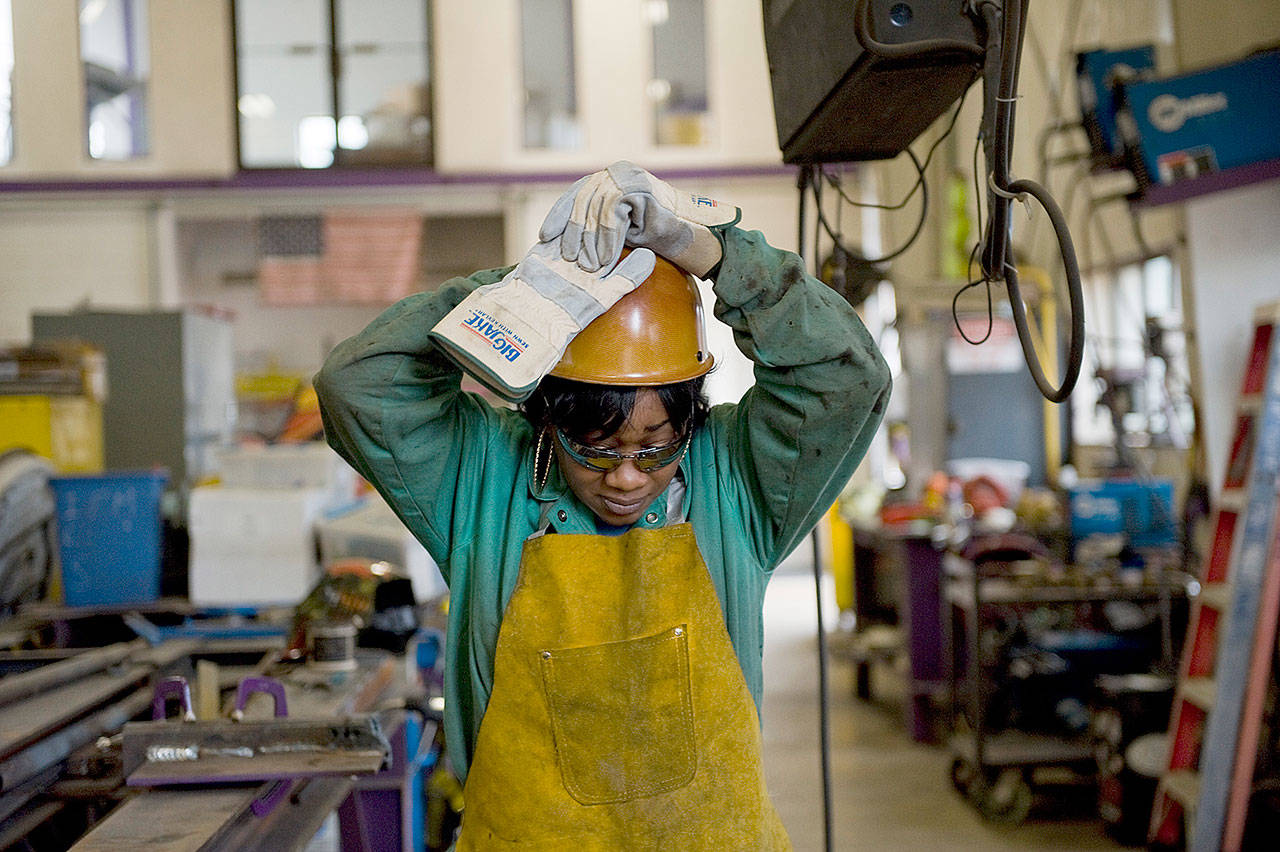
Baby boomers are retiring in droves, vacating construction sites and body shops and 18-wheelers. Now America’s male-dominated industries, faced with a looming worker shortage, are trying to tap talent that has traditionally found such working conditions hostile: women.
The Iron Workers union this month leaped to the cutting edge of the effort, becoming the first building trades union to offer up to eight months of paid maternity leave to pregnant women and new moms. Not that many of their folks hauling rebar or scaling skyscrapers will take them up on the offer: Only 2 percent of the group’s 130,000 North American members are women.
“The whole world is suffering the baby boomer retirement tsunami,” the union’s president, Eric Dean, said. “All the construction trades are in competition for capable people. Wouldn’t it be a distinct advantage for us to be the first?”
By 2029, all of the baby boomers will be older than 65, meaning one-fifth of the U.S. population will have reached retirement age. Millennials, the workers who would replace them, aren’t as interested in pursuing careers in the trades. Enrollment in vocational education has dropped from 4.2 credits in 1990 to 3.6, according to the most recent data analysis from the National Education Association. The opioid epidemic, meanwhile, has zapped some of the male workforce — men are more likely than women to both use and overdose on illicit drugs.
“You hear about a lack of job readiness, an inability to pass a drug test,” said Harry Holzer, a public policy professor at Georgetown University and former chief economist for the Labor Department. “It makes sense that these employers regard women as a group that expands the applicant pool and at a higher-quality level.”
The Iron Workers want to attract and retain more journeywomen, who tend to quit at a higher rate, Dean said. The demographic represents a huge opportunity for growth, a way to bolster the future dues-paying membership.
“We have to innovate,” he said, “if we want different results”
But recruiting women into a historically male space — and keeping them around — isn’t as easy as adding family-friendly benefits, said Cate Taylor, a professor of gender studies and sociology at Indiana University. Almost 9 in 10 female construction workers have dealt with sexual harassment on the job, a Labor Department study found.
“In these occupations, there’s been a persistent idea that women aren’t a good fit, that by nature they not good at the work — which isn’t true,” Taylor said. “So when they’re in these roles, research shows they’re often subjected to this constant doubt about their ability. They’re being undermined by bosses and co-workers.”
Demand for construction workers, which ticks up and down seasonally, hasn’t changed much since 2001, when the Labor Department started keeping track: The average number of job openings per month then was 178,400, compared to today’s 176,400. The typical number of monthly hires in the industry over that period, however, has fallen sharply, from 457,000 to 333,000.
Business owners say they’re having more trouble filling positions than in years past. Bill Brown, chief executive of Ben Hur Construction in St. Louis, said about one-third of his 600 employees are approaching retirement age, and young applicants are tougher to recruit.
“We’re losing a lot of good people and we need to find more ways of attracting them,” he said. “All these young kids now, they want to get a laptop and go work for Amazon.”
Brown, who advocated for the Iron Workers’ leave policy, said he, too, is seeking more female candidates.
“Women pay better attention to detail, in my experience,” he said.
The trucking and automotive technician sectors — 88.5 and 91.7 percent male, respectively — are also grappling with dwindling applicants.
“There’s a shortage of high-end, heavily trained individuals who can do diagnostic work,” said Tony Molla, vice president of the Automotive Service Association, a national industry group . “We’re graduating about 30,000 new technicians a year, mostly men, but that’s not enough to keep up with attrition.”
Automakers have been funneling more corporate sponsorships to groups that work to recruit female trainees, such as the Automotive Women’s Alliance Foundation and the Car Care Council Women’s Board. The outreach hasn’t affected much change, though. The share of female technicians hasn’t budged over the past three years, Labor Department data show, staying at about 1.5 percent.
The American Trucking Associations, meanwhile, declared in a recent report that the industry needs to add almost 1 million new drivers by 2024 to replace retired drivers and keep up with demand. Some companies have added 401(k) and tuition reimbursement programs. Others have hired “female driver liaisons” and started support groups called “Highway Diamonds,” said Ellen Voie, president of the Women in Trucking Association. In 2015, her organization created a Girl Scout badge to teach girls that trucking isn’t just for men.
“Carriers are really targeting female drivers,” Voie said. “They’re facing the retirement issue, yes, but they also know that women tend to be more risk averse, which is extremely important.”
The efforts, which include campaigns to get drivers home more often, are starting to pay off, she said: The share of female drivers has increased from 6 percent last year to today’s 7 percent.
After implementing the maternity leave policy, the Iron Workers plans to monitor its gender diversity progress, as well.
The Ironworker Management Progressive Action Cooperative Trust , the union’s management arm, will supply the benefit, which is funded through member dues. Expectant moms on construction sites and in welding shops can take up to six months off before giving birth at two-thirds their wages (which range from about $20 to $40 hourly), and then another six weeks after the child arrives — eight if they had a Caesarean section.
The half-year pregnancy leave is unusual in the United States, where about half of women work up until the last month of gestation. But women in the building trades tend to lift heavy loads and inhale potentially harmful fumes, so doctors sometimes advise them to sit out earlier than someone in an office job. As of March, only 5 percent of construction workers in the United States had access to paid maternity leave.
Iron Worker members aren’t shouldering a fee increase, however. The dues they already pay haven’t changed, and the union maintains it’s making room for maternity leave in its existing budget.
Vicki O’Leary, a veteran journeywoman who runs diversity efforts for the Iron Workers, said the union’s international board of trustees voted unanimously for the measure. She has, however, heard grumbling about the lack of paternity leave. “I’ve been in 32 years, and we just got this,” she said. “To them I say, ‘Give it time.’ “
The policy packs symbolic power, too, O’Leary said. In the manly world of construction, women have felt pressure to play down femininity. The arrival of maternity leave, she said, sends a powerful message from industry leaders — that women belong there.
The union first considered adding the benefit last May, when a journeywoman stood up at a construction conference in Chicago and told the room she had miscarried on the job.
Bridget Booker, 36, said she was afraid to tell her boss she was pregnant. She didn’t want to be sent home and lose pay. So, she hid her belly under baggy coveralls and kept working on a bridge project in Peoria, Illinois. She told no one when she lost the baby, three months into her pregnancy. She called in sick, and then returned to work less than 48 hours after her miscarriage.
“I did it to survive,” Booker said. “As a woman in the trade, you have to prove yourself every day. Not a day goes by that you don’t have to let them know that you’re up for the task.”
Talk to us
> Give us your news tips.
> Send us a letter to the editor.
> More Herald contact information.