By Anne D’Innocenzio, Associated Press
NEW YORK — Some shoppers are fretting about big companies they don’t like taking over their favorite brands.
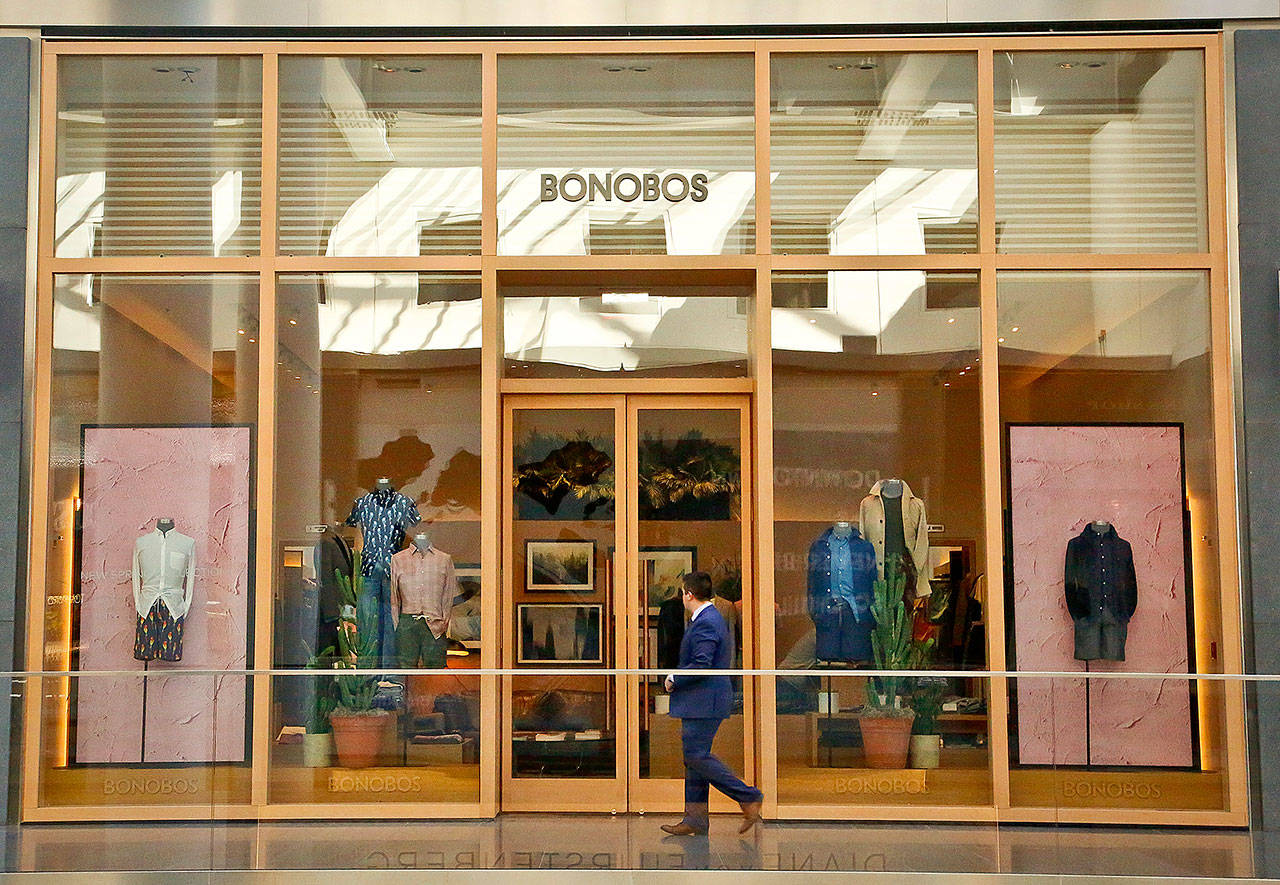
The latest: Amazon’s move to purchase Whole Foods has spurred worries about a decline in quality and ethical standards, or that the store will become like other supermarkets. Walmart’s purchase of clothing labels ModCloth and Bonobos has some shoppers anxious that the world’s largest retailer will cheapen the quality of the clothes, or they’re vowing not to buy the brand again because they don’t want to support Walmart.
For big companies, the challenge is always expanding the reach of a beloved niche brand without alienating its core customers. Of the recent deals, that’s a bigger job for Walmart, since its reputation is more about low prices than trendy fashion — and shoppers might not view the world’s largest retailer very positively.
“Bye bye Bonobos,” T.D. Arkenberg wrote on Twitter. “I’ll miss you. You were a great brand. But as Sears destroyed Lands’ End, Walmart will destroy Bonobos!”
Arkenberg, of Arlington Heights, Illinois, has five pairs of Bonobos pants and loves the way they fit. He planned to buy more, but now says he’ll shop more at Nordstrom and other small boutiques. Arkenberg believes Walmart puts cost-cutting ahead of workers.
“In my mind, Walmart’s participation of the brand will cheapen it,” he said.
Retail history is full of big companies taking over smaller labels, with mixed results. Cosmetic giant Estee Lauder kept the irreverent spirit of MAC Cosmetics when it bought the remaining stake of the upstart makeup brand in 1998. And when Marriott International purchased the swank Ritz-Carlton chain that same year, it found success because it took a hands-off approach, says Allen Adamson, founder of the firm BrandSimpleConsulting.
But plenty of cases didn’t turn out so well, as Arkenberg noted. Sears Holdings Corp. purchased sporty outdoor chain Lands’ End in 2002, but sales deteriorated before Sears spun it back off in 2014. Cereal giant Kellogg Co. bought Kashi in 2000 as it sought to get into the organic food market. But sales of Kashi tumbled after Kellogg stopped letting Kashi run its business independently.
Arkenberg is also worried about his local Mariano’s grocery store changing for the worse now that its parent company is owned by Kroger Co., the nation’s second-largest food retailer. He hasn’t seen any negative impact so far — but is watchful.
“There is a level of distrust among big institutions,” said Wendy Liebmann, CEO of consulting firm WSL Strategic Retail. “So there’s a very delicate balance for big companies to continue to support (the label) and let it grow, and taking costs out of it to make it more efficient.”
Joan Walsh, a Whole Foods customer from Seattle, is concerned that Amazon could ruin the shopping experience at her favorite store.
“I really like Whole Foods for its quality, customer service, and also its proximity to my home and the fact they have all natural ingredients, non-GMO products,” said Walsh. “I just worry that Amazon will really degrade the kind of customer service and quality I’m accustomed to.”
Neither Amazon nor Whole Foods has said much about what they plan. They have said, though, that they don’t intend to change Whole Foods’ standards, which include a ban on artificial ingredients. And Walmart said it’s keeping the stable of online brands it’s bought up, including ModCloth and Bonobos, independent. It said they won’t be sold in Walmart stores — only through Jet.com, which Walmart acquired last year.
Andy Dunn, co-founder and CEO of Bonobos, said that when news of the possible deal leaked two months ago, it gave him a chance to test the reaction. And he found that customer growth actually accelerated.
But Dunn concedes there’s work to be done in appeasing what he calls a dissatisfied minority who are loud on social media. He said some shoppers don’t understand that Walmart is a different company than it was in the past, and he plans to be a “mouthpiece” to trumpet the company’s moves to increase pay for workers and its environmental efforts.
“We need to help them rethink the Walmart they thought they knew,” he said. Being owned by Walmart will improve logistics like faster shipping, he said, and promised that the quality and service will be at least the same.
While Walmart and Bonobos likely had little overlap in customers, Amazon and Whole Foods do. More than 60 percent of Whole Foods shoppers are members of Amazon Prime, and more than 25 percent of Whole Foods customers already buy some groceries on Amazon, says consumer research firm Magid.
Whole Foods’ most loyal shoppers were fairly negative about the deal, with almost 43 percent saying they thought it was a bad idea, according to a survey of more than 2,000 shoppers conducted by research firm GlobalData Retail after the purchase was announced. Most of the concerns centered around a possible change in food quality or the company’s ethical standards, the report said, and just over half fear the deal might mean Whole Foods becomes like “any other grocer.”
“The finding underlines the fact Amazon will have to tread carefully as it makes changes at Whole Foods,” wrote Neil Saunders, managing director of retail at GlobalData.
Smaller companies see opportunities in those concerns. Take Gunnar Lovelace, the co-founder of online retailer Thrive Market, which aims to make non-perishable organic food and non-GMO products more widely affordable. Lovelace believes he’ll benefit from shoppers worried about Amazon taking over even more of their shopping experience.
“Consumers are so sophisticated they can smell the phoniness,” he said, “and that plays to our vantage point.”
Talk to us
> Give us your news tips.
> Send us a letter to the editor.
> More Herald contact information.