Housekeeping’s Good name
Published 5:40 pm Tuesday, January 8, 2008
For many of us, the Good Housekeeping Seal is as emblematic of bygone eras as butter churns, home-ec class and the pre-computerized American kitchen.
Step inside today’s Good Housekeeping Research Institute, though, and that notion is history. The place is sleek, modern, ergonomic and green: an 18,500-square-foot, 2-year-old facility that occupies the 29th floor of the Hearst Tower in midtown Manhattan.
With four test kitchens, each equipped with gas and electric ranges, there is ample space to develop the quick, easy recipes that readers of Good Housekeeping magazine request.
Side by side are sophisticated, computer-monitored laboratories for examining cosmetics, textiles and hundreds of other household products. In a hushed realm of investigation, lab-coated staffers move about quietly, testing and retesting until satisfied with the results.
Good Housekeeping remains a rock-solid advocate for consumers. It has tested and evaluated food and recipes, appliances and housewares for nearly 100 years.
Despite its unglamorous image as a middle-market monthly, Good Housekeeping magazine has a hefty circulation of 4.6 million: more than Real Simple and Martha Stewart Living magazines combined; more than Family Circle’s 3.9 million and Southern Living’s 3 million.
The magazine’s average reader is a woman in her late 40s; most readers live in the mid-Atlantic, Midwest and Southern states.
Last year the publication, founded in May 1885, posted the best revenue period in its history. The company attributed the spike to an updated look, initiated in late 2006, creating 10 distinct “Good” sections, such as Good Health, Good Food and Good Buzz (the last covers how celebrities do such things as lose weight quickly and make their favorite spiced tea).
The magazine’s goals remain the same. It continues to be relevant to its readers by changing only in subtle ways.
“Good Housekeeping has a warmth and a trust,” said its editor in chief, Rosemary Ellis. “There’s a fondness that readers have for this brand.”
The first Experiment Kitchen opened in 1900 in Springfield, Mass. In that decade, scientists and technicians established a Pure Food Assurance Department, lobbied for the standardization of kitchen counter height at 36 inches (early sinks were far lower, causing users to stoop), developed cooking time and temperature charts for dozens of foods, and began developing and testing the magazine’s own recipes.
In a recent visit to the Hearst Tower, home of the multimedia Hearst Corp., we found Sharon Franke, director of kitchen appliances and technology, dressed in a lab coat and silhouetted against a spectacular floor-to-ceiling view of Central Park.
The institute tests more than 2,000 products annually.
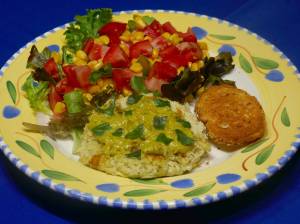
The most active area this day was the recipe test kitchens, where four chef-testers and food director Susan Westmoreland prepared a Spanish tortilla, a polenta casserole and a strawberry tart, all for an upcoming feature.
“Basically, we’re trying to replicate what people do at home,” said Westmoreland, who has led the food department for 12 years.
All recipes are tested at least three times: on gas and electric ranges, and with hand and stand mixers, if called for. At home, Westmoreland uses a Viking gas range and would not trade it for a computerized model with a ceramic top.
“The dirty little secret is that (the ceramic tops) scratch,” she said.
Everyone on her staff prefers gas ranges.
For the most part, she doesn’t follow trends.
“We’re not tracking Ferran Adria,” Westmoreland said, referring to the famed Spanish chef noted for unconventional, deconstructionist cooking. “We’re not doing foams.”
She likes Spanish cuisine and says her readers are most interested in Italian. In general, she stays away from Indian and Southeast Asian dishes, which are “still a little scary for our readers,” as well as dishes involving beets, Brussels sprouts or cabbage.
“We could write a chicken feature every month and they’d be happy,” she said.
The most popular and requested recipe over the years has been the Good Housekeeping popover, a simple, hollow bread that’s moist and eggy inside, crisp and brown outside. Popovers are so beloved at the magazine that they are always served to special guests in the private dining room.
“When I first arrived here in 2006, I said, ‘Why don’t we serve the popovers?’ People looked at me in horror,” said Ellis, who has made the magazine a touch more celebrity- and personality-driven over the past year, with features on domestic diva Martha Stewart and “Today” show host Meredith Vieira.
“We’re entrenched in tradition.”
Popovers
3large eggs
1cup whole or low-fat milk
3tablespoons unsalted butter, melted
1cup flour
1/2teaspoon salt
Position an oven rack in the middle of the oven; preheat to 375 degrees. Use nonstick cooking oil spray to liberally grease the insides of eight deep, 7- or 8-ounce, oven-safe custard cups or coffee cups. Place the cups on a large rimmed baking sheet for easier oven handling.
Beat the eggs in the large bowl of a stand mixer or hand-held electric mixer on low speed for a few minutes, until they are frothy. Add the milk and melted butter. With the mixer on the same speed, gradually add the flour and salt to form a foamy batter.
Divide the batter evenly among the prepared cups.
Bake for 45 to 50 minutes. Pull the oven rack halfway out and use a sharp knife to make a slit in each popover, releasing steam; return the rack to its position and bake for 5 to 10 minutes, then immediately remove the popovers from their cups.
Serve hot, accompanied by curls of butter, or make them ahead and reheat in a 400-degree oven for 15 minutes.
It’s best to use 7- or 8-ounce cups for this recipe, so the popovers have room to puff up.
Makes 8 medium popovers.
Adapted from “The Good Housekeeping Cookbook: 1,039 Recipes From America’s Favorite Test Kitchen,” edited by Susan Westmoreland