Best chance at a regional Link
Published 12:52 pm Saturday, April 2, 2016
It’s not like we haven’t had to do this before, but those who live and work in Snohomish County, along with local officials and lawmakers, will need to make the case that our county is a major cog in the state’s economy and must be served by a transportation system that meets the needs of workers, businesses, students and residents.
Voices were raised during the 2015 legislative session when Gov. Jay Inslee’s proposed transportation budget outlined less than $82 million to be spent over the next 16 years in the county. A lobbying effort made the case to legislators statewide to increase funding for Snohomish County road and transit projects; the result was a package that totaled $670 million.
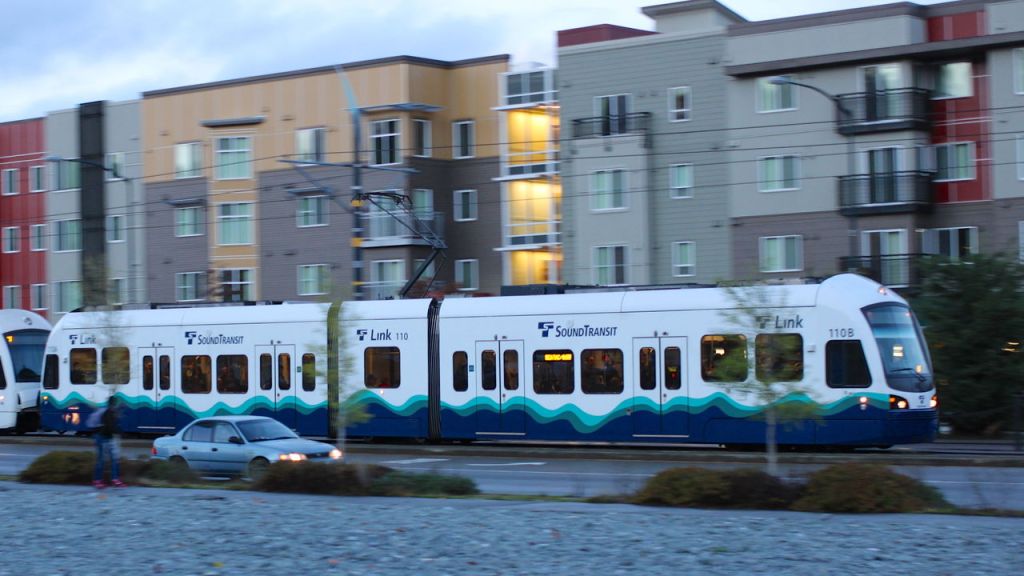
Many of the same arguments now need to be made to members of the Sound Transit board of directors after the regional transportation agency last week released its draft plan for ST3, the third phase of projects for its Link light rail system, launched 20 years ago to connect the cities of Everett, Seattle, Bellevue and Tacoma.
It’s not that board members haven’t been listening. Presented options that would extend light rail to downtown Everett along I-5 or a route that would serve the manufacturing center in southwest Everett near Boeing and Paine Field, the agency’s draft plan recognizes the logic in serving a major job center and recommends the route that serves it.
But the draft plan doesn’t see it as a priority in terms of when Everett will be served. Under the schedule outlined in the draft plan, light rail won’t reach Everett’s 128th Street until 2036. Paine Field, then downtown follow within another five years in 2041.
Supporters of the light rail extension knew it was going to be years before the Everett extension was built out. Lynnwood, which was part of the system’s second phase, ST2, won’t see the arrival of its Link station until 2023. But a 25-year wait was a stunner, no better expressed than by U.S. Rep. Rick Larsen, who has made transportation a major focus of his tenure in Congress: “There may be a lot of head-scratching from some folks,” he told The Herald’s Noah Haglund last week. “I’m not scratching my head; I’m banging it against the wall right now.”
What makes the wait even harder to bear is the fact that the draft plan’s funding priorities bring light rail spur lines to outlying Seattle regions years earlier: 2033 for West Seattle and 2038 for Ballard.
That wasn’t the intention of the effort when it was launched more than 20 years ago. From the start, Sound Transit’s plan in 1994 was to build a light rail spine that connected the four main population centers of Everett, Seattle, Bellevue and Tacoma. If not a promise, it’s a commitment that Sound Transit’s board of directors reaffirmed as late as 2014 in its Regional Transit Long-Range Plan: “Sound Transit will prioritize its light rail investment funds for the completion of the Everett-Seattle-Tacoma Link light rail system. and the light rail system directly connecting Bellevue and downtown Redmond with that north-south rail spine. …”
That stated priority serves the agency’s original goals to connect the region’s major job and population centers and alleviate congestion on I-5, where 90-minute commute times between Seattle and Everett are now routine.
No slight intended against West Seattle and Ballard, but — and here are those statistics that helped argue for a better transportation package — according to Economic Alliance Snohomish County, Snohomish County has:
- The state’s largest concentration of manufacturing jobs with 64,000 direct jobs at more than 750 companies;
- Which includes the state’s second-largest number of aerospace jobs with 43,000;
- The state’s second-largest base of technology employment with 66,000 jobs;
- Estimated job growth in the next five years of 6.5 percent, or 66,000 jobs; and
- A population of 772,500 that is expected to grow by 5 percent in the next five years.
Ultimately, it’s not the 18 members of Sound Transit’s board who must be convinced of the need to move up arrival of light rail to Everett’s job centers and downtown transit hub at Everett Station; it will be the voters in the Sound Transit taxing district in Snohomish, King and Pierce counties who will be asked in November to approve a $15 billion funding package, increases on sales tax, vehicle excise and property tax, with an estimated annual cost of $200 per person.
A wait of 25 years for service to Everett could easily deflate voter enthusiasm for the project among Snohomish County voters. And it could also discourage support among voters in King County, too; many make the reverse commute on I-5 north from King County in the morning and south after a day’s work.
Already, area officials, including representatives of Snohomish County Cities and the county’s legislative delegation have sent letters to Sound Transit’s board, urging reconsideration of the draft plan’s schedule for funding and construction of light rail projects.
The residents throughout Snohomish, King and Pierce counties, particularly those young adults who will benefit most from the light-rail system, need to be heard as well.
Failure of ST3 in November threatens to leave the region with an incomplete light rail system, one that falls far short of the original goal of connecting the region’s employment and population centers.
A proposal that serves the entire region — and on a timely schedule — has the best chance at passage.
Comment on ST3
Sound Transit is seeking public comment on ST3, the third phase of its Link light rail system, until April 29. A survey and opportunity for comment is available at SoundTransit3.org. Comments also can be email to SoundTransit3@SoundTransit.org or mailed to Sound Transit, 401 S. Jackson St., Seattle, WA 98104.
Seven public hearings, including an Everett meeting at 5:30 p.m. April 25 at Everett Station, are scheduled.
Correction: An earlier version of this editorial misstated the amount of the tax package Sound Transit district voters will consider in November. The package of increases in property, vehicle excise and sales taxes is $15 billion.