Editorial: A tragedy compounded by lack of attention
Published 1:30 am Sunday, June 9, 2019


By The Herald Editorial Board
The tragedies behind every missing or murdered person can destroy lives and families.
Those losses are compounded when, particularly in the case of Native American women, the cases too often go unresolved or even univestigated because of scant attention and commitment from law enforcement, officials, the media and the community at large.
Recent reports and legislation at the state and national level are an attempt to correct an injustice that is common throughout North America, but one of particular importance in Washington state.
A 2018 report by the Seattle-based Urban Indian Health Institute found that Washington state, with Native Americans making up 2 percent of the state’s population, was second among the 50 states with 71 reports of missing and murdered indigenous women and girls. New Mexico led with 78 such cases, but that’s among a Native American population that is 10.5 percent of state residents.
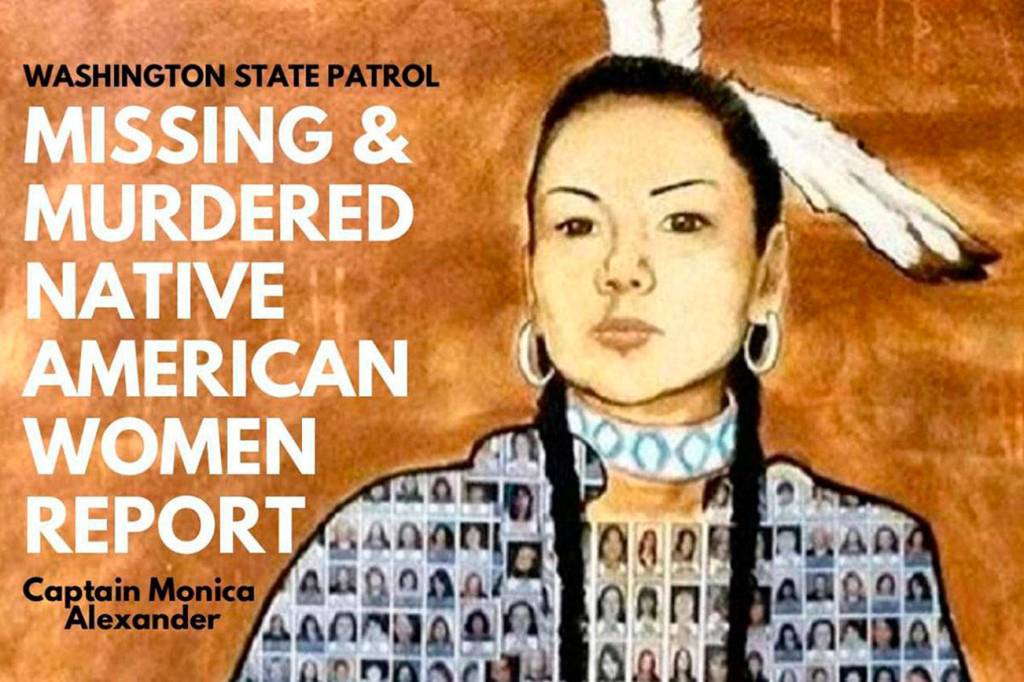
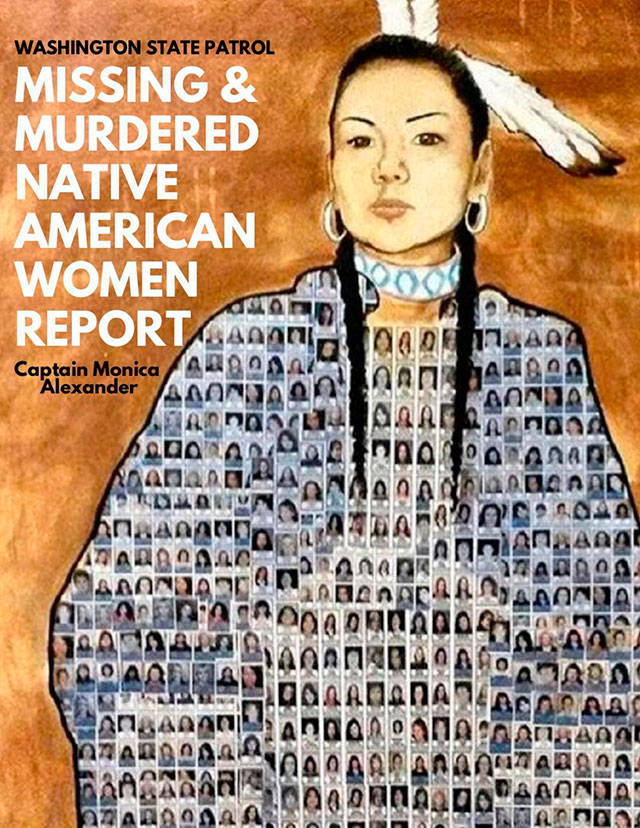
A more recent report, compiled by the Washington State Patrol and the Governor’s Office of Indian Affairs found that among the 784 reports of missing women in the state as of this May, Native American woman account for 56 cases, or 7 percent of the total; again, a figure disproportionate with the state’s native population.
Of those 56 cases, 20 were reported in Yakima County, 12 in King County and four in Snohomish County.
Tasked last year by the Legislature to assess the state crisis of missing and murdered indigenous women and outline a response, the report prepared by State Patrol Capt. Monica Alexander gathered comments during 12 outreach forums with tribal communities last fall and winter, including a discussion with Tulalip tribal leaders and members.
What the report found were wide-spread problems in bringing attention and response to individual cases of missing and murdered tribal women, but also concerns about an under-reporting of those cases.
“We found that we’re maybe not communicating as well as we could,” Alexander told public radio station KUOW (94.9 FM). “We found actually on the State Patrol’s website that we don’t have everyone that’s filed as missing on our website. And we need to figure out why are we not getting all the reports.”
Examination of the 36-page report shows common responses among the 12 forums about the barriers to reporting and investigating disappearances and murders:
Sharing of information among tribes and federal law enforcement is incomplete, with seven of the state’s 29 tribes left without the access needed to file reports with the federal National Crime Information Center’s database. And data, when it was reported, wasn’t always accurately filed. Some agencies appeared to conflate the letter “N” with representing either “Native” or “Negro.”
Persistent distrust among tribal members for law enforcement and officials has also discouraged reporting, borne out of the belief that their reports will not be taken seriously or have been dismissed in past attempts.
Media coverage, some at the forums responded, often ignored or played down individual reports of missing women, as well as the larger issue. (In fact, reporting on the release of the State Patrol’s report was limited to The Seattle Times, the Yakima Herald-Republic and some TV and radio outlets. The state Associated Press provided its members a five-paragraph report, edited down from the Yakima newspaper’s story. But not even that brief report was published in this newspaper, although The Herald has published previous reports related to the issue.)
Social stigma also has played a part in discouraging reports and providing information that can solve disappearances and murders.
And the problem is further complicated when victims are margainalized by homelessness, mental illness or drug or alcohol addiction.
Work has begun to address some of those issues. Even before release of the report, state lawmakers passed legislation that will establish two liaison positions within the State Patrol, with the purpose of building relationships between government and native communities; requires the State Patrol to develop best-practices protocols for response to missing indigenous people; and requires the Governor’s Office of Indian Affairs to provide the State Patrol with training.
At the national level, Sen. Maria Cantwell, D-Washington, earlier this year reintroduced with two other senators, Savanna’s Act, named for a pregnant woman in North Dakota’s Spirit Lake Tribe who went missing in 2017 and was later found dead in a river.
The act seeks to improve tribal access to federal crime databases, including NCIC, and would also require the U.S. Attorney General to provide training to law enforcement agencies to better record tribal affiliation of native victims. It would also require standards for collecting data on missing and murdered indigenous people and protocols for conducting searches on tribal land, The Seattle Weekly reported in February.
Savanna’s Act passed unanimously in the Senate last year, but failed to advance in the then-Republican-controlled House of Representatives. With the House in Democratic control, a version was introduced last month.
With the State Patrol’s report now in hand, state lawmakers, local law enforcement and other local officials need to review opportunities to improve communication, the sharing of data and the notification regarding reports when Native American women go missing or are murdered.
“Let’s not let the trail get cold,” the State Patrol’s Alexander told the Yakima Herald-Republic. “Let’s find people.”