Editorial: Keep up efforts to fund new downtown stadium
Published 1:30 am Tuesday, March 3, 2026


By The Herald Editorial Board
This must be why they call it a ballpark figure.
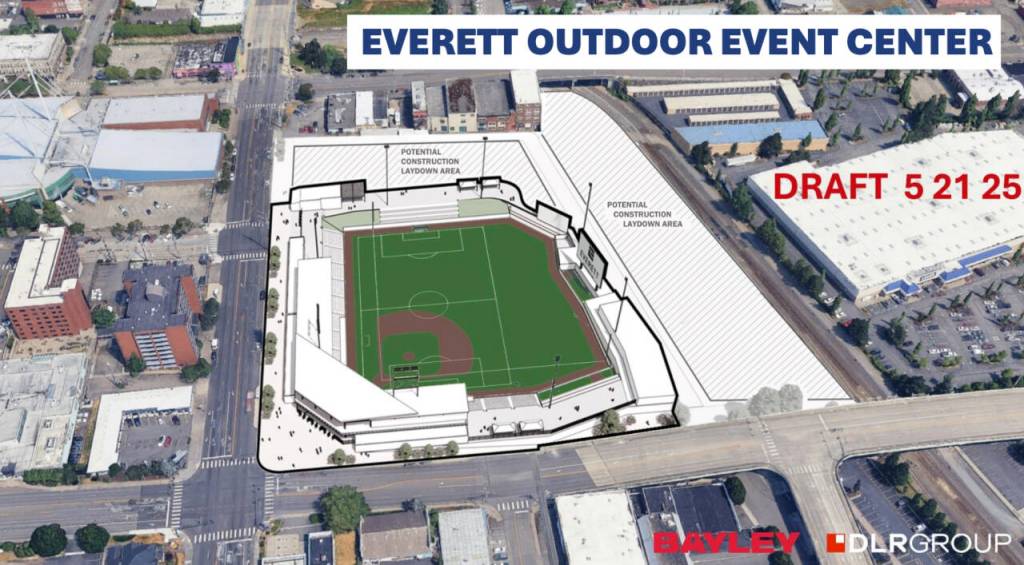
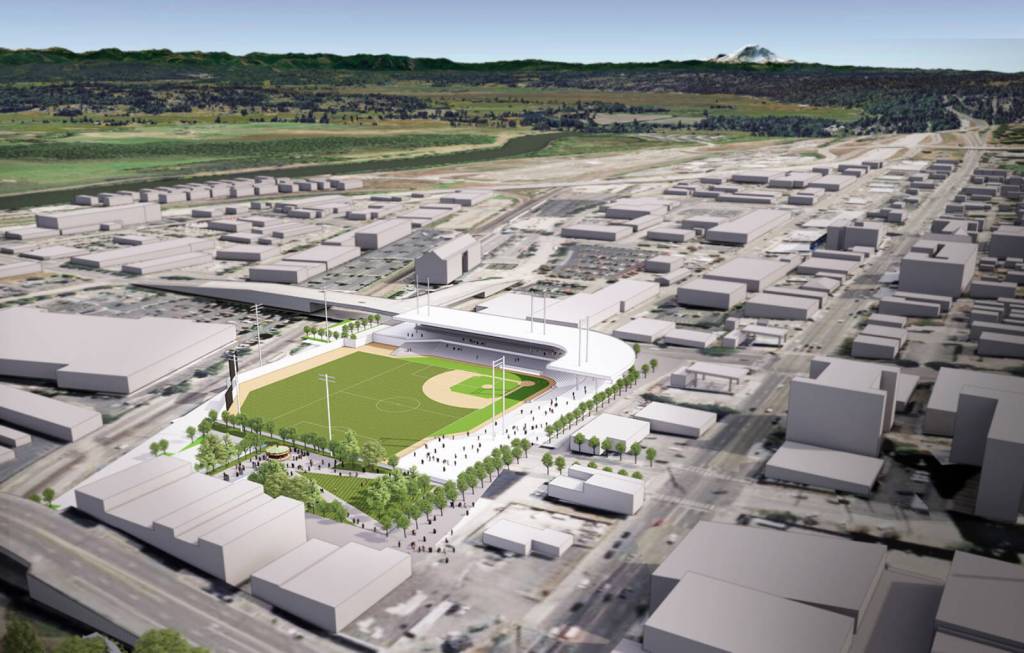
The latest cost estimate for what’s dubbed for the time being the Outdoor Event Center — a new downtown home for the Everett AquaSox Minor League Baseball team as well as men’s and women’s United Soccer League teams — has increased to an estimated $120 million, about $38 million more than an estimate from last May as the city considered moving forward with the public-private project.
The latest figure was part of a Jan. 31 presentation at an Everett City Council retreat by Scott Pattison, the city’s special projects manager — described in presentation slides obtained by The Herald through a public records request — that along with the new cost estimate outlined the project’s timeline, the funding proposal and the potential benefits of the new stadium vs. the losses that could result were the AquaSox to end Minor League Baseball’s more than 40 years of history in Everett, 32 as the AquaSox and a Seattle Mariners affiliate.
The most recent cost projections, reported The Herald’s Will Geschke, came after the city learned it would need to purchase more of the surrounding properties at the downtown site and construction costs for materials, at least some of it inflated by federal tariffs, were updated.
The new figure, while a significant jump from the earlier estimate, is in fact closer to the high end of an early estimate of $115 million for the project, a figure that considering the timeline involved was likely the safer bet. While the new estimate might cause more than a few city officials and residents to balk — we’ll apologize now for the unavoidable baseball metaphors on deck — as deadlines and final decisions approach, the city and its existing partners should move forward with consideration and support of the project, giving full weight to the cost but also to expected economic and quality-of-life benefits that can result as well as the potential for signing new private partners to the effort.
The opportunity provided in building a new stadium followed the decision by Major League Baseball’s 2021 consolidation of its minor league farm clubs, cutting some 40 teams nationwide from affiliate agreements with big league teams to improve pay and working conditions for minor league players. The AquaSox, formerly a short-A team in the Northwest League, were kept in the fold, and bumped up to full Single-A status. But, along with the remaining teams, the Everett club was mandated to improve existing facilities or build a new home to meet MLB standards.
After consideration of renovation of the AquaSox current facilities at Everett Memorial Stadium — owned by the Everett School District — or building a new facility at various locations, city officials determined the best investment was a new stadium located downtown at Broadway and Pacific Avenue, kitty-corner from the city’s other major events center, the Angel of the Winds Arena, home to the Everett Silvertips Western Hockey League team.
The public-private partnership has considerable funding identified. As outlined in the presentation to the council, the city’s share totals 45 percent of the project cost, funded by municipal bonds that will be paid back through the stadium’s revenue from baseball, soccer and other events year-round. As well, the AquaSox owners and those of the prospective USL teams would also contribute about 9 percent each to the project, adding to commitments of 7 percent from the state and 4 percent from Snohomish County. That leaves about 26 percent in funding yet to be identified from additional public and private sources.
The city already had planned for about $40 million in bonding, in addition to more than $9 million in capital spending now committed to the project’s planning, design and development costs. Additional funds from the city’s bonding capacity are one potential source for meeting the current project cost, Pattison told The Herald, but the city will first seek private investors among corporations, businesses and individuals to complete the funding package.
We’ll repeat our suggestion — made during the Seattle Mariners’ run for the World Series — that the Mariners’ ownership team include itself in that fundraising lineup, recognition of the value that Everett has provided for three decades as the home of a successful farm club that has affordably produced Major League talent at a salary cost — $161 million in 2025 — that is less than half of the $349.9 million shelled out by the Los Angeles Dodgers and the New York Mets’ $341 million.
Even with stadium revenues paying a considerable portion of the project, those public sources of funding — and their taxpayers — are far from than the bottom of the batting order. Still, a new downtown stadium promises significant public benefit for that investment.
The AquaSox alone, at the new downtown site, were estimated in an earlier analysis prepared for the city’s stadium fiscal advisory committee, to generate up to $22 million in business revenue, while supporting 135 to 200 jobs. The report provided to the council at the end of January now projects that all events at the new facility would support some 670 jobs, providing about $33.3 million in labor income annually, $84.9 million in yearly business revenues, and would bring in annual tax revenue of $615,000 to the city and $285,000 to the county.
Those figures should also be compared against what would be lost without a new stadium and the likely departure of the AquaSox, according to the 2026 updated analysis by Community Attributes: including 180 jobs lost, $9 million less in labor income, $24.4 million less in business revenues, and loss of annual tax revenue for the city and county of $185,000 and $100,000, respectively.
And the AquaSox would almost certainly look for a new city to call home somewhere within the Northwest if a new stadium is not built here. One of the AquaSox’ fellow Northwest League teams, the Eugene (Ore.) Emeralds are not expected to remain at their home for the last 70 years, past the 2027 season, after voters there rejected a $15 million bond measure for a portion of a new stadium.
Instead, Medford, Ore., — about three hours south of Eugene — is planning a $117 million stadium for the Emeralds, a San Francisco Giants affiliate, as part of a downtown redevelopment effort, for which its voters approved an increase in the city’s lodging tax.
Presented with the potential loss of the AquaSox — as well as the lost opportunity of providing a home field to two professional soccer teams — against the budding prospects for economic development of a year-round sports and recreation facility and community pride in a team that won the Northwest League Championship last year, the news of the stadium project’s added cost shouldn’t call the game on account of rain.
The city, sticking to its pledge not to increase the tax burden on residents and assuring adequate bonding capacity for all of the city’s reasonably expected capital needs, can assess its ability to add to its contribution while at the same time make a renewed pitch to private investors, sponsors and fans to build it.
Because baseball fans, soccer fans and more will come. People will come.
“Oh, people will come, Ray. People will most definitely come.”
— Terrance Mann (James Earl Jones), to Ray Kinsella (Kevin Costner) in “Field of Dreams”