SnoCo officials call on Congress to fund clean transportation
Published 1:30 am Tuesday, March 31, 2026
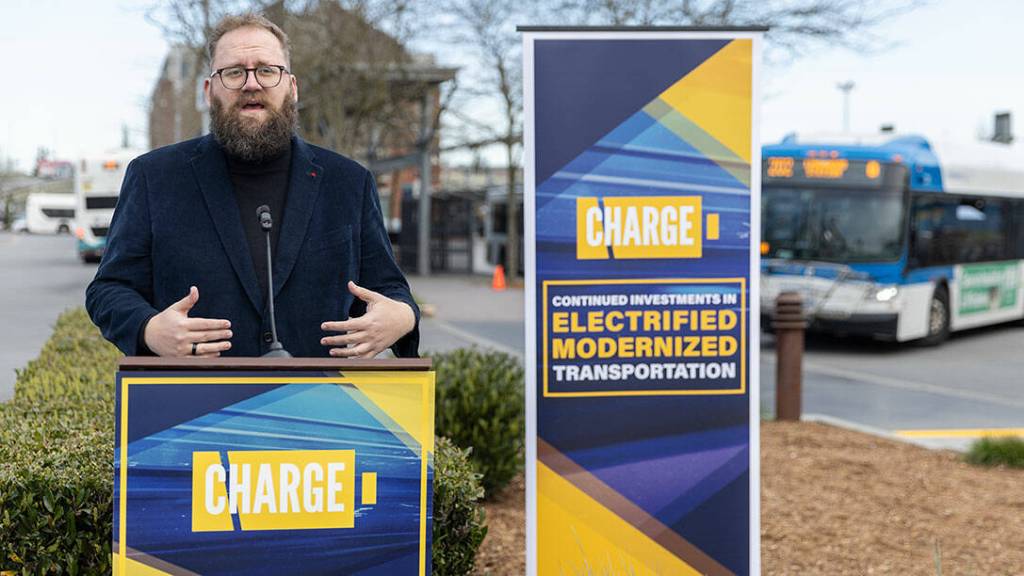
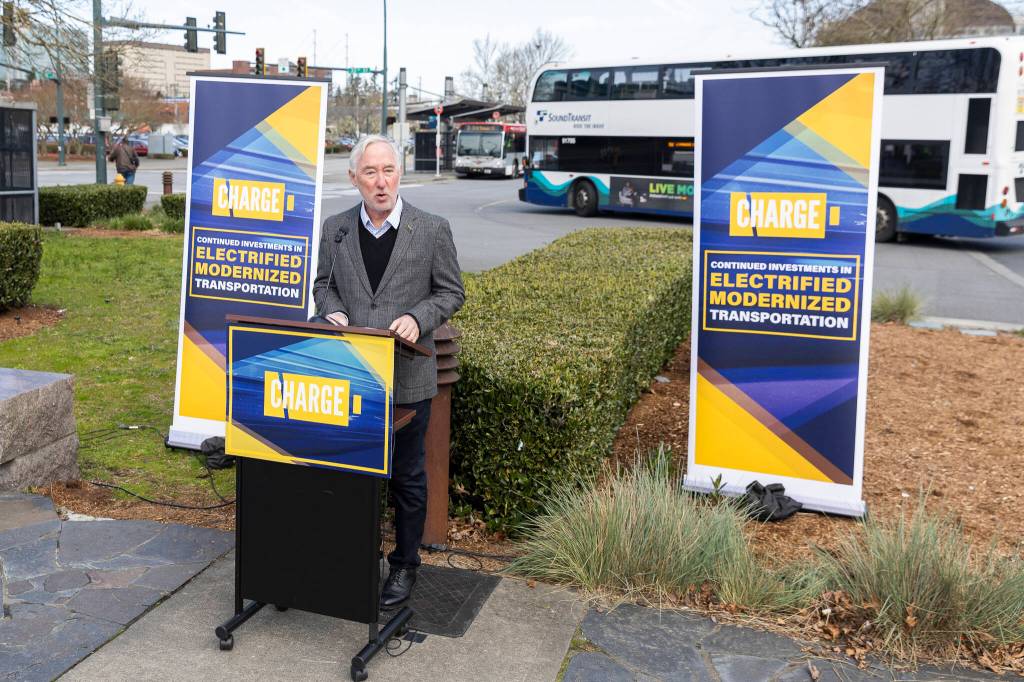
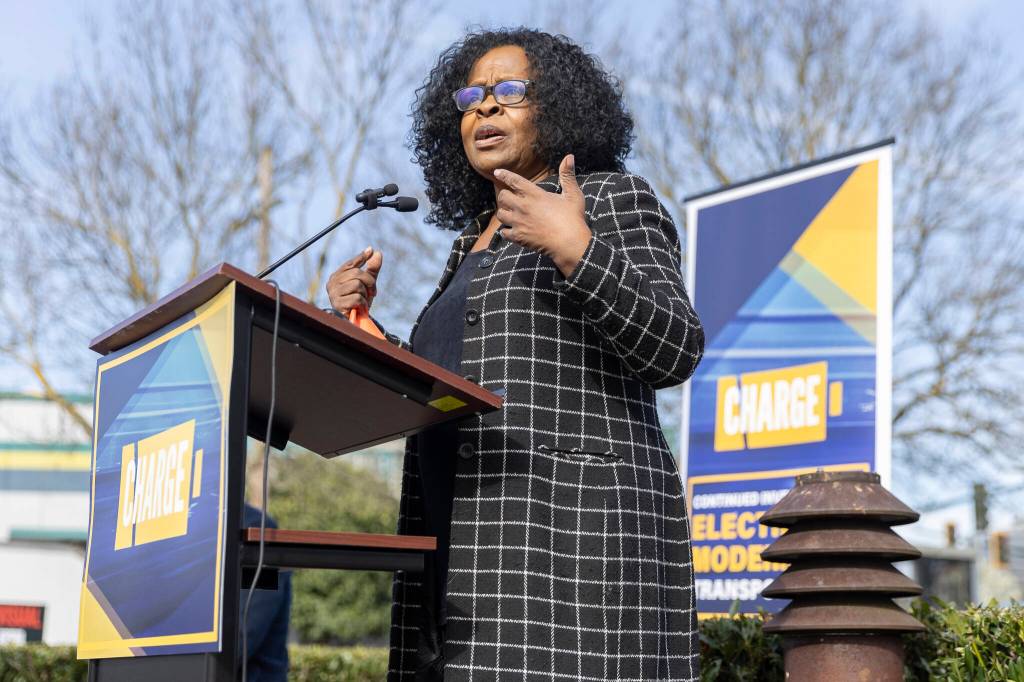
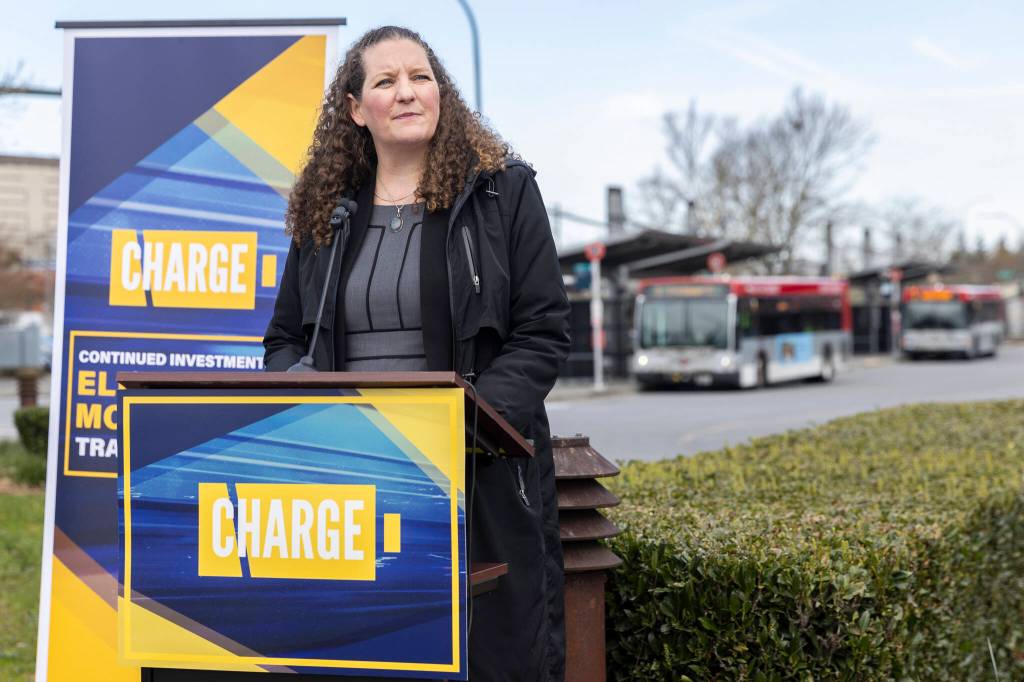


EVERETT — Local officials held a press conference on Tuesday asking Congressional leaders to keep electric transportation infrastructure in mind as the federal government prepares to negotiate the renewal of billions of dollars of transportation funding.
Every five years, Congress renews spending authorization for transportation projects across the country in what’s known as a surface transportation reauthorization bill. Congress last approved a reauthorization in 2021 with the passage of the Infrastructure Investment and Jobs Act, which included the transportation spending as part of a larger funding package that totaled around $1 trillion. That expires on Sept. 30.
The surface transportation reauthorization distributes money through both formula funding allocated by the state and competitive grants, which help pay for infrastructure projects across Washington, including in Snohomish County. Federal grant funds have supported recent local projects like the construction of the Edgewater Bridge replacement and upgrades to an Everett rail yard.
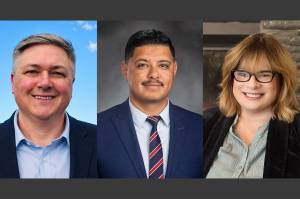
On Tuesday, local leaders, including elected officials State Sen. Marko Liias and Snohomish County Council member Megan Dunn, called on Congress to consider funding for electric vehicle charging infrastructure, battery-electric buses and projects that support people walking and biking when developing the reauthorization package of the surface transporation funds.
“There’s strong momentum already, and now is the time to build on it and show our support to Congress that local government can benefit from and encourage these long-term investments,” council member Dunn said Tuesday.
Annemarie Dooley, who works with the public health nonprofit Physicians for Social Responsibility, said investments to electric transportation programs and infrastructure that allows people to walk and bike more frequently would be important factors in letting people be more active.
“Diet and exercise does not live in a vacuum,” Dooley said during Tuesday’s press conference.
Research has linked traffic pollutants, and car travel more generally, with adverse health effects. Traffic-related air pollution is linked with heart disease and lung cancer, and may increase the risk of certain neurological conditions. Transportation is also the largest single source of greenhouse gas emissions in the United States, The New York Times reported, emissions that are the main driver of climate change.
Washington could learn lessons from cities like London, Dooley said, which implemented reforms to increase the number of electric vehicles, encourage active transportation and disincentivize the use of polluting vehicles. London — along with Paris, which also implemented similar reforms in recent decades — has seen a significant decrease in pollution levels in recent years.
“I would love to see that we can make Washington the healthiest state to live in, and we can actually save the public money by doing so,” Dooley said.
Everett Transit data shows that the agency’s electric buses cost about half as much to operate per mile compared to diesel buses. Drivers of electric cars can also save on fuel and maintenance costs.
Using public transportation, even when riding diesel buses, can reduce an individual’s carbon footprint compared to driving alone in a car. Everett Transit already has a significant number of electric buses already in operation and Community Transit plans to have 30% of its fleet made up of electric vehicles by 2030.
Liias said that moving forward, transit agencies could lean into the use of green technology like electric buses to help reduce the effects of greenhouse gases even further.
“There’s a lot we can do using our current systems, but we can also do better,” Liias said. “That’s why it’s helpful to have Congress and a green transportation program at the state level work in concert to help our transit agencies do even more to make our air cleaner.”
Investing in electric transportation infrastructure could also catalyze jobs in manufacturing, construction and operations, said Janice Greene, the chair of the Snohomish County Future Workforce Alliance and a former candidate for Everett mayor.
“They are exactly the kind of family-wage jobs that we need in our community,” Greene said.
Liias, who chairs the state senate’s transportation committee, said he is working to ensure that state-level transportation investments work in tandem with federal grant funds. The sweeping 2022 state transportation package known as Move Ahead Washington, which totaled $17 billion, used about $3.5 billion through federal transportation funds to fund it. That package brought about $600 million worth of transportation upgrades into Snohomish County.
“We’ve got really healthy and strong transit grant programs, grants for bicycle and pedestrian safety, for Safe Routes to School, we have our own Connecting Communities program at the state level,” Liias said. “So when Congress takes action to extend and fund these programs, we’ve got the local and state dollars to match them and try and bring as many dollars into local communities as possible.”
Will Geschke: 425-339-3443; william.geschke@heraldnet.com; X: @willgeschke.