Seattle Kraken look to solve 5-year struggle as NBA looms
Published 10:26 am Friday, April 17, 2026


SEATTLE — Last week, having watched his team lose 10 of 11 games to crash out of the NHL playoff race, Seattle Kraken chief executive officer Tod Leiweke held a brutally honest news conference.
Speaking to local media, he revealed team president Ron Francis would be stepping down at the end of the season, and promised a “full, independent audit” of the franchise’s hockey operations to address these on-ice failings.
“We have not delivered on the promise of the team … and it’s not acceptable,” Leiweke said.
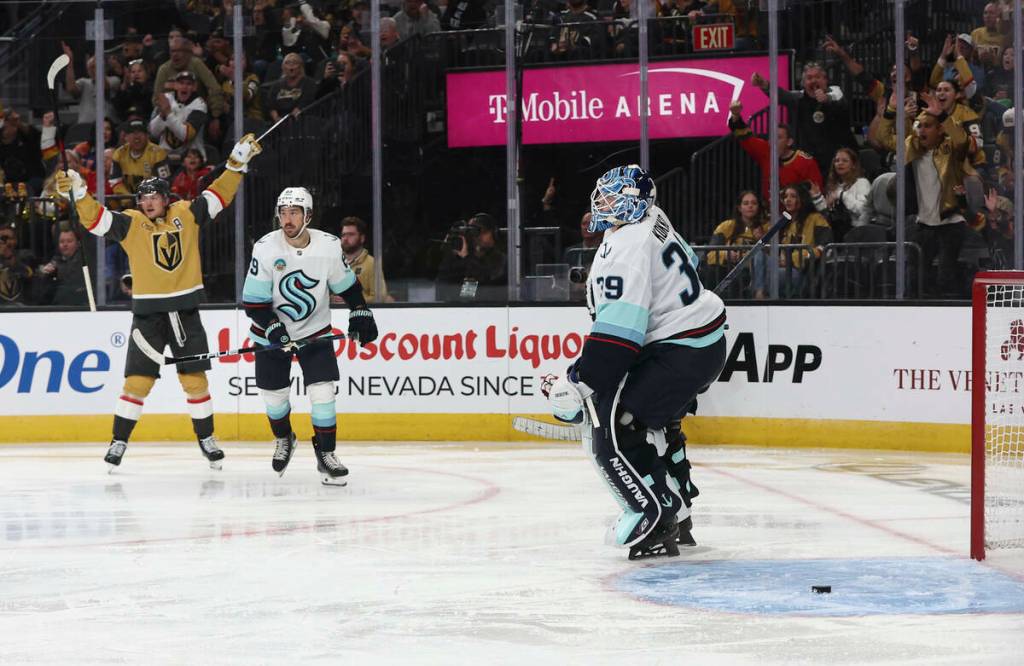
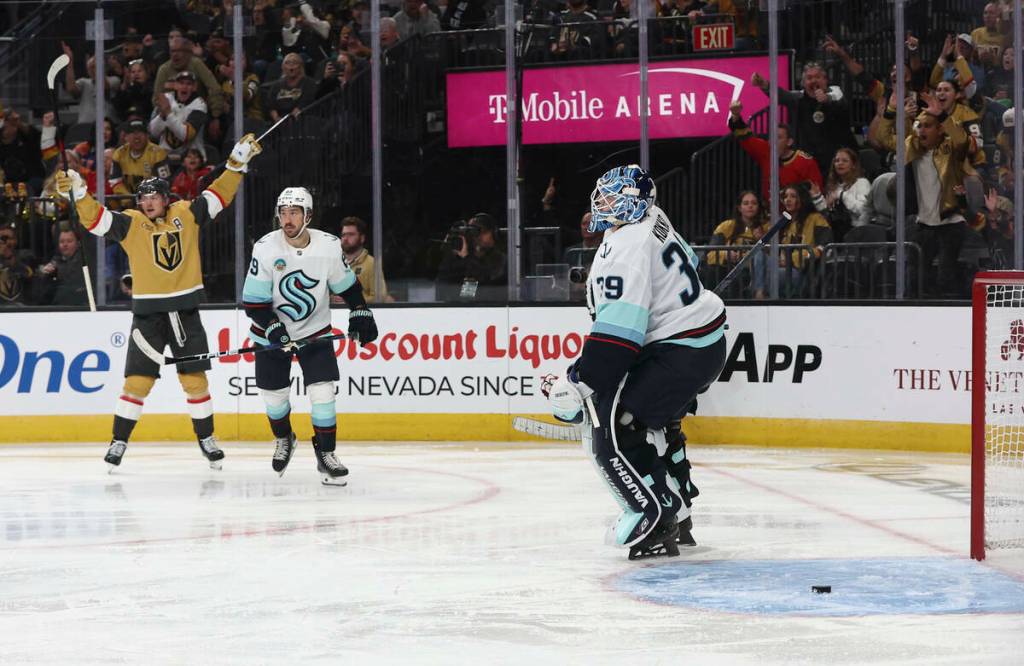
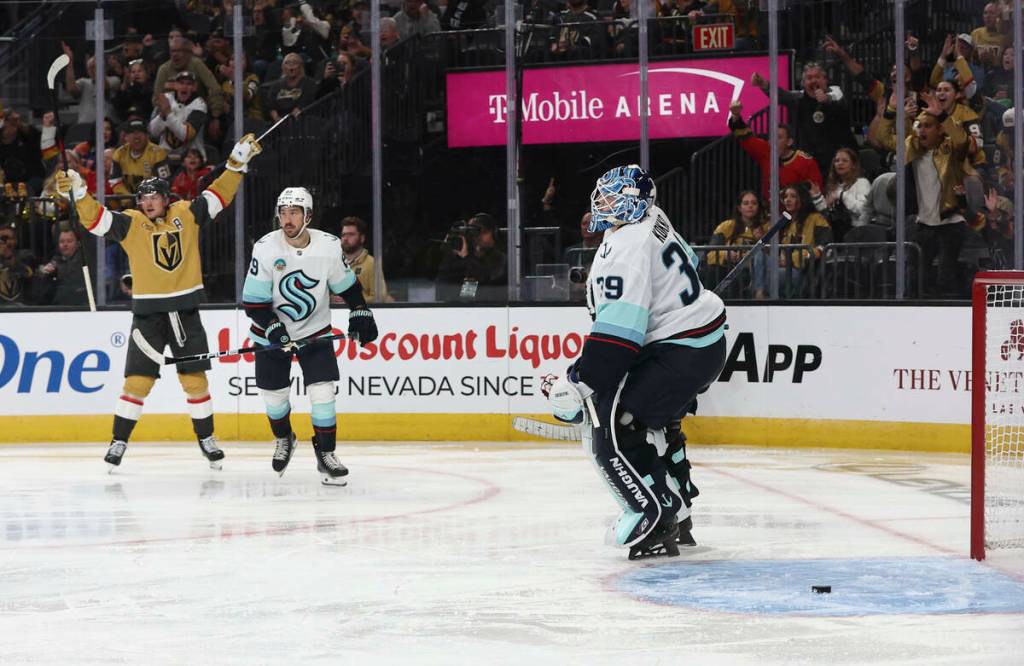
Unlike NHL expansion cousins in Las Vegas, where the Golden Knights hoisted the Stanley Cup in their sixth season, Seattle appears to be stalling out. With one meaningless game left on their 2025-26 schedule, the Kraken are set to miss the playoffs for the fourth time in five years and join the rebuilding Chicago Blackhawks as the only NHL teams to finish in the league’s bottom eight for a third straight season.
Greater strides have been made in the stands, as Climate Pledge Arena is consistently filled to capacity. On average, 2,000 members of each sellout crowd are attending their first Kraken game, a reminder that Seattle remains a relatively green hockey city. And the organization has cut season ticket prices for two years in a row while introducing smaller, more affordable packages, reflective of a desire to appease and grow a fledgling fan base.
The market offers some innate challenges. The NFL’s Seahawks are coming off a win in Super Bowl LX. The MLB’s Mariners reached the 2025 American League Championship Series. Add in the Storm (four-time WNBA champions), the Sounders (two-time MLS Cup winners), the PWHL’s expansion Torrent and the extremely popular University of Washington teams, and it’s clear Seattle is already one of the United States’ most jam-packed sports hubs for its size.
Now, with the NBA’s Board of Governors recently voting to explore expansion bids in Seattle and Las Vegas, the Kraken are facing even more urgency to finally deliver on the ice. Eighteen years ago, the beloved SuperSonics relocated to Oklahoma City, depriving local fans of a major-league rooting interest between football and baseball seasons. If the Sonics are resurrected, it’s fair to wonder how the superstar-less Kraken will handle the challenge.
Especially as they struggle to win.
Since entering the league in 2017-18, the Golden Knights have set the bar for new NHL franchises to heady levels, passing 90 points in every 82-game season of their existence and reaching the playoffs in eight of nine overall. The Kraken’s lone playoff appearance pales in comparison.
NHL commissioner Gary Bettman believes Seattle faced an early disadvantage after Vegas “schooled” the rest of the league in its 2017 expansion draft, making other GMs skittish to deal with them as a result.
The Kraken also made mistakes in selecting their initial roster. Then, their outlier trip to the second round in Year 2 appeared to prematurely accelerate the mindset of Seattle’s front office — then run by Francis — beyond a draft-and-develop mandate.
Though the Kraken have a hopeful future, with a prospect pool that grades out among the best in the league and two first-round picks in each of the next two drafts, they lack current star power. A bold attempt to acquire Artemi Panarin before the trade deadline — including offering a massive $14-million-a-season extension — was thwarted when he chose Los Angeles instead. Seattle sits 26th in the NHL in goals per game as of Wednesday, and their top producer, Jordan Eberle, is tied for 101st in points.
They signed defenseman Brandon Montour and center Chandler Stephenson to big deals in the summer of 2024, but they’ve yet to land a marquee free agent.
“It’s still an education,” Kraken GM Jason Botterill said of Seattle becoming a destination for players. “That’s what we’re trying to do; that’s why we’re working with our own players and making sure they’re as comfortable as possible. The fact that it is out here (in the Pacific Northwest), it might not be the spot where everyone thinks of or has been out in Seattle all that much.”
“I think we’ve done OK from a free-agent standpoint … but we all know what’s the biggest draw: success. If you get to that point, you’re on the radar for a lot of different players.”
Until then, the Vegas comparisons are clearly a source of frustration for the organization.
“Vegas is a completely different city than Seattle,” said Kraken majority owner Samantha Holloway. “It’s just a different animal. They’ve had different success and we’ve had community success in different ways and we’re still building our team. Kudos to them. And kudos to us for what we’ve done. …
“Do I wish that we were a perennial playoff team at this moment? Yes. I think that it’s a different landscape to get there right now, and we’re working hard to do it. But I can’t be a fan every night or it’s difficult. There’s lots of ups and downs, and it’s very emotional. You’ve got to stay steady.”
After five years in the city, the Kraken’s fan base remains a curious mix of transplants who used to cheer for other teams and those completely new to the sport. On many game nights, Climate Pledge Arena is split evenly between the two groups, with many of the newer fans bringing a rowdy atmosphere in the pricier lower-bowl seats.
“The fan base is kind of a hybrid of the hardcore hockey fans and brand new fans,” explained John Barr, a Day 1 season-ticket holder who led a grassroots push for a team via his website NHLtoSeattle.com. “We still have fans yelling ‘shoot!’ all the time.”
While players said they never get recognized around town, they do receive curious questions from neighbors and friends, making them ambassadors of the team in a different way than the city’s other athletes.
“When we got here, no one really knew what hockey was,” defenseman Vince Dunn said. “Quickly, just being such a good sports town, everyone jumped on board and we built ourselves a really good fan base. It definitely translates into kind of like a football atmosphere. I think our arena’s probably one of the louder ones for sure, and I think that probably comes from the culture and the environment in the city.
“It’s been cool to see the younger kids getting into hockey. A lot of my neighbors are getting into hockey, embracing a new sport in the town. We enjoy answering questions and helping people out.”
The Kraken have tried to broaden their appeal in other ways, including freeing their television broadcast from a pricey cable package and instead showing games on over-the-air channels and Amazon Prime. As with many things the Kraken have done, they’ve spared no expense. Their broadcast consistently ranks among the best in the league.
But the crown jewel of the team’s community outreach efforts is the Kraken Community Iceplex, the first new arena complex built in Seattle proper in decades. It’s a $90 million facility jammed from 6 a.m. until midnight, seven days a week, with 1 million annual visitors.
The Kraken and Torrent both call it home, and it’s likely the best practice facility in both leagues. Located seven miles from downtown Seattle, it also offers everything from kids’ birthday parties to introductory beer leagues to figure skating lessons.
“This has been a great market so far,” Holloway said. “You could be losing here and at the end (of the game), people are still in their seats, cheering and having a really good time. So we’re doing something right and giving people a great experience that they still want to be part of.”
After her billionaire father, David Bonderman, died in December 2024, Holloway became the face of the Kraken’s unusual ownership group alongside a number of minority partners, including Hollywood producer Jerry Bruckheimer, Amazon CEO Andy Jassy, former Seahawks star Marshawn Lynch and rapper Macklemore. Leiweke, another minority owner, has also been heavily involved, tapping his experience as a high-level executive with the Seahawks, Minnesota Wild and Tampa Bay Lightning.
With a master’s degree in forensic psychology, an MBA focused on marketing and experience as a founder in the startup world, Holloway brings a diverse background to Seattle. The NHL’s youngest primary governor and only woman serving in that role, she has also quickly established a strong relationship with the league commissioner, who describes her as a “very special person.”
“She really is completely immersed in the community in Seattle, in hockey, and the team,” Bettman added. “She’s really smart, she’s really energetic, she is really creative, and she really has strong values and everything is pushed in that direction.
“She may not be as vocal as some at the Board (of Governors’) meetings, but she and I have an open line of communication, and she never hesitates to ask questions. And when she feels strongly about something, (she) expresses her opinion.”
One such opinion: The Kraken can coexist and thrive alongside an NBA franchise in Seattle.
Questions persist about what the NBA’s return could mean for the Kraken. Basketball fans here have been in mourning ever since the Sonics moved in 2008; their rebirth will be an unprecedented love-in that could be hard for the new franchise to match.
And, unlike with the Seahawks and Mariners, their seasons will almost fully overlap.
“If done the right way, (an NBA team) is additive,” Holloway said. “It’s been important that we’ve had enough time to build the Kraken brand and get to where we want to be. There’s always room to grow, but it’s a great time to add basketball, and they’re complementary if done correctly.”
The hope internally is that by the time the Sonics hit the court two or three years from now, the Kraken are firmly entrenched enough to avoid getting crowded out. But part of that calculus is contingent on winning more games and introducing new fans to playoff hockey to cement their love of the sport.
“I’m a huge basketball fan,” Holloway said. “At the moment, my heart is in hockey and I’m really proud of what we’ve built here, but we’ve shown we can bring an expansion team to Seattle and that the market is big and sports-focused. And there’s plenty of appetite for another team as well. We’re excited at the possibility.”
The NHL is similarly unconcerned. According to Bettman, Seattle has already been a significant success, with strong economic underpinnings and a well-heeled ownership group. One of the key reasons the NBA is courting a return to the market, he argues, is that they can see how well expansion has worked in his league.
“What do they say? Imitation is the highest form of flattery?” Bettman said of the fact that the NBA appears ready to follow the NHL into Vegas and Seattle. “I think both franchises have established a really strong foothold. They have become essential elements of their communities.
“I don’t worry about our franchises at all. They’re going to more than hold their own.”
Those who know Holloway well, meanwhile, believe she is up to the challenge of turning around the Kraken and bringing back the SuperSonics because they’ve seen her thrive in unfamiliar territory before.
“We were able to go win these really big Fortune 500 accounts and have them use our software,” said Matt Talbot, who co-founded the data collection software firm GoSpotCheck with Holloway. “I don’t think that would have happened without Sam’s magic in working with people.”
From a young age, Holloway set out on a path to differentiate herself from her father, a former minority owner of the Boston Celtics who also held investment stakes in Continental Airlines and J. Crew, among other holdings. Talbot chuckles when he reflects on their startup days, recalling how Holloway lived in a modest home and drove around in a beat-up Nissan Pathfinder with a broken taillight.
“It was important to me to live my own life and do my own thing,” Holloway said. “But I think sports is really interesting in the state of the world that we’re in. It’s this thing that brings everyone together. There’s this pure joy associated with it and this unique ability to do things for the community that you can only do in this kind of industry.”
It’s a cold, wet afternoon deep into the season, and Eberle is hustling through the Kraken Community Iceplex.
As a Zamboni covered in a large Starbucks logo smooths over the rink that his team just tore up, the Kraken captain is headed to another sheet to watch his 5-year-old daughter skate with her youth team, one of 39 Jr. Kraken clubs that have sprung up since the NHL arrived in 2021.
“It’s convenient, that’s for sure,” Eberle said, adding that his 3-year-old son also participates in a popular learn-to-skate program at the facility. “I’ve just got to walk across the rink to watch them play. There’s a couple guys that have that.
“When the (expansion) draft happened, this place wasn’t built yet, but they walked us through the plans and everything. Honestly, I have nothing but great things to say about this organization and the way we get treated. It’s first-class here; ownership has put a lot of money and time into it.”
Shortly after that conversation, Eberle signed a two-year extension with Seattle, a deal that could take the 35-year-old to the end of his playing days. He’s far from the only player who raves about what it’s like to play here, even though there have been challenges on the ice and a revolving door of coaches behind the bench.
Holloway, 45, is significantly closer in age to the players than most NHL owners, something she believes allows her to take a different approach with those relationships. Multiple members of the Kraken said they and their wives consider Holloway and her husband, Greg — a local beer league player who’s originally from Minnesota — to be something closer to friends than ivory-tower owners.
“I’ve never really had someone who cares so much about the organization and being so hands-on,” defenseman Vince Dunn said. “Just knowing she’s really invested, I think the support gives us a boost. Seeing her around shows that she’s all in.
“From what I know, she doesn’t come from a huge hockey background, but she’s really adapted well to the culture and is building a really good business and a really good team. It’s cool to see her and be able to talk to her. You’re not intimidated by her, which is a really good feeling. It’s more of a personal relationship than looking at her just as an owner; she’s very humble and brings herself down to a level where everyone can relate to her.”
Added Adam Larsson, a 15-year NHL veteran who signed a four-year extension to stay in Seattle last season, “We’re very well taken care of here. They really care about the families. … And she wants input from the players, too. It’s a lot of small things that I think will keep pushing this organization to where it wants to get to. They’ve done a really good job so far.”
Bettman believes that approach exemplifies how the Kraken are succeeding quietly behind the scenes, winning over players and fans one by one with a personal, community-focused approach that’s unusual in the NHL.
“There’s a unique ability to really lean into: ‘What can we do that’s different to make sure that players and their families feel great in Seattle and want to be here?’” Holloway said. “We’re trying to authentically make sure that’s a thing. Because we’re going to need to recruit people.”
Holloway addresses the Kraken at the beginning of each season, and Eberle explained that part of what she focuses on in those talks is that their mission goes beyond scoring goals and winning games. They’re also part of building a hockey culture and growing the game in a city where the sport has often been on the fringes, despite its close proximity to the Canadian border.
Minor hockey growth has been modest so far, with the number of players aged 10 and under in the state of Washington rising from 2,600 before the Kraken arrived to 3,100 last season. One thing that holds those numbers back is a lack of ice time in a metro area of four million people, something the Kraken are trying to alleviate as they build more arenas in the suburbs.
Seattle is still seeking its first homegrown star, as the area has produced almost no notable NHL players outside of the retired T.J. Oshie, a native of nearby Everett.
“I’ve seen hockey grow here — no question,” Eberle said. “I don’t think it was the biggest hockey town coming in. … I’d love to see more rinks come up and the game continue to grow.”
It’s a long-game approach that should win the Kraken more converts in the decades to come, as the sport catches on. For now, however, the organization knows they need to win more games in order for the NHL club to have sustained success here.
“There’s judgments that are rendered like this is a 60-minute game,” Bettman said of the criticisms the Kraken receive. “This is a franchise that was built from scratch for the long haul and they wanna do everything right and whether or not they make the playoffs in their first five years or they go to the Stanley Cup Final, what’s more important is that this franchise is firmly entrenched in the community and it’s built for the long term. That’s what their commitment was to Seattle.”
“Winning is really important to us,” Holloway added. “We built this in the right way from the ground up and winning consistently is starting to come and will come …
“We have to start consistently winning and the organization is working towards that. It’s always more fun to win.”