Forum: There are some things that should not be subcontracted
Published 1:30 am Saturday, May 30, 2026

Diagnostic thinking is one of the blessings (among some curses) that came along with the “Enlightenment.” It’s the ability to parse circumstances into their component parts such that truth can be ascertained. It can occur at a small scale: “Why is this child’s toy not working?” Or at a larger scale: “Why is this democracy rattling apart?” Good mechanics think like this. So do good doctors and good leaders.
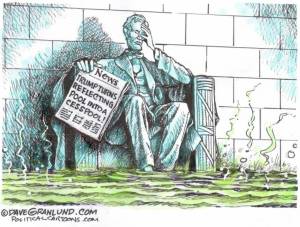
The response to the Minnesota Medicaid Fraud debacle is an example of failing to think diagnostically. The occupants of Trump’s Clown Car came piling out, tripping over one another, madly honking their Ahooga horns and shouting, “It’s the Immigrants!” Well, they’re wrong. Because they’re clowns and more concerned with balloon animals and rubber noses, they can’t diagnose what happened. Now, it’s hard to admit, but they’re not wrong about everything. The evidence reveals there has been significant fraud in Minnesota. But if the cause is not “immigrants,” then what?
I propose that it’s subcontracting. Well, more precisely, it’s our collective avoidance of responsibility that permeates culture and institution alike – but that is diving too deeply for accurate diagnostic thought at this stage.
Subcontracting (as I use the term today) is the practice of authorizing another to carry out an act you were mandated to perform, but you keep a cut. The practice has likely been around forever, but it has grown to become standard operating procedure in every area of human endeavor over the course of my lifetime. It’s how planes are assembled, classrooms staffed, accounts balanced, homes built, meters read, customers “serviced,” taxes assessed, potholes filled, bridges built, X-rays interpreted, movies produced, news broadcast, fires fought, laws enforced, novels written, cows milked, votes counted and newspapers published. It’s even how most churches work. Disciples of Jesus are called to be compassionate. But members largely just write checks to their local church and expect them to do compassion on their behalf. Subcontracting compassion. (Don’t get cocky, church critics. Y’all do this too.)
Well, some things (like being compassionate) can’t be subcontracted no matter how much you pay for it.
Turns out the convicted ring leaders of the Minnesota scheme operated non-profits ostensibly tasked with distributing Medicaid dollars to poor folks. It’s a very common subcontracting system that has built into it’s architecture the fundamentals for corruption. It’s a system arguably most widespread in government.
You wanna save local salmon runs? Send your tax $1.00 to the EPA. They will keep $0.50 and “grant” the other $0.50 to the Washington State Department of Ecology who will snag $0.25 of that, then contract with Snohomish County who will take $0.15 for administration costs to hire a consultant who charges $0.10 to study the impact of installing a bigger culvert in the new Costco parking lot. Everybody but the salmon gets their cut.
But it’s not just various strata of government. Our housing and financial systems are set up like this too. Crypto and stock market values soar even in the midst of global turmoil because the potential of making money for producing nothing is too attractive. We subcontract fund managers to gamble our money for us. My favorite euphemism for subcontracting is “passive income.” We don’t do anything “active” (in other words, produce a product or provide a service) but we get our cut as money passes through our hands. I see it most commonly in the practice (unheard of 30 years ago) of a middle-class family owning a second home which they rent out at a higher rate than their mortgage, moving money from the renter’s bank account to their retirement account, and on to the Dow Jones. Subcontractors every step of the way.
Being a subcontractor allows us to remain concealed, unburdened by the obligation of the original contract whether it be affordable housing, feeding the poor or paying back a debt.
Because “I just work here.”
Dan Hazen lives in Marysville and works in Everett.