Shoreline college failed to investigate former Everett teacher, other applicants
Published 6:00 am Tuesday, June 16, 2026
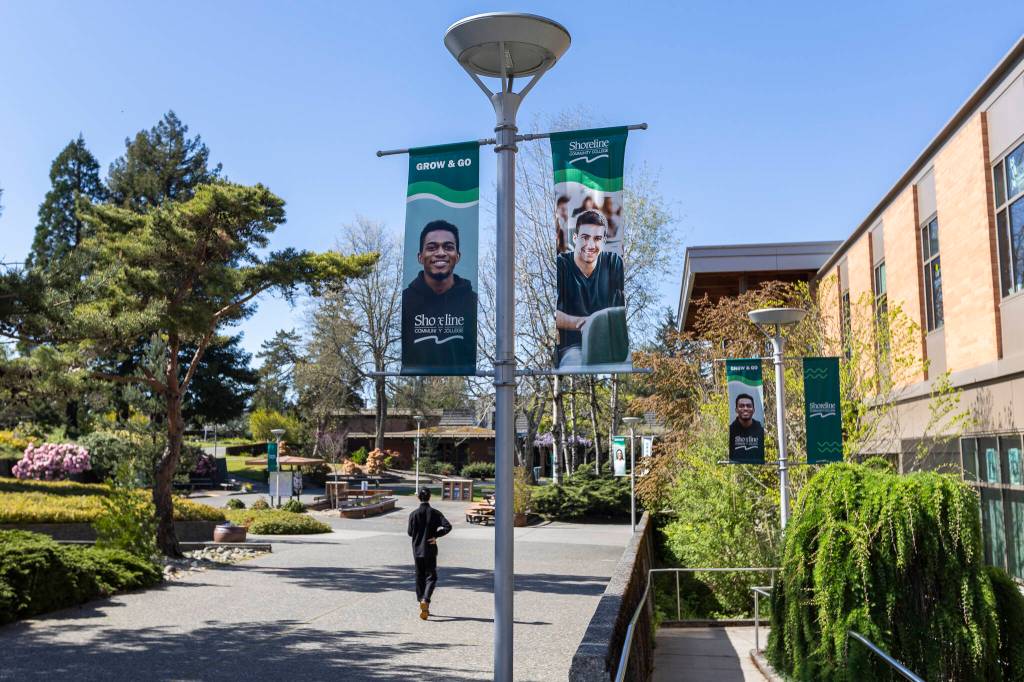
Shoreline Community College has updated its sexual misconduct disclosure form for job applicants after recent reporting revealed the college failed to implement a 2020 state law meant to prohibit teachers accused of sexual misconduct from being hired.
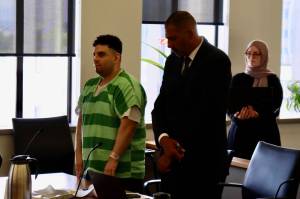
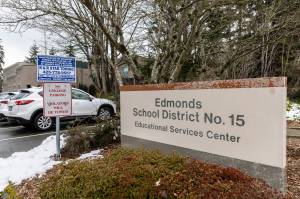
In May, InvestigateWest and The Daily Herald reported that Shoreline Community College hired a Henry M. Jackson High School physics teacher, Kevin Kukla, who had resigned while under investigation for engaging in a years-long inappropriate relationship with his then-student.
A bill passed by the Washington Legislature in 2020 aimed to prevent higher education institutions from hiring teachers like Kukla.
The law requires anyone applying to a higher education institution to disclose if they are under investigation, if they resigned, or if they were the subject of “substantiated findings” related to sexual misconduct. Shoreline’s sexual misconduct disclosure form at the time of Kukla’s hiring did not require applicants to disclose that information, according to internal communications obtained by The Daily Herald and InvestigateWest.
Shoreline had not contacted Everett Public Schools, Kukla’s previous employer, to check his references. A loophole in the 2020 law means colleges and universities only have to call an applicant’s previous higher education employers, not a K-12 employer. As part of the recent policy updates, Shoreline’s hiring procedures will include reference checks to K-12 schools, which exceeds state law requirements.
“We take the safety and security of our students and employees very seriously,” Cat Chiappa, a spokesperson for Shoreline Community College, wrote in a statement. “As soon as this matter was brought to our attention, we reviewed our practices and took immediate steps to strengthen our processes going forward.”
Shoreline Community College did not announce the recent updates to its hiring procedures publicly, and until this month, the college had given the public no indication that those procedures were not aligned with the law.
In April, a college spokesperson said in a statement to InvestigateWest and The Daily Herald that Shoreline’s vetting of job applicants complies with the 2020 law.
But public records obtained by the news organizations show that just a few days after that April statement, Jack Kahn, the president of Shoreline Community College, told the Board of Trustees that the college was out of compliance with the 2020 law. In an email, Kahn said that while Kukla had accurately completed a required sexual misconduct disclosure form, the form itself was “deficient.”
Members of the five-member board, which oversees the college’s leadership and financial affairs, are appointed by the governor and approved by the Washington State Senate.
“For reasons that remain unclear, a less comprehensive version was implemented in practice,” Kahn, who became the president in 2022, wrote to the Board of Trustees. Shoreline’s former president, Cheryl Roberts, held the position from 2014 until June 2021, when she was terminated by the board. She’s now a consultant, according to her LinkedIn.
Kahn added that Human Resources staff “have been retrained” on protocols for reviewing applicants and that there will be “ongoing monitoring to ensure consistent application.”
“These changes materially tighten hiring controls and reduce the risk of similar issues in the future,” Kahn wrote.
In April 2024, a custodian at Henry M. Jackson High School found Kukla receiving a back massage from an 18-year-old student in his locked classroom, according to a police report. The incident sparked three separate investigations by the school district, the Mill Creek Police Department and briefly, the state K-12 oversight agency. The investigations discovered thousands of texts between the teacher and student over the course of two years, referencing kissing, loving and missing each other, and being afraid someone saw them lying in the back of the teacher’s car. Prosecutors did not pursue criminal charges, saying there wasn’t enough evidence of a physical relationship.
In his April 2026 email to the board, Kahn said that after reporters began inquiring about the college’s compliance with the 2020 law, Shoreline confirmed that Kukla had left his previous job amid an active sexual misconduct investigation. Kukla was placed on paid leave on April 15 until his contract expires on June 18. In April, the college declined interview requests from The Daily Herald and InvestigateWest, and it declined a public records request to review Kukla’s job application, citing a public records exemption.
Kahn — who, through a spokesperson, declined an interview request for this story as well — said the college’s decision to limit its public response was done in consultation with the attorney general’s office.
Michael Hemker, the assistant attorney general assigned to represent Shoreline, who was copied on Kahn’s email to the board, declined to answer written questions from The Daily Herald and InvestigateWest. He said that, as Shoreline’s lawyer, the attorney general’s office doesn’t comment on its behalf.
Rachelle Alongi, a spokesperson for the Washington State Board for Community and Technical Colleges, said in an email that the oversight board had sent out a template of the new sexual misconduct disclosure form in September 2020 for colleges to adopt. But she did not respond to a question regarding whether the state agency, which oversees 34 public colleges throughout the state, has ensured compliance since.
Washington state Rep. Gerry Pollet, D-Seattle, who spearheaded the 2020 law, said he is disappointed that Shoreline Community College never implemented it and that the attorney general’s office failed to ensure compliance. Each public higher education institution in Washington has at least one assistant attorney general assigned to provide it with advice and legal representation.
“What is the role of the AG’s office supposed to be? Isn’t it also to protect students from being victims, not just to protect the institution from liability?” Pollet said.
Pollet, who is also a lawyer and an adjunct professor at the University of Washington, said he spent nearly a year consulting with higher education institutions and members of the attorney general’s office while developing the 2020 law, which also bans the use of nondisclosure agreements related to sexual misconduct allegations.
He’d sought to pass the law after learning about a star volleyball player at the University of Washington who was sexually assaulted by a senior administrator in the athletic department and then pressured to sign a nondisclosure and settlement agreement that released the school from liability and allowed the administrator to move on quietly.
“The assistant AGs, not universally, but in general, had a pattern of advising schools to sign nondisclosure agreements,” Pollet said. “The school doesn’t want publicity.”
He’s concerned Shoreline Community College might still be using nondisclosure agreements.
“Someone screwed up here, in the AG’s office. And they need to take a look … and examine how far their lack of compliance went,” he said.
Chiappa, Shoreline’s spokesperson, said in an email that under the current presidential leadership, “there is no awareness of any [nondisclosure agreements] being completed.”
Pollet is concerned that other community or technical colleges may also have failed to fully implement the 2020 law. He had previously worked with the Washington State Council of Presidents to ensure that the state’s four-year colleges had implemented it.
He plans to introduce legislation next session to fix the current loophole that doesn’t require hiring managers to call K-12 employers, and plans to follow up with the state oversight board to ensure other schools have adopted an accurate sexual misconduct disclosure form.
“If Shoreline didn’t update,” Pollet asked, “who else didn’t?”
Moe K. Clark is a collaborative investigative reporter covering Washington state for InvestigateWest. Her position is supported by the Murrow News Fellowship, a state-funded journalism initiative managed by Washington State University. Contact her at moe@investigatewest.org.
Eliza Aronson is The Daily Herald’s investigative reporter. You can contact her at 425-339-3434 or eliza.aronson@heraldnet.com. Eliza’s stories are supported by the Herald’s Investigative Reporting Fund.