Everett unveils pre-approved ADU designs, aims to cut permit timelines
Published 1:30 am Tuesday, June 23, 2026


EVERETT — The city of Everett unveiled new pre-approved housing designs on Tuesday, a move that officials hope will shorten design and permitting times for builders seeking to construct small homes, particularly accessory dwelling units.
In an industry where long wait times can cost developers money, city staff hope the designs could be a step toward allowing for more affordable home ownership opportunities — at a time where the vast majority of workers in Snohomish County can’t comfortably afford to purchase an average home.
When building a home, the first step is often to design the structure itself, said Sabrina Good, the permit services manager at the city of Everett. That process can take up to a year. Then, it has to go through permit approvals with the city, a process that can also stretch for months, depending on the housing project.
The pre-approved designs, however, aim to shrink those timelines significantly.
“This completely eliminates that design phase, and it’s also partially through the permitting process,” Good said. “All they have to do is get the licensing for the pre-approved design, and then they work with the designer to prepare site-specific permitting.”
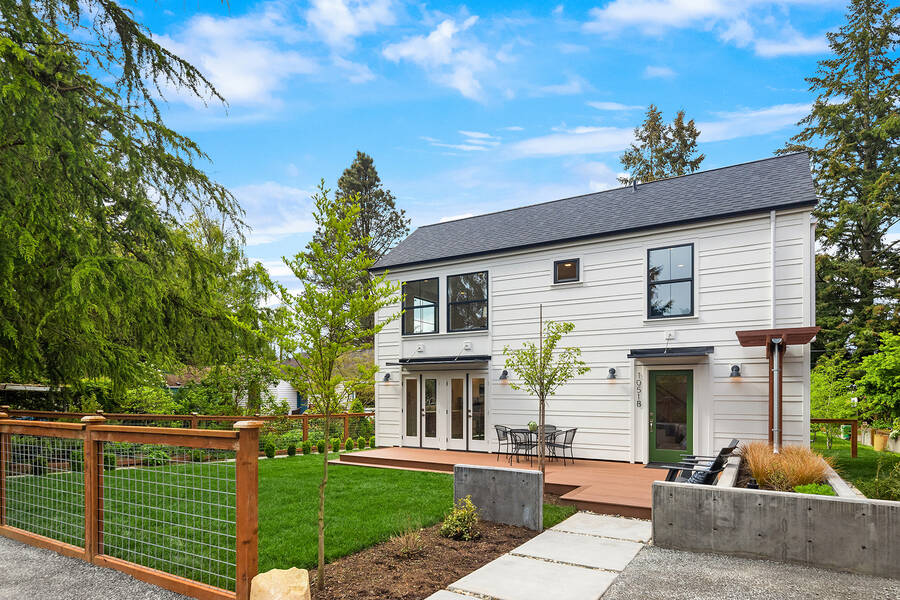
The three pre-approved designs now available in the city, ranging from 820 to 1,000 square feet, are designed as detached accessory dwelling units, or DADUs, small homes which are intended to be built on existing residential lots where excess space allows. In Everett, they are eligible for reduced development costs and, when built under 1,200 square feet, have no parking mandates. Those rules, along with the small footprints of the homes, mean they are often a more affordable option than purchasing a single-family home.
The city’s goal is to approve permits for pre-approved designs within three months.
“This is a huge thing for someone who wants that, they can just get it off the shelf,” Everett mayor Cassie Franklin said Tuesday. “If they’re getting a pre-approved ADU plan, we should be able to help deliver that permit in three months.”
Using one of the pre-approved plans requires paying a licensing fee to the designer, usually around $1,500. Those interested in building an ADU need to work directly with the designers to purchase the plans, according to a city website.
Making any changes to the pre-approved designs would cost additional time and money, according to the city. Even slight changes to the design of the pre-approved projects, like moving a window, changing the size of a door or adjusting a wall would require the project to go through a standard building permit process.
Other Washington cities, including Renton, Kirkland and Lacey, offer some pre-approved accessory dwelling unit designs. Seattle released pre-approved accessory dwelling unit, or ADU, designs in 2020 and, in the following years, permitting timelines for the pre-approved designs averaged nearly 40% faster than those without pre-approval, according to a 2023 city report.
“If we can reduce the complexity and the challenges to get a project moving, then that is another step toward our aim of increasing housing supply, which helps reduce the cost of housing, creates more opportunities in the home ownership space and is ultimately aligned with our cities goals of achieving more affordability,” said Mike Fong, Everett’s deputy mayor.
Data compiled by local housing experts has estimated that only about 10% of the workforce in Snohomish County earns enough to comfortably purchase an average home of any kind, either a condominium, townhome or single-family home. A majority of workers living in the county don’t earn enough to comfortably rent — spending less than a third of their income on housing — the average apartment on their own. Building more homes to meet the demand would likely drive down the cost of housing.
In 2023, Everett approved relaxed rules for ADU construction, allowing for two accessory dwelling units on each qualifying lot and removing some restrictions around parking and appearance standards.
The city’s latest comprehensive plan update, approved in 2025, planned to accommodate about 36,500 new housing units in Everett by 2044 by allowing for denser housing in most areas of the city. That’s because about 65,000 new residents are expected to move in, according to regional growth targets. The comprehensive plan assumes about 2,500 accessory dwelling units will be built in the city through 2044.
Since Everett changed its rules surrounding ADU construction in 2023, the popularity of the housing type has increased significantly, city data shows. Between 2021 and 2023, the city approved a total of 64 ADUs. After the changes to the codes were implemented, the city approved 89 ADUs between 2024 and 2025.
In only the first six months of 2026, the city has approved 51 new units, already the highest number in a single year since 2020, when the city began tracking the number of ADU permits issued annually.
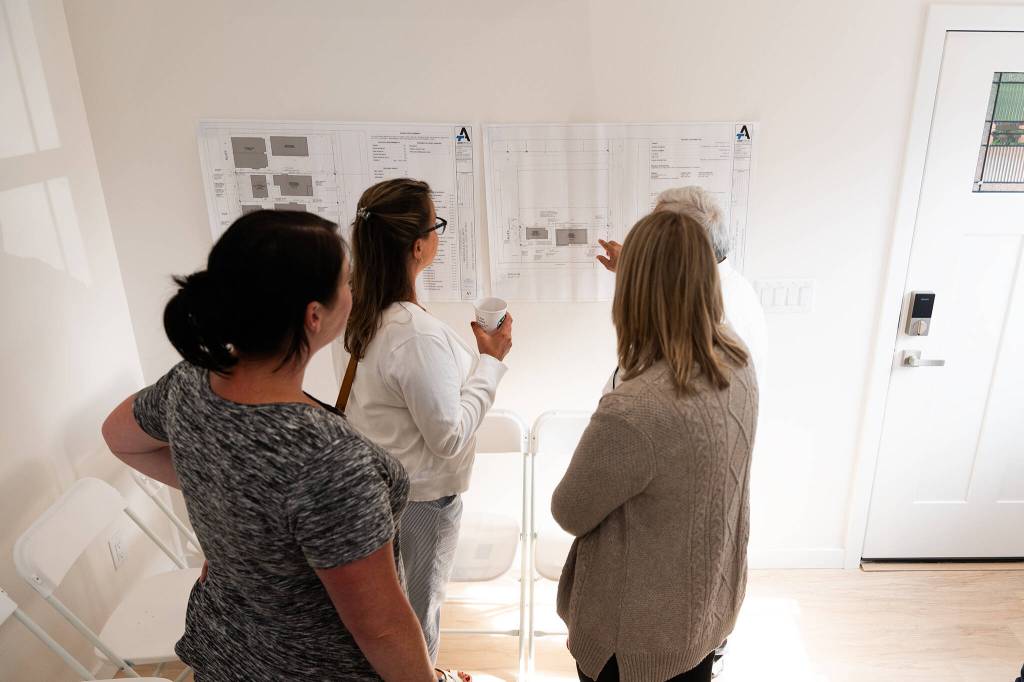
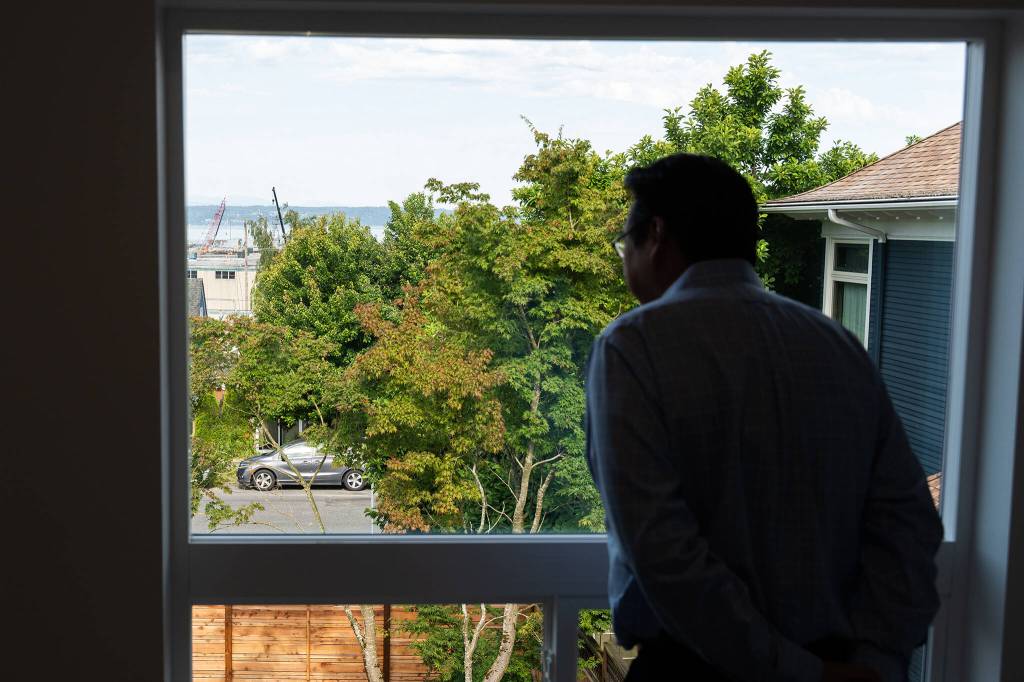
On Tuesday, officials gathered for a tour at the site of a newly built DADU on a north Everett property overlooking Possession Sound. The local developer who built the the two-bedroom, two-bathroom unit, Ismail Mohammad, said he hoped to create other pre-approved designs the city could offer to property owners looking to add units on their land.
“We have the land, we have the infrastructure for it,” Mohammad said. “We are not building a seven-story construction here.”
He said that while the city has made progress on improving the permit process, developers have still run into challenges with permitting timelines in the city — sometimes stretching as long as a year or more.
City officials said that at the start of June, they implemented new policies to fast-track the permitting process for housing, Good said. Everett added new checklists to city websites so builders could see if their application was missing important pieces needed for code compliance, Good said, and permitting staff will perform intake checks to make sure applications include required plans before they get stuck in the pipeline. The goal is to reduce the length and the frequency of correction letters sent to builders.
“We’re giving immediate feedback instead of waiting in line, so that we can get a really high quality plan set and try to do a really quick turnover,” Good said.
Housing projects, particularly ADUs, are also now being prioritized in the city’s permit review queue, she added.
“We want to try and lower that price point,” Fong said. “… Part of that is the time spent getting the project from point A to point Z, and all of these tools that we’re talking about are an attempt to really go at different points at in the continuum of the process that can help make this faster and more affordable.”
Will Geschke: 425-339-3443; william.geschke@heraldnet.com; X: @willgeschke.