WA has paid unemployment to more than 100 striking workers
Published 1:30 am Friday, July 10, 2026
The state has paid out over half a million dollars in unemployment benefits to workers during labor disputes this year.
Washington’s new benefit extending unemployment to striking union workers took effect Jan. 1. Since then, the state Employment Security Department has made payments to 138 people, totaling 642 weeks of pay and nearly $506,000, the agency reported this week.
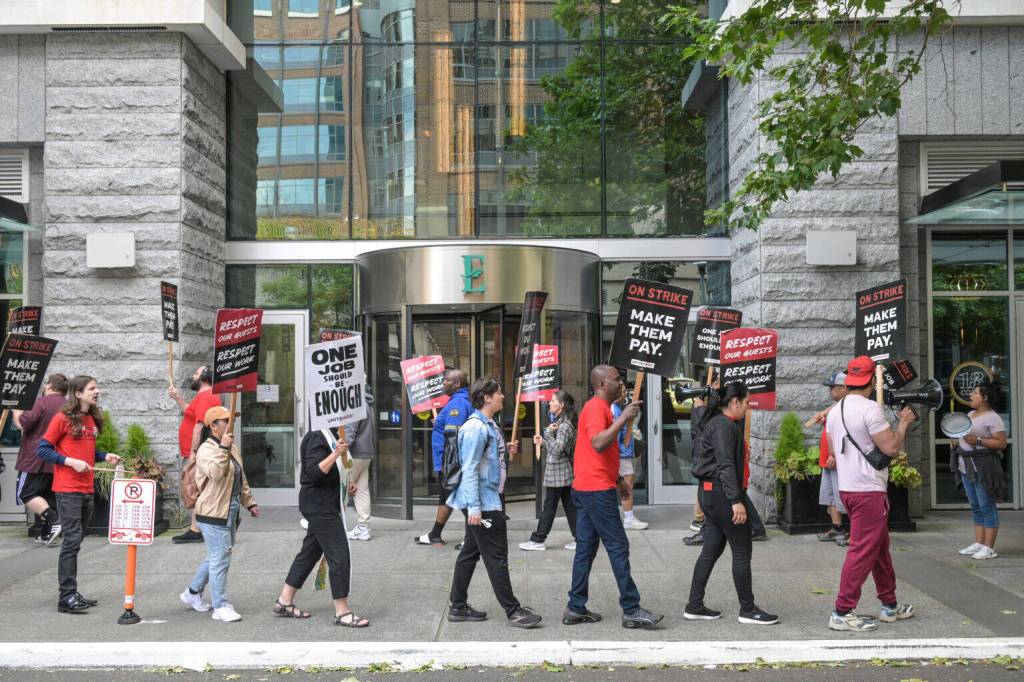
The total could soon climb. Striking workers at Hilton’s Embassy Suites in Seattle’s Pioneer Square neighborhood recently applied for the safety net program. Barring an agreement, they expect the benefits to kick in within a few weeks.
Democrats passed the contentious law in 2025 without support from Republicans, who argued the measure would incentivize striking and squeeze businesses financially. For Democrats, the goal was to give striking workers, especially those earning low wages, a backstop for rent and food when they are not getting a paycheck.
Workers on strike are eligible for up to 6 weeks of benefits. Unemployment is available following the second Sunday after a strike begins, plus a one-week waiting period. Typical unemployment insurance is offered for up to 26 weeks. Six weeks was the product of negotiations between House and Senate Democrats in the Washington Legislature. Initial proposals would’ve provided payments for 12 or four weeks.
Dozens of Embassy Suites employees went on strike June 18 as the city boomed with activity during World Cup games. They are seeking better wages, year-round healthcare coverage and increased staffing, and say they are in it for the long haul.
Aspen Desmarais, bartender at the hotel’s Zephyr restaurant and a member of UNITE HERE Local 8, said without unemployment, her colleagues would be more willing to accept a worse contract to return to work.
“It does allow people to go on strike for longer and be better off financially in order to get the contracts that they want signed,” Desmarais said Wednesday. “And I want mine.”
April Sims, the president of the Washington State Labor Council, said employers can always weather work stoppages easier than workers.
“Employers know this and bad bosses use the precarity of low wages as a bargaining strategy, relying on workers’ economic strain to keep them from taking action to organize a union or win a contract,” Sims said in a statement. “Providing unemployment benefits for striking workers upends this predatory dynamic.”
A Hilton spokesperson said the company is making “every effort to maintain a cooperative and productive relationship with the union.”
“We remain committed to negotiating in good faith toward a fair and reasonable agreement that benefits both our valued Team Members and our hotel,” the spokesperson said in an email.
State officials couldn’t disclose the employers of workers who have accessed the nascent benefit, or how many strikes have resulted in unemployment payments. Though the Washington State Labor Council did help 24 striking Starbucks workers apply for unemployment during their strike, according to the council.
Workers locked out by their employers are also now eligible for the program.
If a strike is found to have been prohibited under state or federal law, workers would have to repay the benefits.
By the end of this year, and every year going forward, the Employment Security Department will need to submit an annual report on the prevalence of strikes and the impact of them on the unemployment insurance trust fund. Projected flagging finances for the trust fund could trigger a new business tax worth hundreds of millions of dollars.
The law is set to expire at the end of 2035.
This story was originally published in the Washington State Standard.