Jurisdiction key in Tulalip fireworks lawsuit
Published 9:57 pm Wednesday, August 19, 2009
EVERETT — A man was injured after he bought a mortar at a firework stand on Tulalip tribal land.
That’s something the lawyers agree on. Most of the other facts surrounding the 2005 incident are in dispute. Now, Snohomish County Superior Court judges are grappling with a simple question that arises time and again when something involving a non-Indian goes awry on tribal land: Who’s in charge?
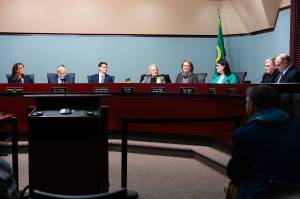
On Tuesday, Superior Court Judge Ellen Fair said she was hesitant to make any sort of ruling because so many of the allegations are lodged in the quagmire of jurisdictional issues between Snohomish County and the Tulalip Tribes.
Here’s the short story: Guy Johnson of Marysville bought a Great Grizzly “Unleash the Beast” mortar from the Louie Louie stand at Boom City, the biannual fireworks marketplace on the Tulalip Indian Reservation. According to documents submitted by Johnson’s attorney, the mortar detonated prematurely and exploded in Johnson’s left eye.
In a lawsuit that reached for justice in every direction, Johnson sued the fireworks manufacturer, the fireworks distributor, Louie Louie stand owner Louie Pablo, Boom City, the Tulalip Tribes and others. So far, the Tulalip Tribes and Pablo have been dropped from the lawsuit.
“I don’t have jurisdiction over Louie Pablo,” Superior Court Judge George Appel said last month. “Whatever suit will take place will have to take place in tribal court.”
On Tuesday, Mary Schmitt, Johnson’s lawyer, argued that Alea London, the company that insured Boom City, has some responsibility for the injury. Fair agreed, but admitted that her knowledge of Boom City, and her understanding of who has jurisdiction is lacking.
“This type of thing comes up all over the country, all the time,” said Bob Anderson, director of the University of Washington’s Native American Law Center.
The Tulalip Tribes has its own tribal court system, which has been honored for its innovation and fairness by experts, including Harvard University’s John F. Kennedy School of Government.
A good rule of thumb for non-Indians who do any business on tribal land, whether buying fish at the Tulalip Marina or contracting with the tribal government or a tribal member to provide any type of service, is that any disputes from that business should be resolved in tribal court, Anderson said.
There are some exceptions under Washington state’s Public Law 280, but in most cases, “If its tribal land, it goes to tribal court,” he said.
When cases involving tribal members or tribal land wind up in a state court, judges often are perplexed, Anderson said. If they’ve never handled a case involving a tribal member or tribal land, they might not realize that they don’t even have jurisdiction over the issue, he said.
In Johnson’s case, it’s not clear whether the insurance company will be forced to pay for the injuries allegedly caused by fireworks sold on tribal land. It’s also not clear whether a judge will toss Johnson’s claim against Boom City, which is an entity made up of tribal members that operates entirely on Tulalip tribal land.
Schmitt said she cannot comment on whether her client intends to take his case to tribal court.
Krista J. Kapralos: 425-339-3422, kkapralos@heraldnet.com.