Editorial: Let states police themselves on marijuana
Published 1:30 am Wednesday, March 29, 2017
By The Herald Editorial Board
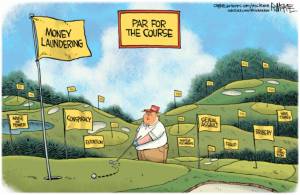
Recent statements out of the White House regarding “greater enforcement” of federal laws against recreational marijuana are concerning for those who toke but also should have the attention of all taxpayers in Washington state.
Last month, White House spokesman Sean Spicer said that states should expect “greater enforcement” of federal laws that ban recreational use of cannabis, though he gave no details of what enforcement could be expected.
Just as difficult to interpret have been recent statements by the nation’s top law enforcement official, U.S. Attorney General Jeff Sessions.
Sessions recently told U.S. senators, such as Sen. Rand Paul, R-Kentucky, that he would have “some respect for states’ rights” regarding marijuana. But Sessions also has proclaimed that “good people don’t smoke marijuana” and that he is “dubious about marijuana” and is reviewing current policy.
Nor has Sessions offered much support for medical cannabis: “I think medical marijuana has been hyped, maybe too much,” he told reporters this month in Richmond, Virginia, questioning how dosages of THC are administered.
Despite the waffling, Washington state Attorney General Bob Ferguson isn’t taking the statements from the White House as idle threats. Ferguson — who’s already had success in challenging the federal government by successfully arguing to strike down President Trump’s first travel ban — is ready for more: “My office will use every tool at our disposal to ensure that the federal government does not undermine Washington’s successful, unified system for regulating recreational and medical marijuana,” he said in a statement last month.
Washington state, of course, is not alone in its concerns. Seven states and the District of Columbia have legalized recreational marijuana, most recently California, Massachusetts, Maine and Nevada. Another 20 have legalized medical marijuana.
Those states that have legalized recreational marijuana are wondering how to respond to the White House as well.
Colorado’s state lawmakers are considering legislation that would allow the state’s recreational cannabis growers to reclassify what they grow as medical marijuana in the event of a federal policy change, but such a change would come at a cost for the state, as it collects a higher tax on recreational marijuana than it does on medical cannabis.
A crackdown on recreational marijuana, even one that gives a pass to medical marijuana, would represent a significant revenue loss for Washington state.
The state expects about $730 million in tax revenue from marijuana sales over the next two years, according to an accounting by The News Tribune earlier this month.
That’s a small piece of the $41.3 billion in total state revenues over the same period. But it’s still a significant revenue source that helps fund a range of state programs. About $438 million will supplement public health programs, including Medicaid, community health centers and substance abuse programs. About $17 million helps fund the administration of the Liquor and Cannabis Board that oversees marijuana. About $30 million will go to local governments, at least those who allow the sale of marijuana. And the rest, about $211 million, goes to the state’s general fund.
Since 2013, under the Obama administration, federal authorities have not enforced federal law where states have legalized recreational marijuana, conditioned on the states’ stopping the drug from crossing state lines and keeping it out of the hands of children and the black market.
Sessions and the White House would do well to keep that policy in place, especially if they are serious about the 10th Amendment’s protections for state rights.
And if Sessions has doubts about marijuana’s medical benefits and how it is used, he could easily free up opportunities for medical research by reclassifying marijuana as a Schedule 2 drug from its current Schedule 1 classification, which puts it on par with heroin and LSD and complicates legitimate research.