Snohomish County PUD activates fire safety protocols
Published 1:30 am Saturday, July 26, 2025

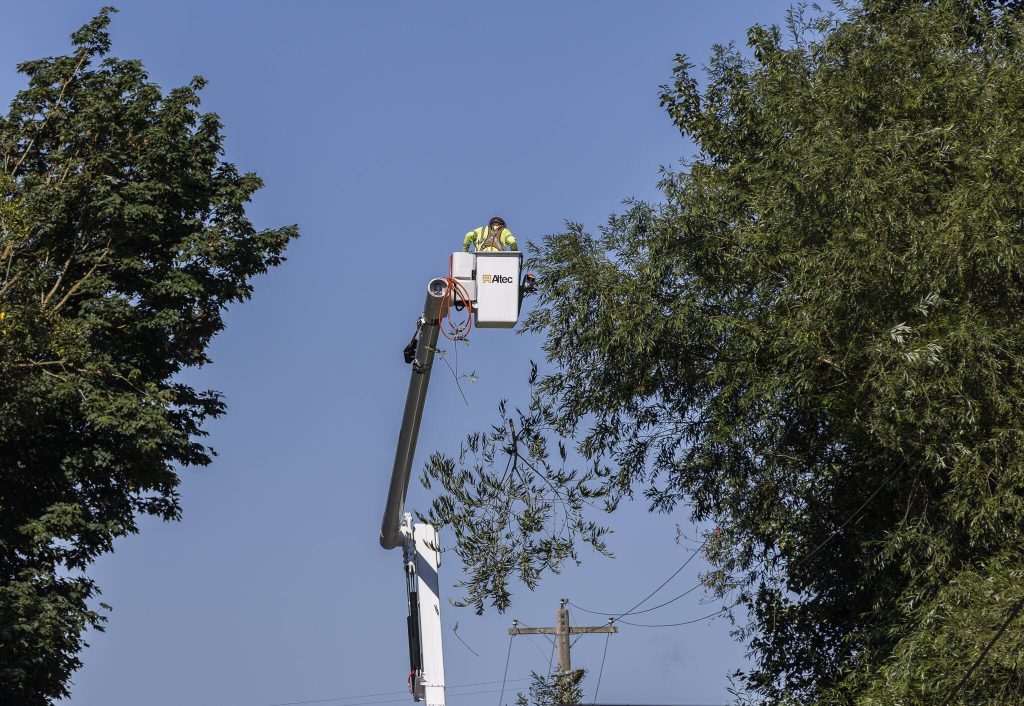
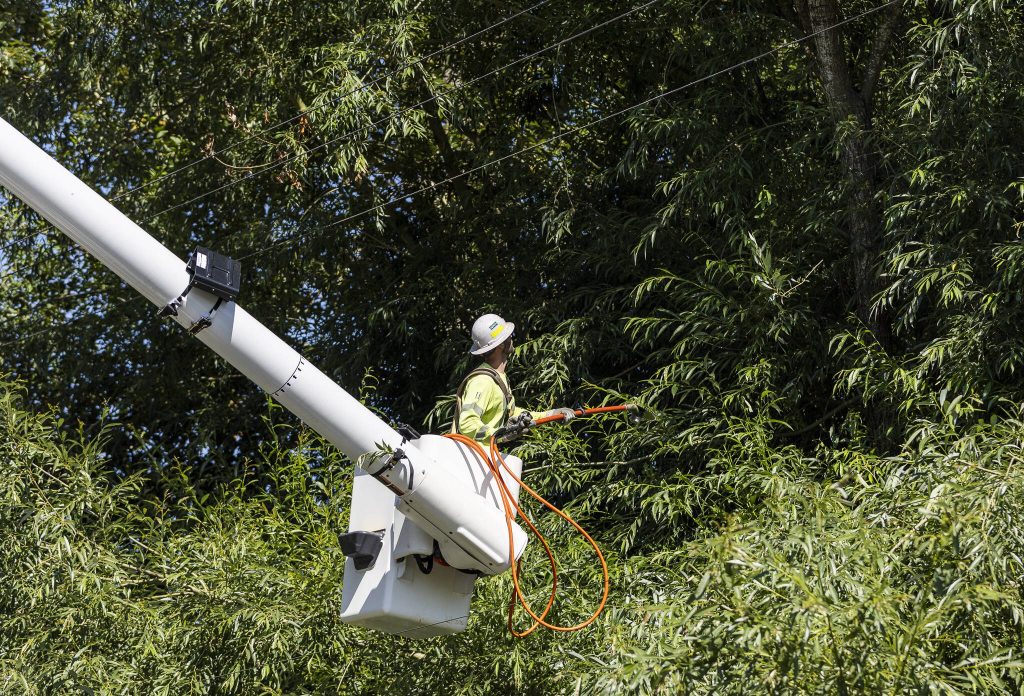



EVERETT — As annual wildfire risks rise in Western Washington, Snohomish County Public Utility District continues to develop protocols to prepare for and decrease wildfire risks.
In 2023, the state Legislature passed a bill requiring electric utilities to create and adopt a wildfire mitigation plan. Snohomish PUD already had some protocols in place at the time, but the district expanded upon its procedures and published its new mitigation document in October 2024.
The document describes management of vegetation in the district, inspection and maintenance of infrastructure, communication plans, breaker setting protocols and how to track the plan’s effectiveness.
“A very key part of our plan was to identify what risk factors does Snohomish County has, and what are we doing to mitigate those specific risk factors,” said David Popach, a protection engineer for Snohomish PUD.
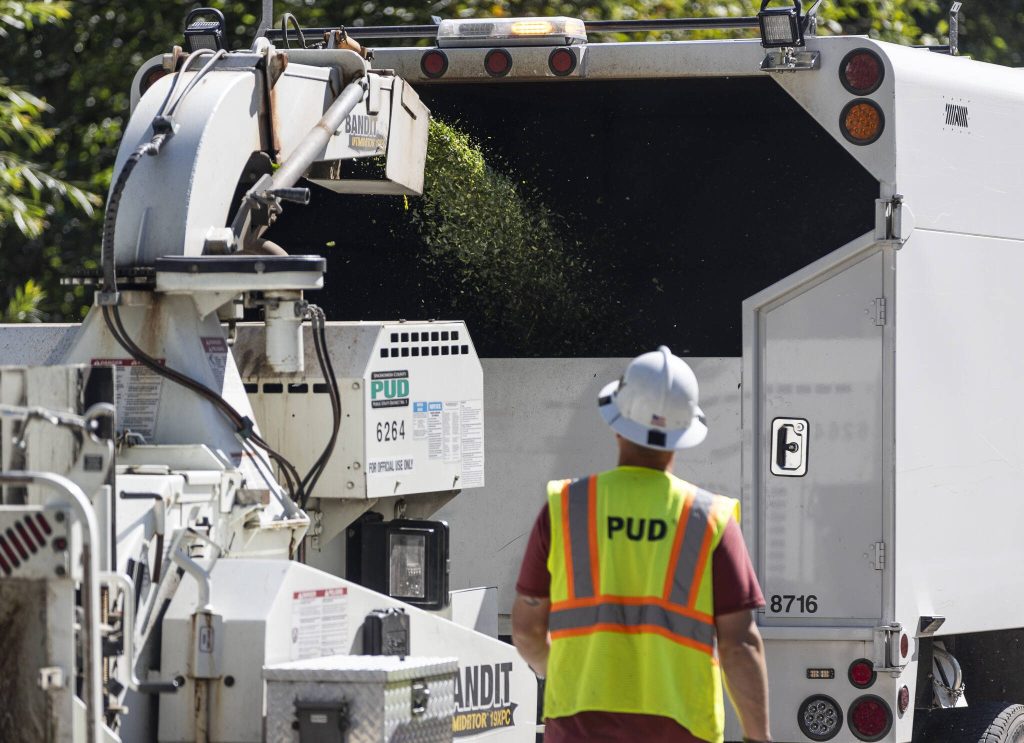
Trees are the No. 1 cause of power outages in the region. While trimming is typically done in preparation for winter storm season, the district has now shifted to also trimming to mitigate wildfire risks. Instead of multi-year cycles of trimming for areas, the district has ramped up efforts to make sure crews trim high-risk areas annually, Popach said.
The PUD has also created alternate settings for its electrical devices that they can switch to during wildfire season or heightened wildfire-risk conditions.
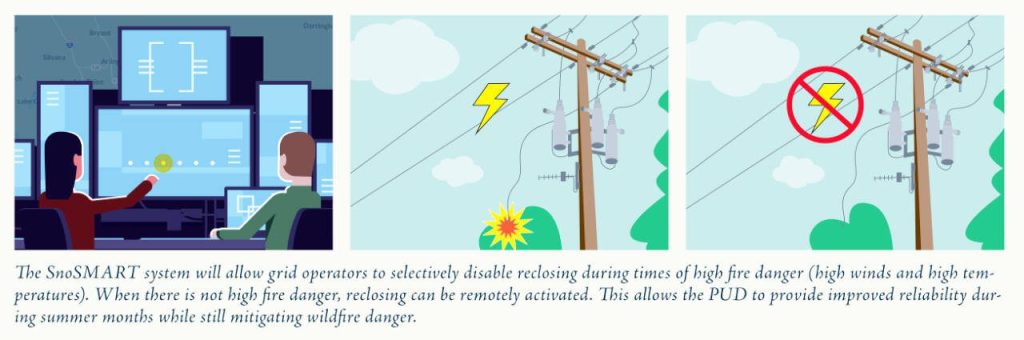
The fire setting makes it so when a branch or other debris hits a line, reclosers, the technology that attempts to reclose a power line circuit when a fault is detected, are disabled. This setting decreases wildfire risk because if a branch knocks a line into dry grass of brush, the equipment doesn’t try to reboot and cause a spark, Popach said.
The next level of protective measures is a setting called hot line hold, which the PUD activated last week when the National Weather Service issued a red flag warning for parts of the western slopes of the north and central Cascades.
The setting expands the fire setting idea of disabling automatic reclosers, making it so that if a fault is detected anywhere on the circuit, equipment won’t try to reclose it.
In extreme fire conditions, the PUD has created a protocol called public safety power shutoffs to proactively shut off power in certain areas. The last resort measures would be communicated extensively through robo calls, emails and in-person conversations, PUD spokesperson Aaron Swaney said on Friday.
Right now, the protective settings have to be manually changed for the majority of the PUD’s equipment. When the National Weather Service issued the warning on Tuesday, the PUD’s GIS team overlayed its coverage area with the warning area, and first thing Wednesday morning, crews went out to switch settings.
Soon, instead of a process that could take hours, the utility district will be able to change settings with a flip of a switch.
In 2023, the Department of Energy awarded a $30 million grant to the PUD to accelerate its SnoSMART program, which in part will automate the process of switching equipment into fire safety settings.
During the red flag warning last week, the PUD sent out emails to customers, explaining the work crews were doing and how the extra safety precautions could lead to longer power outages if a circuit was triggered.
“We’re trying to be really transparent with customers and make sure that they know we’re doing so much work behind the scenes to make sure that we’re being proactive with wildfire safety,” Swaney said. “It also keeps it top of mind for customers that they need to take wildfire safety seriously.”
Swaney encourages customers to sign up for the PUD wildfire update email list, which you can do online at https://lp.constantcontactpages.com/sl/t73xGEC/PSPS.
Eliza Aronson: 425-339-3434; eliza.aronson@heraldnet.com; X: @ElizaAronson.
Eliza’s stories are supported by the Herald’s Environmental and Climate Reporting Fund.