Everett may fund study of possible annexation
Published 1:30 am Friday, March 27, 2026
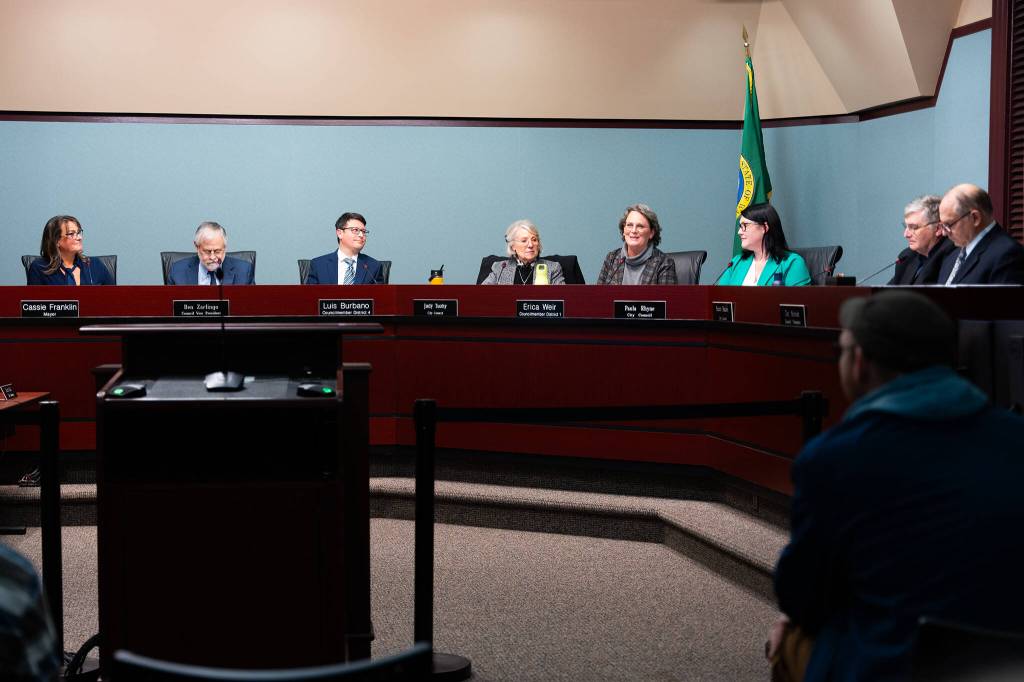
EVERETT — As part of a proposed budget amendment, the Everett City Council could give spending authority to conduct a study on the potential annexation of land south of current city limits.
The budget amendment could also include funding for work on a subarea plan — a land-use planning document focused on a small geographic area in a city — for the Casino Road neighborhood in south Everett.
The budget amendment would give authority to spend $200,000 on an annexation study, set to be conducted by a consulting service. In recent weeks, city staff have said they started initial conversations about potentially annexing areas near south Everett that are currently within the city’s urban growth area.
During Everett Mayor Cassie Franklin’s State of the City address on March 6, she said that the city is evaluating potential annexation options with a focus on south Everett. She mentioned locations around the Mariner area of unincorporated Snohomish County, which includes Mariner High School, a public library and a future light rail stop, as areas that could be brought into city limits.
Census data from 2020 shows about 223,000 people live in the unincorporated areas in southwest Snohomish County. If it were a city of its own, it’d be the largest in the county. About 47,690 people lived in the unincorporated areas of Everett’s growth area as of 2020, according to census data. Those areas include the Mariner region as well as the Eastmont area, southeast of Everett’s current city limits and just north of Mill Creek.
Through annexation, the city of Everett grew in size and population significantly since its founding. In 1915, the city limits only reached as far south as what is now 52nd street, a city diagram shows. By 1971, the city had just about doubled in geographical size through annexations.
Everett’s last annexation was in 2021, when the city brought a portion of Smith Island, zoned for industrial use, into the city, Snohomish County records show. The last time the city annexed land which added residents into the city was in 2014 — boosting Everett’s population by six people.
Since 2000, Everett has gained about 4,700 residents through annexation, county records show, mostly through an annexation in 2000. It had considered a massive annexation effort in 2008 which could have seen its population skyrocket, but eventually decided against it, citing the cost of providing services to the new areas.
Annexation could bring financial benefits to the city, like property tax revenues or potential sales tax credits from the state. It would also incur costs, stemming from the need to provide city services to the new residents within the annexed boundaries.
The subarea plan for the Casino Road neighborhood is expected to begin in 2026 and take about a year to complete. The proposed budget amendment would give the planning department $50,000 for outreach and community engagement work related to the subarea plan.
The budget amendment would also carry over unspent funds from the 2025 budget to pay for projects that had not yet been completed by the end of the year.
The city council is expected to vote on the budget amendment on April 8.
Will Geschke: 425-339-3443; william.geschke@heraldnet.com; X: @willgeschke.