Flower World and Snohomish County continue legal struggle over permits
Published 1:30 am Thursday, May 28, 2026

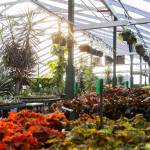
EVERETT — The Maltby nursery and farm, Flower World, has been embroiled in legal battles with Snohomish County for the last five years over acquiring permits — and it doesn’t look like it’s going to end any time soon.
At the root of the dispute is whether Flower World is an agricultural or retail operation.
For owner John Postema, the answer is clear.
He told The Herald in April, during a visit to Flower World, a county employee told him his business is related, “but is not agriculture.”
“Now that offends me,” he said in April. “We, for the last 57 years, we have been growing here and we have never done anything else than growing, and now all of a sudden we are a Home Depot.”
In April, Postema, requested the public’s help in a newsletter posted to Flower World’s website, where he claimed the county was “asserting that Flower World is no longer an agricultural operation.” He asked community members concerned about Flower World and local farmers to reach out to the county council.
In the county’s response, it stated that recent developments on the Flower World property did not qualify for an agricultural activity exemption and needed a permit. But the county affirmed nothing in the ensuing court case sought to shut Flower World down or keep it from selling nursery plants and products.
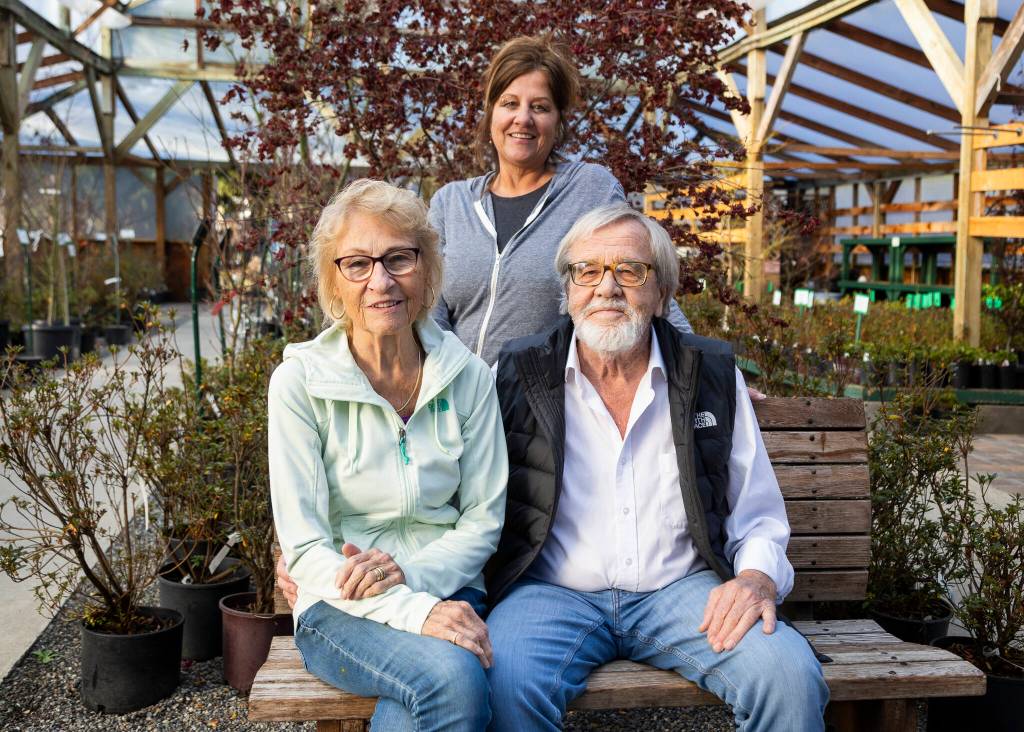
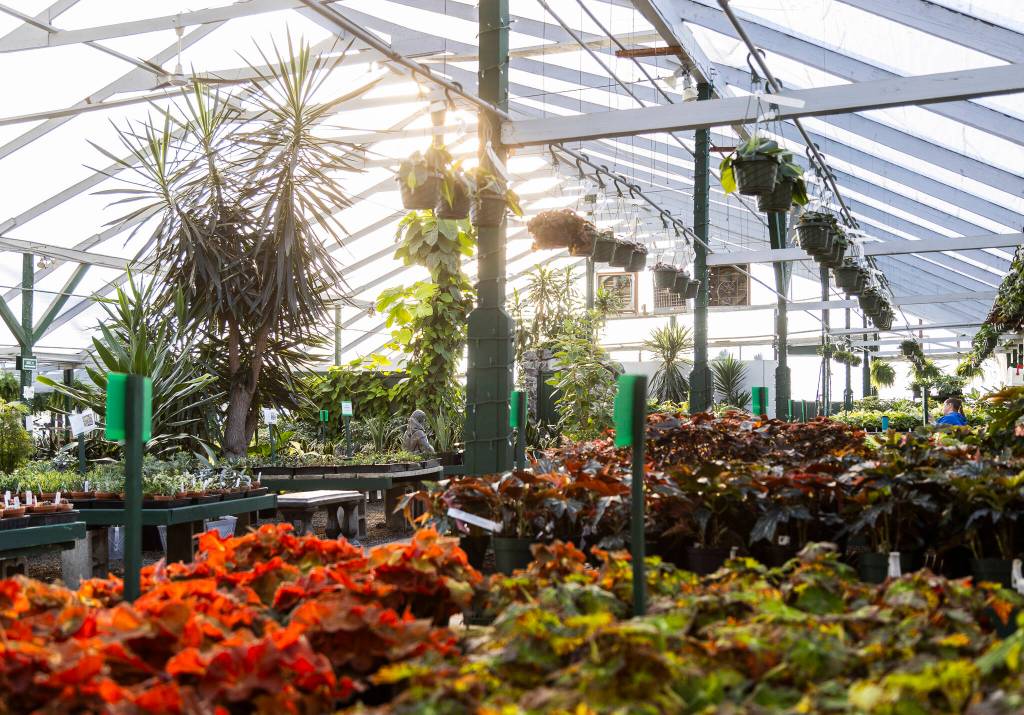
Postema and his wife, Marijke Postema, own the 15-acre campus, which features a large retail area for buying flowers and plants alongside a pond and walking trails. What the county doesn’t understand, Postema said, is that Flower World includes another 185 acres where they grow aproximately 95% of what they sell.
“There’s no place like us,” Postema said. “You will not find anybody in the Western Washington who actually sells that much and has the properties to do it.”
Building Permits
Flower World’s recent conflict with the county took root in 2023 when John Postema and Marijke Postema cleared a single-family residence and outbuilding on the nursery property. In its place, they built two 4,500 square foot pole-building-style structures and placed asphalt-paved aisles, which accessed rows of graveled areas, and a graveled area in the front of the nursery’s western portion, according to court documents.
One building is intended to serve as growing space; the other an employee break space, Postema said.
Of the two buildings, identified as north and south, only the north building has wood siding and a metal roof, court documents said. The neighboring south building’s roof is covered, but the walls are left bare.
The graveled areas are used for growing container plants and act as parking for retail customers from March-April to September-October, court documents said. Additionally, the Postemas replaced the existing entrance to the property with a new one on 200th Street Southeast.
On Oct. 11, 2023, the Snohomish County Planning & Development Services Code Enforcement division issued Flower World a warning letter for five violations.
They include:
• Two buildings with permit-commercial violations related to the construction of the pole buildings.
• A land disturbing activity violation for the impervious surfaces added and the construction of a pond area without the required permits.
• An access violation for changing the entrance to the property without a permit
• A right-of-way occupation violation for placing a wood fence and trees within the right-of-way of 200th Street Southeast. This issue was later separated due to filings in the Snohomish County Superior Court.
In Postema’s response, he argued that the buildings and grading activities were exempt from such permits as they served agricultural purposes, court documents said. He also states there were no obstructions to the right of way and that the driveway was preexisting, established in a previous short subdivision of the property.
Code enforcement advised the Postemas that it disagreed, and on Oct. 11, 2024, it issued a notice of violation, citing the same issues as in the previous warning, court documents said. Just over two weeks later, the Postemas appealed the notice.
They also argued that the county only has an easement on the north half of the 200th Street right of way, so they did not need a permit since it does not interfere with the county’s use, court documents said.
“We thought for the last 50 years it was clear, but they came out now with an interpretation which is not acceptable,” Postema said in April about county agricultural codes.
The land is used to hold growing plants in containers, he said. Paved roads help forklifts move plants around — parking is incidental use and the buildings are additional growing spaces.
Even the landscaping is used in the growing process, said Robert Wickstrom, Flower World’s director of finance, in April.
“There’s also plants that are planted as what you and I would look like is just landscaping,” Wickstrom said. “The difference is, we’re taking cuttings from those plants to then grow.”
At the commencement of hearing in March 2025, code enforcement withdrew violations related to the south building after Postema provided photos showing that only a plastic membrane covered the structure, court documents said. Postema stated the building is used as a temporary growing structure, making it exempt under county code.
The other structure remains in limbo, with a finished roof and open sides, as construction cannot continue during the permit disputes, Postema said in April.
Much of Postema’s arguments rest on the Right to Plow initiative, which was codified after voters approved it in 2001. The code states that agricultural activities on property where commercial agriculture is allowed are exempt from the county’s grading and drainage code, unless those activities include development requiring another permit.
The hearing examiner’s decision countered that, “a one-acre graveled and paved parking area to support a 15-acre commercial retail and wholesale use is not an agricultural activity exempt from permitting requirements.”
Ultimately, the hearing examiner affirmed the permit violation for the north building, the access violation and land disturbing activity related to the addition of impervious surfaces and the north building, court documents said. But the ruling sided with the Postemas that the creation of a pond fell under the agricultural activity exemption.
Flower World had until Dec. 31, 2025, to comply, the decision stated.
“I think there’s a perception by what they see, and I think that’s part of the problem,” Wickstrom said. “They see what looks like a parking lot, so it’s got to be a parking lot. They see what looks like a retail Home Depot-style operation. So it’s got to be that.”
Because they grow and sell, everything has mutiple uses, “more than just what you see with your eyes,” he added.
In April 2025, the Postemas petitioned for the hearing examiner to reconsider the decision. Subsequently, the hearing examiner granted the petition to reconsider verb usage, such as “temporally hold” rather than “stage” in reference to the container plants. The decision regarding the use of the graveled areas was upheld.
On July 11, 2025, the Postemas filed a Land Use Petition in the Snohomish County Superior Court after the hearing examiner denied them the chance to submit additional evidence, citing that the evidence was not actually newly discovered. The Postemas argued that the evidence related to an issue that was not apparent before the hearing.
In Superior Court Judge Jennifer Langbehn’s Jan. 8 decision, she upheld that Flower World needed to acquire the applicable permits. She acknowledged that growing the container plants on the gravel lot is exempt, but the parking usage is not.
Later that month, the Postemas filed an appeal with the Washington State Court of Appeals. As of Wednesday, a decision has not been made.
The Maltby Produce Market
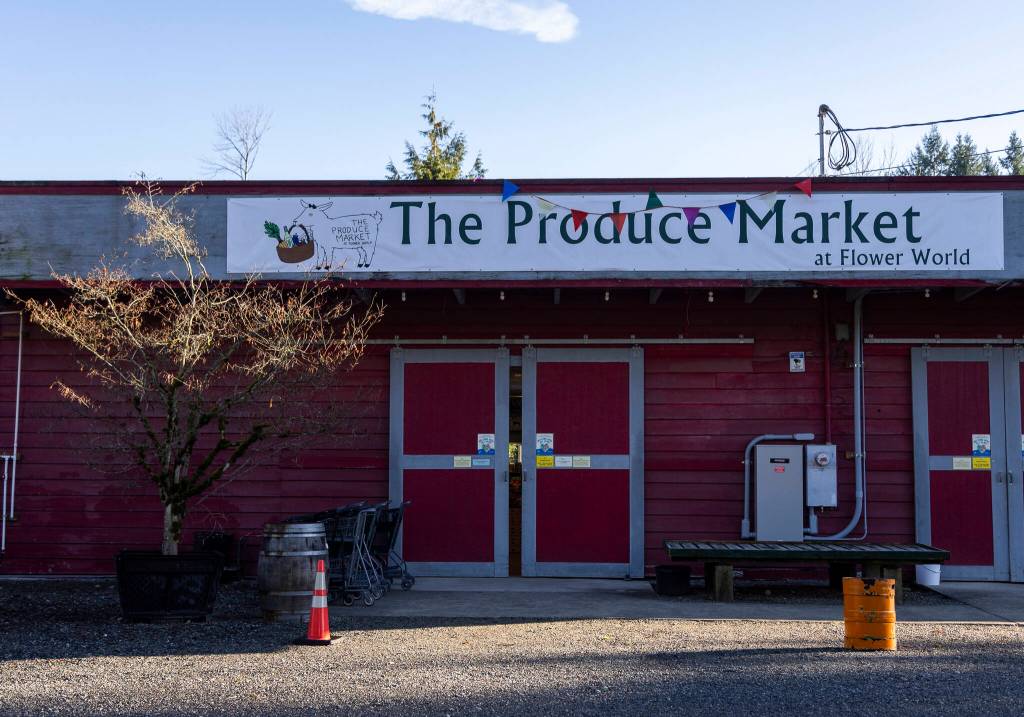
In addition to building disputes, Flower World and the Snohomish County Health Department have been at odds over permits for the Maltby Produce Market, which the Postemas opened just before 2004. Neighboring the nursery portion of Flower World, the market sells farm produce and other goods.
In February 2021, the Snohomish Health District, now known as the health department, received multiple reports related to improper storage and handling of food requiring temperature control, such as milk, cheese, yogurt and meats at the market, according to court documents.
Health district staff visited the market six times between February 2021 and January 2022, court documents said. Officials discovered that the market was selling temperature-controlled food, including dairy products, frozen meat, unpasteurized apple cider and cut-and-repacked frozen fruit, without a proper permit.
“While sale of agricultural products is allowable on a farm, that does not mean that the sale of foods such as meat and dairy may occur without benefit of a food operating permit issued by Snohomish Health District,” an official wrote in an April 2021 inspection report.
“They have been saying that forever,” Postema said in April. “They said, ‘You need a restaurant permit.’ We are not a restaurant.”
“The Snohomish County Health Department’s Food Safety team protects public health by ensuring all food establishments comply with required safety and sanitation standards, and the permitting process is essential to that work,” health department spokesperson Jeff Hodson said in a statement on Tuesday.
In July 2021, a health officer issued an order citing the market for being a food establishment without a permit and directed it to stop operating or obtain a permit within 30 days, court documents said. But, on follow-up visits, officials confirmed that the market continued to operate without the necessary permit.
The Postemas attempted to appeal the order, but the district stated that since they had not applied for a permit or had their license revoked or suspended, an appeal was not applicable, court documents said.
On Jan. 25, 2022, the health district filed a complaint in the Snohomish County Superior Court seeking an injunction to stop the market from selling temperature-controlled food without a permit.
In Postema’s response, he states that the market has sold temperature-controlled food without such a permit and had no “incidents to the health of their customers.”
“The Market has operated for almost 20 years without a food establishment permit from the Health District,” Postema wrote in a declaration submitted to the court. “And up until February of 2021, the District has never asked us to obtain one.”
Postema argues that the market is not a food establishment due to it being part of Flower World’s farming operations, which are “regulated and overseen by the Washington State and United States Department of Agriculture,” court documents said.
Additionally, he claimed that because the meat, which is USDA-approved, and dairy are packaged at licensed facilities and not removed from their containers until they reach the customer, the market should not fall under the county’s definition of a food establishment.
While the USDA’s stamp of approval covers meat production, it does not extend to storage and retail sale, which are under local health jurisdiction, the health district said in its report.
If selling temperature-controlled items were prohibited, the market would lose approximately 80% of its sales revenue, Postema countered in court documents.
On April 21, 2022, Superior Court Judge Anita Farris denied a preliminary injunction, which may be granted before or during a trial to preserve the status quo before a ruling, and a warrant of abatement. She stated that since the district’s claims rested on failure to obtain a permit, not on improper storage, it failed to show legal right to require a permit, court documents said.
In June 2023, another superior court judge, Millie Judge, approved Snohomish County joining the same lawsuit as a plaintiff alongside the health district.
In October of the same year, a third superior court judge, Anna Alexander, granted the county and district summary judgment, which is a ruling issued without a full trial. The court required the market to obtain a permit within 90 days or stop selling temperature-controlled food until a permit is secured.
Just under a month later, Postema filed an appeal with the Washington State Court of Appeals. In an unpublished opinion, the appeals court affirmed the superior court’s ruling.
An unpublished opinion is an opinion with no precedential value and is not binding on any court.
As of this year, Flower World’s permitting conflict continues.
On April 21, the Snohomish County Health Department served a cease and desist order to the Market for operating a food establishment without a valid permit. The order concerned the unpermitted sale of frozen meat, dried fruits and ultra-pasteurized Darigold products.
“This is how the county operates: cease and desist,” Postema said. “Why did they do that? They said, ‘We got a complaint, so cease and desist.’ An operation that’s been in operation for 20 years.”
In Flower World’s appeal, dated May 6, Postema acknowledged that the cease and desist is not appealable, but expressed a desire to appeal “the new local interpretations and decisions being made by the Health Department.”
Postema cited differences between state and county regulations in the appeal, including the Washington State Department of Agriculture Fact Sheet No. 27.
The fact sheet states that farmers’ markets, farm stands and other retail outlets can only sell USDA-inspected beef, pork, lamb and goat. In the appeal, Postema claims that this is in conflict with the county requiring said meat to be sold “by a Food establishment that has a Food establishment permit.”
The fact sheet also states that livestock producers who are selling at farmers’ markets, pop-up markets or farm stands “need to find out what permits are required by the local health jurisdiction where they will be selling meat.”
Currently, Flower World is in the process of applying for a WSDA processing certification, which would apply to the qualifications needed to dry produce, Postema said in an email Tuesday.
The health department has not currently received an application from the Maltby Produce Market, Hodson said.
“A food establishment permit is needed to operate legally,” he said.
‘Explore all our options’
In the April letter, Postema wrote that Flower World’s board has contacted a land development firm to explore paths forward with the county.
The process could take multiple years, Postema wrote. “The uncertainty created by ongoing legal proceedings makes it necessary to explore all of our options now.”
Partnering with a firm would allow Flower World to utilize its expertise to navigate laws, permits and other processes needed to complete a project most cost-effectively, Wickstrom said in an email Tuesday. While it’s still early days for Flower World, Wickstrom referred to a partnership as a “long-term and ‘last resort’ type of solution.”
The extent of these legal battles has caused financial strain on Flower World.
“We spent about $100,000 a year on attorneys for the last three years,” Postema said in April.
Flower World’s board of directors is also worried about how that cost might increase without Postema’s expertise, Wickstrom said.
“As a board member, none of us have the expertise he has in these matters,” he said. “When he’s gone, we also have to consider, if it’s $100,000 now, how much more is it going to cost us to continue?”
The law governing businesses that operate as both agricultural and retail enterprises needs to be clearer, Postema said.
“If there is ambiguity in the law, then let’s address that,” he said. “The ball is rolling in that direction. So that’s a good part.”
Jenna Millikan: 425-339-3035; jenna.millikan@heraldnet.com; X: @JennaMillikan
Taylor Scott Richmond: 425-339-3046; taylor.richmond@heraldnet.com; X: @BTayOkay