Edmonds parents speak out against earlier start times for elementary schoolers
Published 1:30 am Friday, June 12, 2026
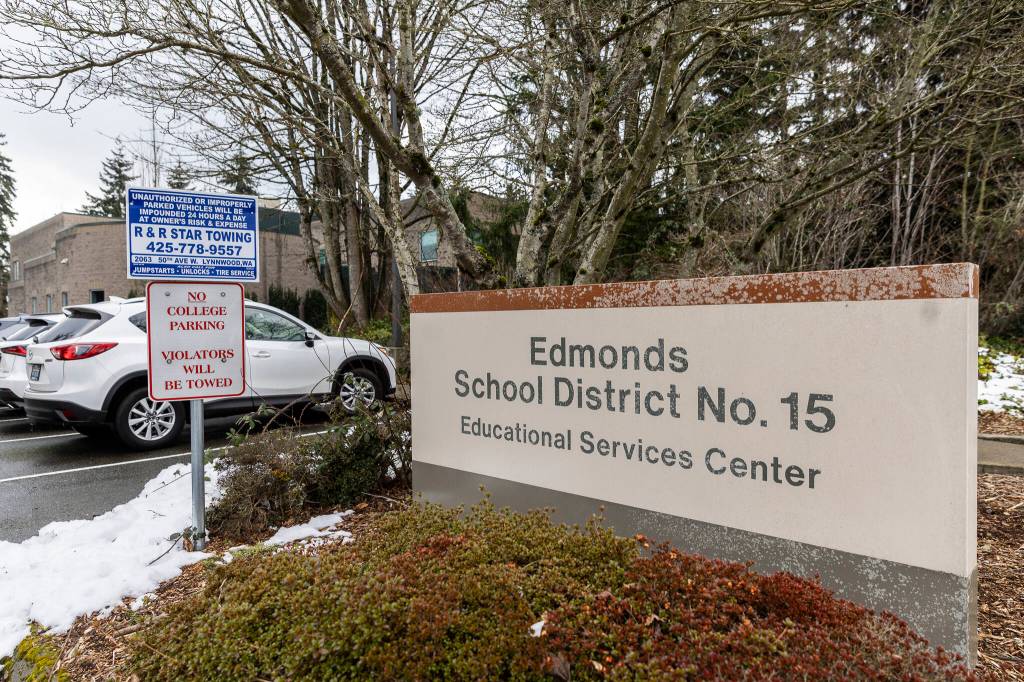
EVERETT — Edmonds School District parents have raised concerns about start time changes for next school year that will impact most of the district’s elementary schools.
Twelve of the district’s 20 elementary schools will move from an 8:45 a.m. start time to 7:20 a.m. Dismissal times will change from 3:15 p.m. to 1:50 p.m. The district announced the change June 2.
At a school board meeting Tuesday, parents said they worried the new start times would impact students’ sleep and make after-school child care more expensive.
Two years ago, a district task force began looking at start time changes — specifically moving high school start times later. The high schools currently start at 7:20 a.m. and would move to 8:05 a.m. under the new model. Multiple scientific studies have shown that early start times for adolescents can negatively impact health and well-being. In 2018, researchers at the University of Washington found that moving start times in Seattle high schools from 7:50 a.m. to 8:45 a.m. resulted in more sleep, higher grades and less tardiness and absences for students.
“Medical and sleep experts have consistently found that teenagers’ natural sleep cycles shift during adolescence, making it difficult for many students to fall asleep early enough to get the recommended amount of rest before an early school start time,” the Edmonds School District’s website says. “Studies have linked later start times to improved attendance, increased alertness, better academic performance, and positive mental health outcomes.”
But for elementary school children, a 7:20 a.m. start time could mean waking up at 6 a.m. to catch a bus, making it difficult to get the recommended nine to 12 hours of sleep each night.
“Teachers, doctors and parents tell us that getting enough sleep helps us learn better, stay healthy and manage stress and perform our best,” said Tobias, an 11-year-old student in the Edmonds School District, at Tuesday’s board meeting. “We hear this message all the time. This is why I find it a bit confusing that we are considering a schedule that would make it harder for many children like me to get the sleep that they need.”
Some parents worried about their children walking to bus stops in the dark in the winter.
“Young children would be walking, riding, waiting at the bus stop alone in the dark most of the year, and it’s very unsafe,” said Ashley Price, a parent whose child attends Cedar Way Elementary School, one of the schools affected by the change. “The mornings will be dark, wet and cold. A lot of neighborhoods do not have street lights or sidewalks.”
The district’s transportation program is budgeted at $19.1 million, or about 4% of the district’s total operating budget, district spokesperson Curtis Campbell said in an email Thursday. In Washington, the state reimburses districts based on an estimate of what transportation should cost according to certain characteristics, including the number of students transported, number of students receiving specialized transportation services, average distance students travel, and number of schools and stops served.
The district divides start times into four tiers: 7:20 a.m., 8:05 a.m., 8:45 a.m. and 9:25 a.m. To remove tiers, the district would need more buses to get the same amount of students to school in a shorter amount of time. To go down to two tiers, for example, the district would need an additional $40 million in transportation costs and $20 million for 120 new buses, Campbell said. Additionally, the district does not have enough drivers, and such a change would cut drivers’ hours in half, he said.
As of Friday, a parent-led, online petition urging the district to have every school start after 8 a.m. had more than 1,800 signatures.
While some previous proposals included shifting all school schedules later, that creates challenges at the end of the school day, Campbell said.
“As start times move later, dismissal times also move later, which affects activities, childcare, and family schedules,” he said. “Similar proposals were considered in the past and generated significant community concern regarding those impacts.”
Over the past two years, the district has sent out three community surveys regarding start and end times, which showed strong support for later high school start times, according to the district. Some parents said Tuesday they were frustrated that the surveys never directly asked if parents supported a 7:20 a.m. start time for elementary school students.
Others pointed out that most of the district’s Title I schools fall into the earliest tier. Title I is a federal funding program for schools in low-income neighborhoods. Ten of the 12 schools in the earliest tier are Title I schools.
The schools were chosen based on transportation and routing logistics, Campbell said, including “school locations, bus travel times, route efficiency, and the district’s ability to provide reliable transportation services across all schools.”
Some parents raised concerns about affording child care with a 1:50 p.m. dismissal time. Tom Kozaczynski, a parent of two students at Westgate Elementary, said child care in the area can range from $4,500 to $5,750 per year.
“The families who already face the greatest barriers to child care, transportation and before and after school support are the ones being asked to absorb the most disruptive schedule in the district,” he said. “That is not equity, that is actually the opposite of equity.”
High school students who serve on the school board as student representatives said they’d like to see a solution where no student has to start at 7:20 a.m. They were in favor of later start times for high school students so they could get adequate sleep. Some schools have a “zero period” for certain classes — including jazz band and some International Baccalaureate classes — which starts at 6:20 a.m. with the current schedule, said student representative Scarlett Luo, a senior at Edmonds-Woodway High School.
“I had a zero period … and I ended school at 4 p.m. some days, plus all the after-school activities, such as this, and all the homework,” she said. “I was averaging four to five hours of sleep at night, and that’s not even just me, that’s many of my classmates as well.”
Before public comment, school board President Nancy Katims said the board is continuing to listen to community feedback regarding start and end times.
“We have created a very long runway in terms of this whole initiative before any actions will be taken toward implementation, so there is plenty of time to allow additional input from our community,” she said.
Jenna Peterson: 425-339-3486; jenna.peterson@heraldnet.com; X: @jennarpetersonn.