In praise of turkey vultures, nature’s cleaning service
Published 1:30 am Sunday, June 26, 2022


By Monika Spykerman / The Columbian
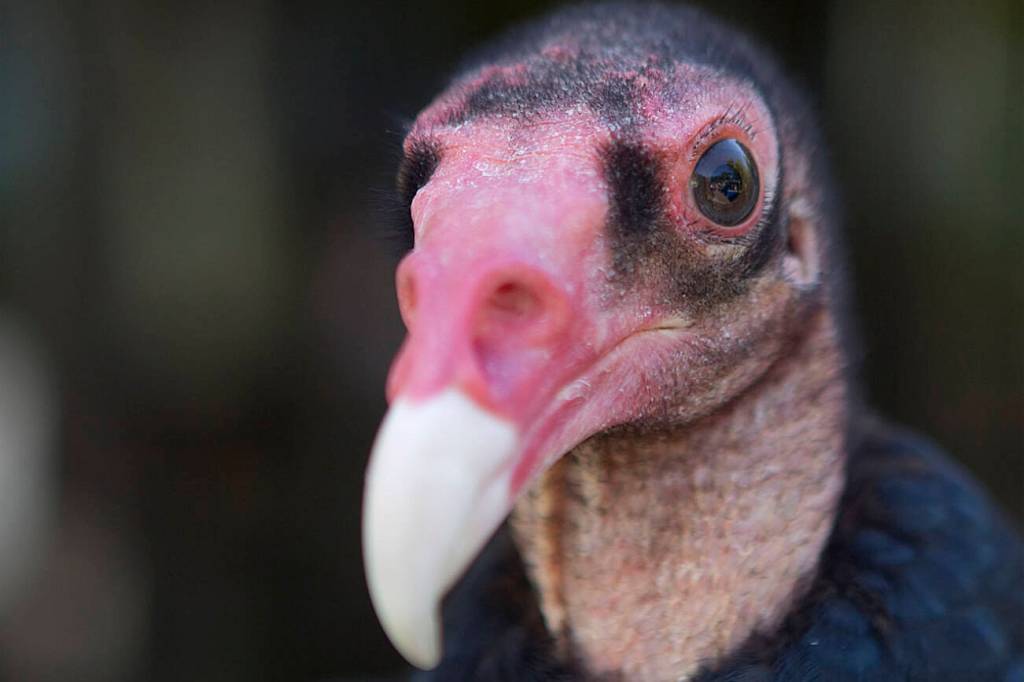
Turkey vultures are disgusting.
A few of their more stomach-turning features are featherless heads to help them reach deep into carcasses, pooping onto their own legs and projectile vomiting onto any perceived threat. It’s precisely these adaptations that make turkey vultures — the only species of vulture to live in Washington — so important. These birds serve as nature’s cleaning service, consuming recently dead animal matter that would otherwise be left to fester and spread disease. Turkey vultures should be revered, not reviled.
“They can eat food that would be toxic to just about any other animal. They have extremely strong digestive juices,” said Wilson Cady, founding member, past president and current board member of Vancouver Audubon. “They do a heck of a cleanup job. We’d be knee deep in dead animals if not for turkey vultures.”
Turkey vultures, also called turkey buzzards (though they’re not buzzards) and carrion crows, once hunted for food alongside California condors, Cady said. In fact, California condors were spotted by members of the Lewis and Clark expedition at the mouth of the Columbia River. (“They should have been called ‘Columbia condors,’ ” Cady quipped.)
“When condors were around, they used the turkey vultures to find food. Condors don’t have a sense of smell but turkey vultures can smell the food from a mile away,” Cady said. “A turkey vulture’s beak isn’t strong enough to break open the skin so they relied on the condor to open up the food for them. After the condors ate, the vultures would come in and eat.”
Turkey vultures, which are classified as raptors because of their meat-only diets, used to flock to the Columbia River to feast on the bodies of dead smelt that blanketed the shore after spawning, Cady said. The huge smelt runs are now, like condors over Northwest skies, a thing of the past. The condors left but turkey vultures stayed, relying on predators like coyotes to kill and rend the hides of animals. Once a predator is done feeding, that’s when the vultures get to work. They can devour a deer carcass in a couple of days, making neat work of a messy situation, Cady said. (He once aimed a time-lapse camera at a dead deer, he said, to see how long it would take.) Cars are probably a modern turkey vulture’s best friend, because they do such an effective job of killing and tearing the skin.
This is likely why turkey vultures are often visible above Highway 14, especially around Camas and Washougal and up the Columbia River Gorge into Skamania County. Here, they can find plenty of roadkill, and it’s also not too far from their preferred nesting spots — hidden nooks and crannies in remote cliffsides and rocky areas. They don’t build nests of organic material but lay their eggs on bare surfaces in a location that’s difficult for predators to access. Nurseries have to be hard to reach because chicks take 28 days to hatch and another 10 weeks to fly. Once they find a good spot, turkey vultures, who mate for life, will return to it for generations, Cady said.
A cliffside home offers another advantage: an easy way to get in the air. Turkey vultures are big birds, Cady said — 6 feet from wing tip to wing tip — and have a tough time getting airborne. A high launch point allows them to take advantage of warm updrafts.
“They’re a soaring bird and they prefer to use thermals to rise in the air. That’s why they used to roost near the Camas paper mill,” Cady said. “The steam coming up out of the stacks made a super-heated column of air. The vultures would come off the transmission towers and use that heat to circle up to several hundred feet before heading out.”
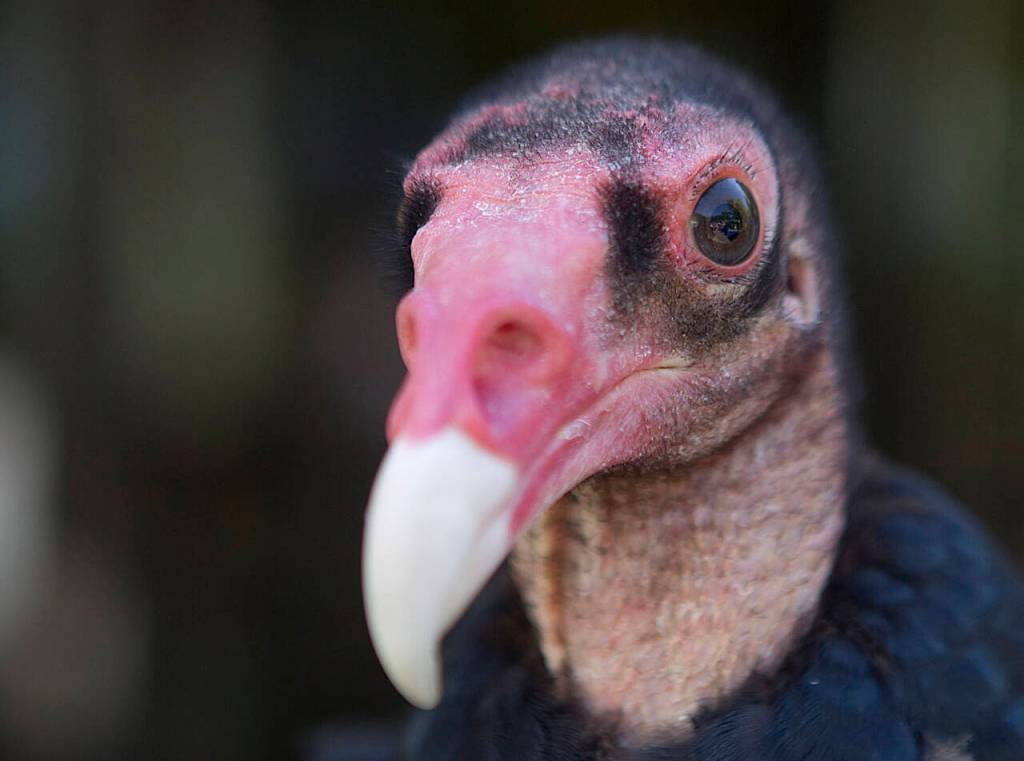
Vultures sniff the air for any scent of decay with their peculiar see-through noses. This “pervious nostril” allows air to flow straight into their sinuses and also allows them to easily expel any gunk that might get up there while feeding. Turkey vultures also have keen eyesight and can spot a large carcass from miles away, Cady said.
Contrary to their gruesome reputation, they prefer fresh meat to something that’s been rotting for a while. Even so, they won’t kill a living animal for food. They will, however, vomit into its eyes if they perceive that it poses a danger. The high acid content in a turkey vulture’s gut is strong enough to kill almost every pathogen it ingests, even anthrax, which makes it ideal for blinding attackers. The disorienting stench of regurgitated decomposing meat is another defensive bonus.
Turkey vultures use their digestive acids in another interesting way. Their dark feathers absorb a lot of heat, so to cool themselves off, they expel feces onto their legs where it forms a sort of crusty whitewash, Cady said. The acid in the poop conveniently kills any bacteria they might have picked up from standing in carrion.
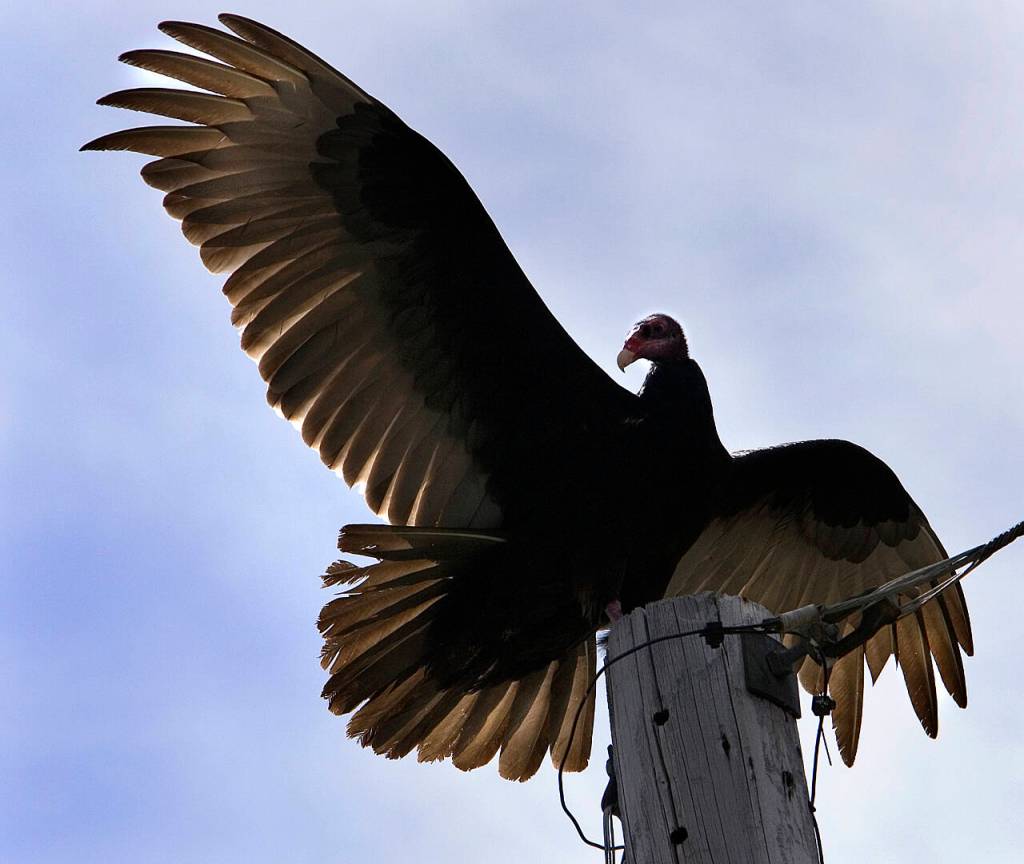
If you’re driving east on Highway 14 and wonder if you’re seeing turkey vultures overhead, watch how they fly, Cady said. Turkey vultures hold their wings slightly forward, in a loose V-shape, as opposed to an eagle, which holds its wings straight out in a T-formation. Turkey vultures also don’t flap much but teeter back and forth while soaring, adjusting their bodies to make the most of air currents. If the vulture is low enough to the ground, you might also see its distinctive white beak. If you see many turkey vultures circling together, that’s called a “kettle,” Cady said. Turkey vultures roosting in a group are a “committee” or a “venue,” while turkey vultures feeding together form a “wake.”
Don’t expect to see vultures in the late fall and winter. They’re migratory birds that overwinter in sunnier southern climes and flock back to our skies in late February or early March, Cady said.
“During the fall migration, they come down the Puget Trough and the Willamette Trough, between the Cascades and the Coast Range,” Cady said, referring to the ecoregions used as migratory routes. “People out in the Ridgefield area have counted 120 coming by in a day. My wife and I go up to the Ridgefield Wildlife Refuge during the fall migration and they just stream along the embankment, one after the other. Sometimes you see 30 or 40 birds in a circle, moving south as they glide.”
Monika Spykerman: 360-735-4556; monika.spykerman@columbian.com