Democratic debate was a boxing match over Medicare-for-all
Published 1:30 am Wednesday, July 31, 2019
By Paige Winfield Cunningham / The Washington Post
For pointers on how to attack Medicare-for-all, all President Donald Trump needs to do is watch last night’s Democratic debate.
Democrats who had been circling the ring on the Sen. Bernie Sanders’ pet proposal sure jumped in last night in Detroit.
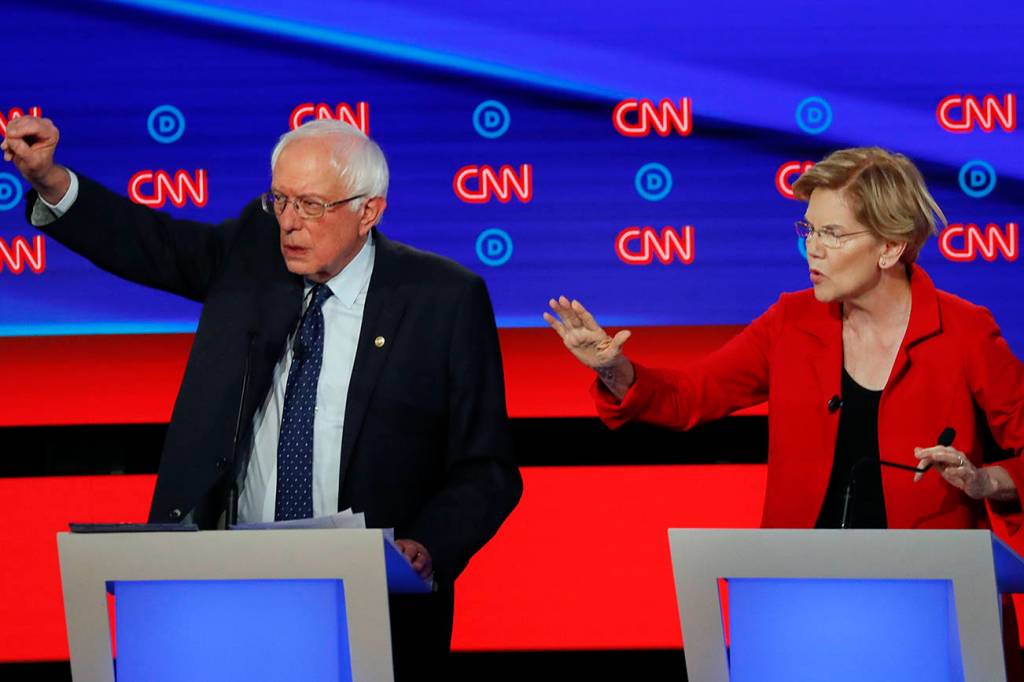
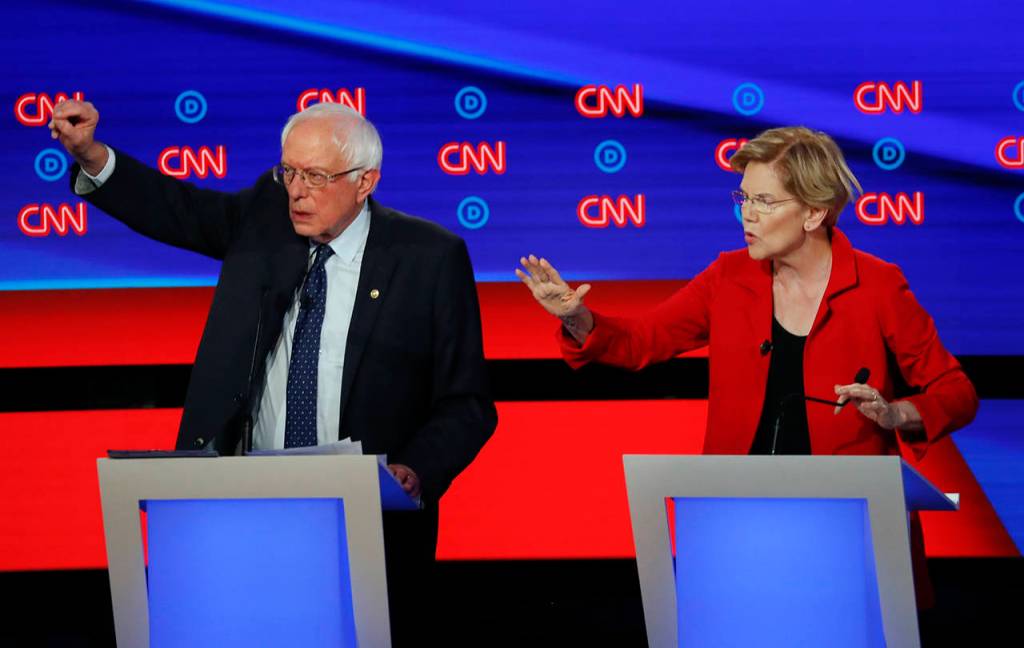
The debate’s first 25 minutes was spent in what amounted to a boxing match between Sanders, I-Vt., and Sen. Elizabeth Warren, D-Mass., who want to replace private plans with generous government coverage — and most of the other Democrats onstage, who lambasted that approach as terrible policy and predicted it might even cost their party the White House.
“We don’t have to go around and be the party of subtraction, telling half the country, who has private health insurance, that their health insurance is illegal,” former Rep. John Delaney, D-Md., told Sanders. “It’s also bad policy.”
Sanders fired back: “You’re wrong.”
And he accused Democratic rivals of distorting the facts.
The extensive volley of exchanges — in which every single one of the 10 candidates weighed in at least once — highlighted such sharp differences on the best way to achieve universal coverage that at one point, Warren even warned her fellow candidates against beating each other up too much over the issue.
“We are the Democrats, we are not about trying to take away health care from anyone,” Warren said. “That’s what Republicans are trying to do. And we should stop using Republican talking points in order to talk with each other about how to best provide that health care.”
Warren and Sanders, who stood next to each other on stage, were predictably the evening’s Medicare-for-all cheerleaders. But they were forced to defend it against an unprecedented barrage from candidates including Delaney, Sen. Amy Klobuchar, D-Minn., Montana Gov. Steve Bullock, Rep. Tim Ryan, D-Ohio, and former Colorado Gov. John Hickenlooper, who depicted Medicare-for-all as a heavy-handed system that would deprive Americans of the ability to choose the plan they want.
To Warren’s point: The attacks could very well have been lobbed by Republicans, who frequently deploy the “no-choices” theme to hit against virtually any Democratic health-care proposal (like Obamacare).
“It comes down to that question of Americans being used to being able to make choices, to have the right to make a decision,” Hickenlooper said.
Bullock said he won’t support “any plan that rips away quality health care from individuals.”
“This is an example of wish list economics,” he said. “It used to be just Republicans who wanted to repeal and replace. Now many Democrats do, as well.”
Ryan seized the opportunity of the debate being in Detroit, home of the United Auto workers union. He pointed to union workers, who, under Sanders’ plan, would lose the health benefits negotiated with their employers in lieu of a single, national plan.
“This plan that’s being offered by Senator Warren and Senator Sanders will tell those Union members who gave away wages in order to get good healthcare that they’re going to lose their healthcare because Washington’s going to come in and tell them they got a better plan,” Ryan said.
The division could be thought of this way: Candidates who want an “evolution” towards universal health coverage — where people are offered some combination of a public option and buying into Medicare or Medicaid – versus those who want an immediate “revolution” like what Sanders envisions.
That’s how Hickenlooper put it.
“If enough people choose it, it expands, the quality improves,” he said. “In 15 years you could get there, but it would be an evolution, not a revolution.”
The other main line of discussion was over whether Medicare-for-all would raise taxes on middle class Americans, a question the CNN moderators pressed several candidates on repeatedly. Sanders has proposed a 4 percent tax on employees, exempting families earning less than $29,000, as one way to pay for his plan. But he stresses the taxes would be more than offset because people would no longer have to pay premiums, deductibles and co-payments.
When moderator Jake Tapper tried to pin Warren down on whether she’d support raising taxes on middle-income earners, Warren left the door open without explicitly endorsing the idea. Overall health-care costs would go down for these people, she stressed.
“Middle-class families are going to pay less out of pocket for their health care,” she said. “For middle-class families, costs — total costs — will go down,” she said, after Tapper pressed her again.
Not even South Bend, Indiana, Mayor Pete Buttigeig was willing to say the middle class should pay higher taxes, or that people should be forced into it — even though he appeared more amenable to Medicare-for-all than the others.
Because the candidates had such a limited time to respond — and because they often cut in and interrupted each other — it wasn’t always entirely clear exactly how they’d present new coverage opportunities were they to be elected president.
Some said the Medicare buy-in age should be lowered. Others said the uninsured should be able to buy into it, and that it should be an option for everyone. Still others said a public option plan is the best way to go. Many wanted a combination of the two.
Buttigieg touted “Medicare-for-all-who-want-it,” where people could choose to join the program if they preferred it to commercial plans.
Former Rep. Beto O’Rourke said he wants “Medicare for America,” presumably referring to a bill in Congress allowing people to stay in qualified employer-sponsored coverage.
Delaney said his plan, “BetterCare,” would give people options and wouldn’t raise middle-class taxes.
Here are a few of the other key health care-related moments from the first round of the second Democratic debate:
Gun violence: Bullock called for tackling gun violence as a public health issue “not a political issue,” and said that while he’s a hunter and gun-owner, he was affected by gun violence when his 11-year-old nephew was shot and killed on a playground. Bullock and numerous others on the debate stage pointed to money in politics from groups like the National Rifle Association as the reason for lawmakers’ inaction on the issue.
After Minnesota Sen. Amy Klobuchar criticized Trump for saying he would support universal background checks before meeting with the NRA, Buttigieg lamented what he called the “exact same conversation we’ve been having since — since I was in high school. I was a junior when the Columbine shooting happened. I was part of the first generation that saw routine school shootings. We have now produced the second school shooting generation in this country.” Buttigieg also suggested there was support, including from a majority of Republicans, for universal background checks, as well as “common sense solutions like red flag laws that disarmed domestic abusers and flag mental health risks and an end to assault weapons.”
Heathcare for undocumented immigrants: Some of the more moderate candidates on the stage challenged Sanders’s proposal to offer health coverage for undocumented immigrants.
Bullock said: “We’ve got 100,00 people showing up at the border right now. If we decriminalize entry, if we give free healthcare to everyone, we’ll have multiples of that.” Ohio Rep. Tim Ryan agreed with Bullock and rejected the idea of free health coverage for undocumented immigrants. “Undocumented people can buy healthcare too. I mean everyone else in America is paying for their healthcare. I think — I don’t think it’s a stretch for us to ask undocumented people in the country to also pay for healthcare,” he said.
Sanders defended his proposal: “I happen to believe that when I talk about healthcare as a human right that applies to all people in this country, and under a Medicare for All single payer system, we could afford to do that.”
Hospital closures: Delaney claimed that “many hospitals would close” if they were paid at Medicare rates, challenging Sanders’s Medicare-for-all plan. In a fact-check, our Post colleague Salvador Rizzo points out that during the debate, Delaney scaled back a Four Pinocchio claim that all hospitals would close under such a plan, but also notes it’s not entirely clear how the Sanders plan would impact hospitals. “Health-care experts previously told us that under Sanders’s bill, some hospitals could close and some could cut staff or reduce services to cope with lower revenue from being paid at Medicare rates or at lower rates than they currently see,” Salvador writes. “Some rural hospitals are already struggling, so being paid at lower rates would compound their troubles. But some urban hospitals treating high volumes of uninsured patients could end up with more revenue. And Sanders says bureaucratic costs would decline because of reductions in hospitals’ billing-documentation requirements and red tape.”