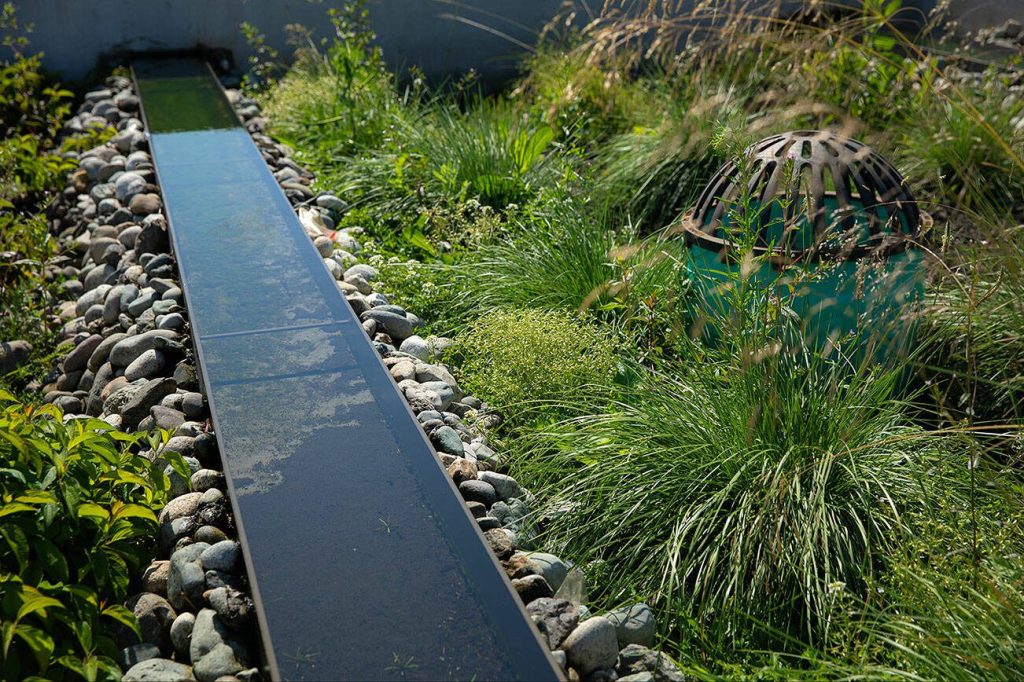
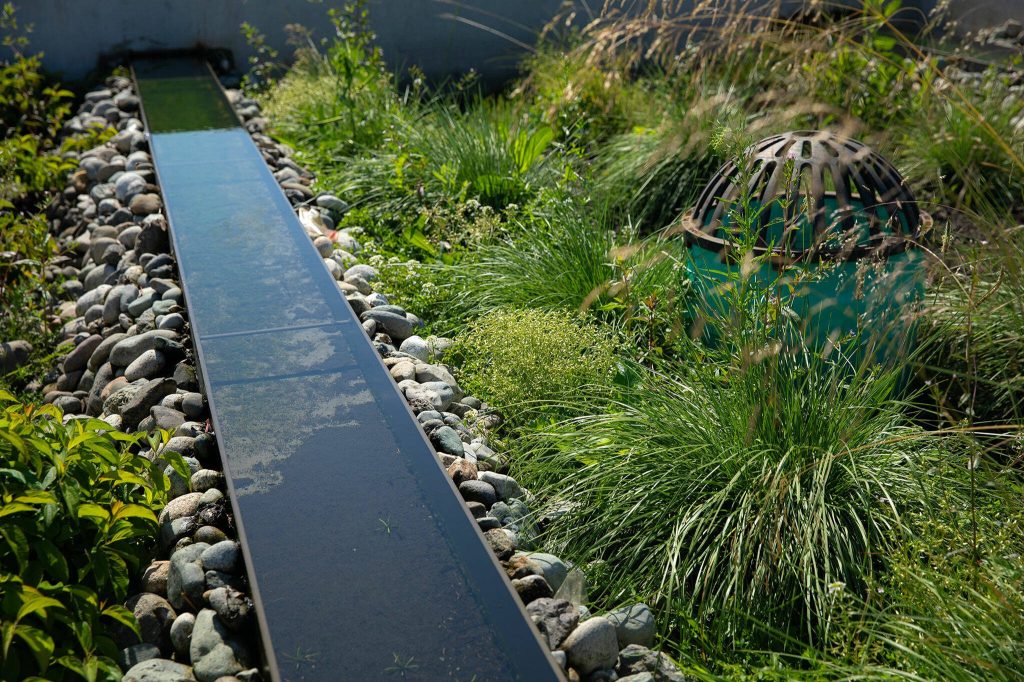
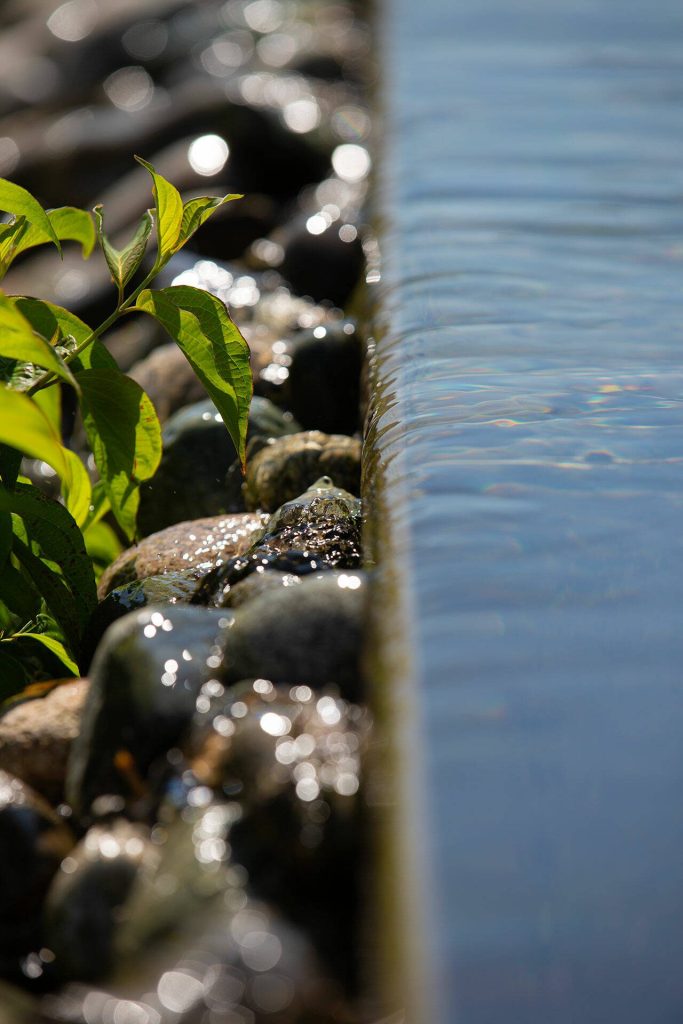
Components of downtown Marysville’s new stormwater treatment facility can be seen from the walkway on Thursday, July 11, 2024, in Marysville, Washington. While much of the treatment and filtering happens out of sight, visitors of the area will see troughs, left, spilling water out onto the surrounding landscape, which soaks up the filtered water before it makes its way into Ebey Slough. Overflow grates, right, help alleviate flooding during heavy rains. (Ryan Berry / The Herald)

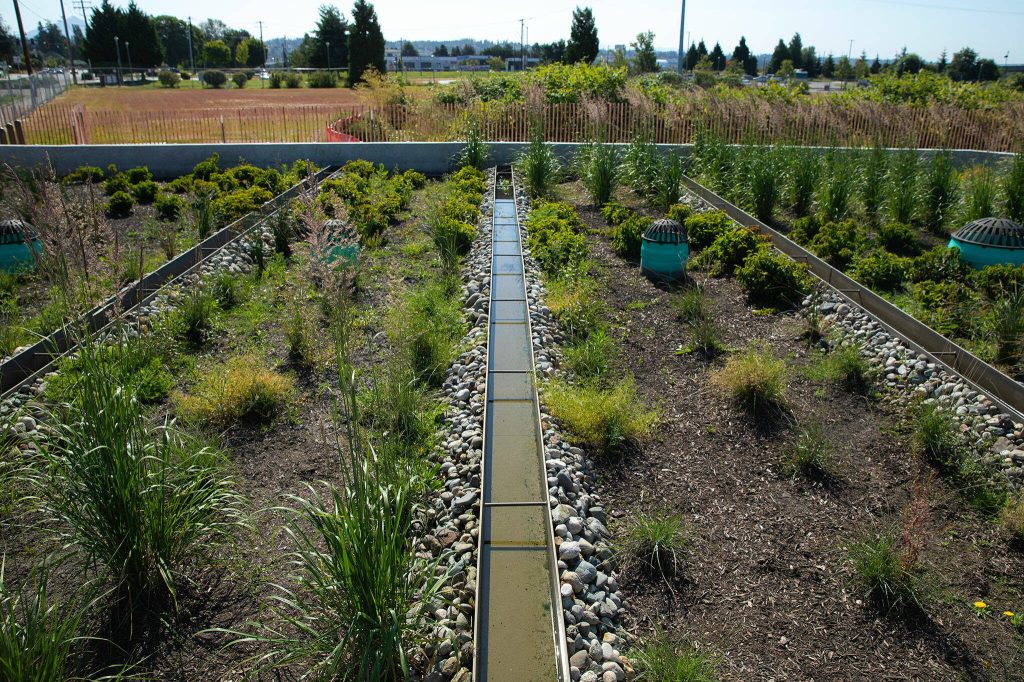
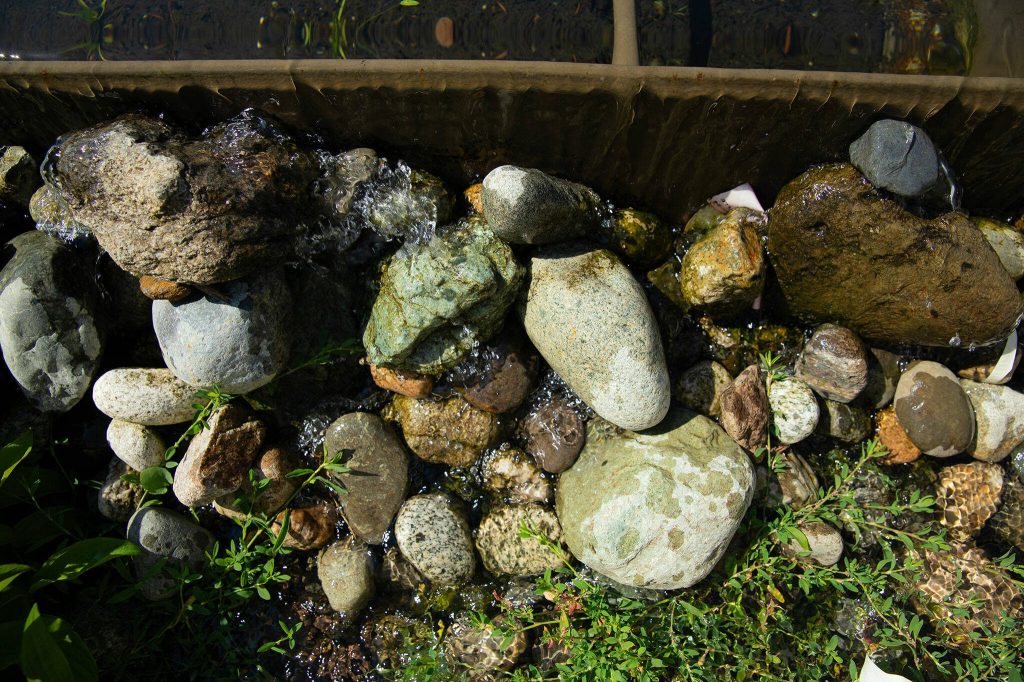
Components of downtown Marysville’s new stormwater treatment facility can be seen from the walkway on Thursday, July 11, 2024, in Marysville, Washington. While much of the treatment and filtering happens out of sight, visitors of the area will see troughs, left, spilling water out onto the surrounding landscape, which soaks up the filtered water before it makes its way into Ebey Slough. Overflow grates, right, help alleviate flooding during heavy rains. (Ryan Berry / The Herald)

At new Marysville water treatment facility, plants filter out pollutants

City officials expect the $14 million project to clean 110 million gallons of water every year, reducing harm to wildlife.

MARYSVILLE — The city’s new stormwater treatment plant isn’t landmarked by large tanks and pipes — or any buildings for that matter.

Near the shore of Ebey Slough, the plant — charged with treating 460 acres of urban runoff — looks like a park, with paved walkways and rows of native grasses.

The facility at 1304 First St. in Marysville incorporates new filtering technology never before seen at this scale, city officials said.

Inspired by a similar plant in Tacoma, the park designed by engineering companies Contech and Parametrix prevents pollutants like oils, fertilizers and pesticides from entering Ebey Slough and harming aquatic life.

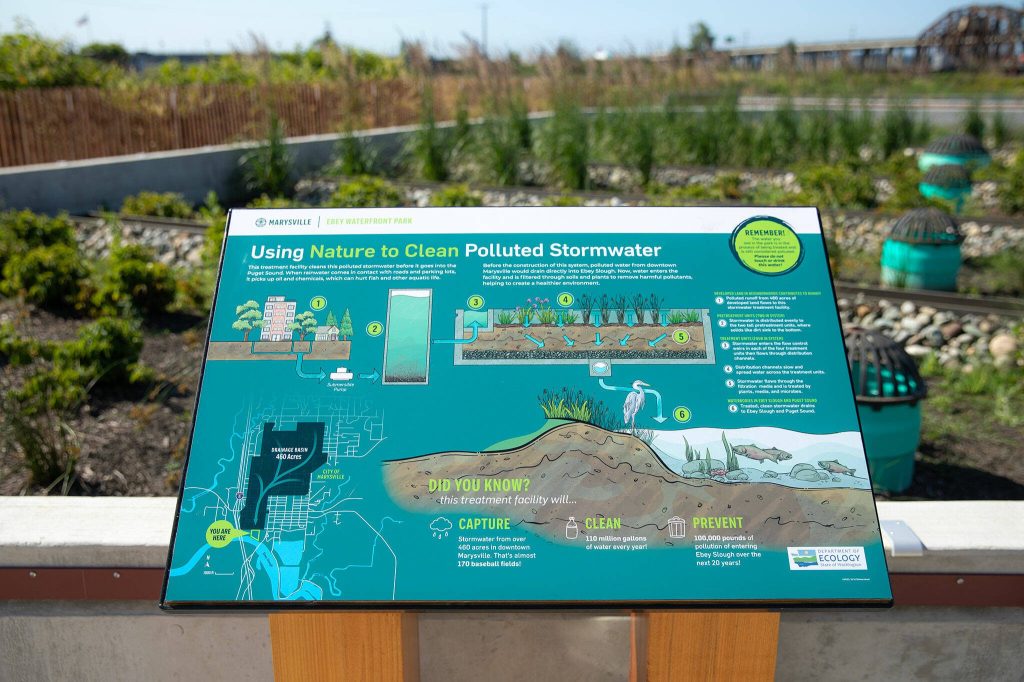
An interpretive sign describes the filtration process used at the downtown Marysville stormwater treatment plant on Thursday, July 11, 2024, in Marysville, Washington. (Ryan Berry / The Herald)

An interpretive sign describes the filtration process used at the downtown Marysville stormwater treatment plant on Thursday, July 11, 2024, in Marysville, Washington. (Ryan Berry / The Herald)

Runoff from downtown Marysville flows into an underground pipe system, directing the water to vaults where heavy debris, like dirt, sinks to the bottom. Then the runoff seeps into the garden’s channels — metal troughs patterned with rows of grasses. As the troughs overflow, water trickles in between stones and plants, sinking into what is called a “media filter” layer made of gravel and mulch. From there, the treated water spills out into Ebey Slough and eventually Puget Sound.

Experts familiar with the project expect the plant to clean 110 million gallons of water every year. The treatment plant, completed in May, cost the city about $14 million, with $7.6 million from state Department of Ecology grants.

If contractors had built a more traditional water treatment plant, “it would have required a larger footprint,” said Steven Miller, the city’s senior project manager.

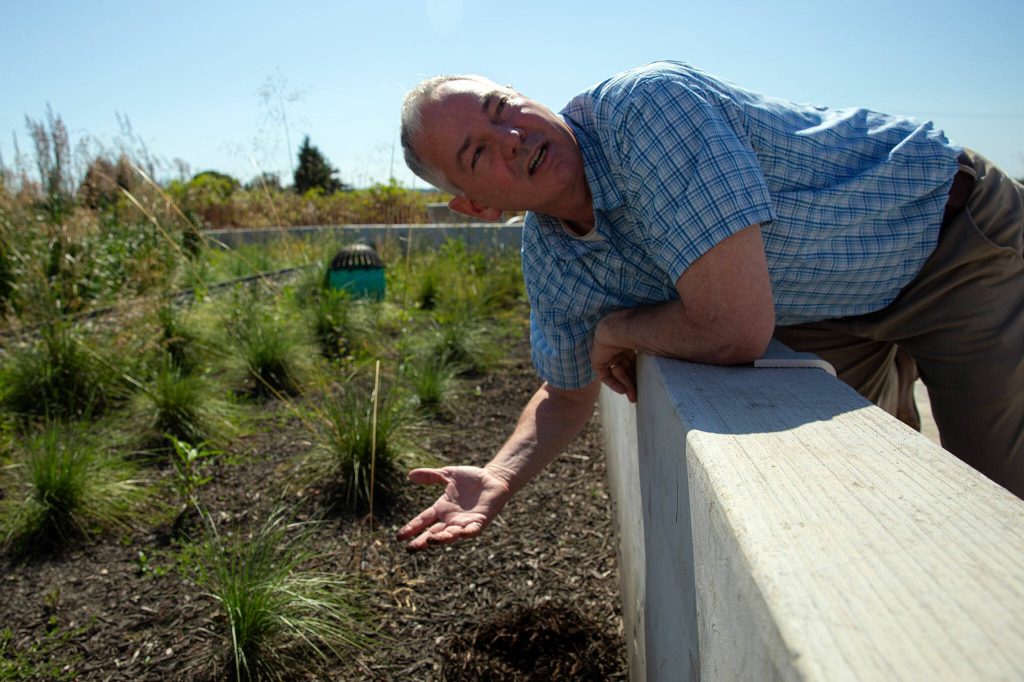
Senior Project Manager Steven Miller leans over to show the soil that filters stormwater at the downtown stormwater treatment plant on Thursday, July 11, 2024, in Marysville, Washington. (Ryan Berry / The Herald)

Senior Project Manager Steven Miller leans over to show the soil that filters stormwater at the downtown stormwater treatment plant on Thursday, July 11, 2024, in Marysville, Washington. (Ryan Berry / The Herald)

Workers would have had to develop more land and seek permission from BNSF Railway to construct a small channel under nearby railroad tracks.

Instead, the project “fit like a puzzle piece” next to Ebey Waterfront Park on a half-acre plot the city purchased in 2010, Miller said.

Project partners wanted to make the facility accessible, as a part of Marysville’s larger plan to develop the waterfront along Ebey Slough. City leaders have floated the idea of developing a $73 million sports hub there with hundreds of apartments and hotel rooms.

A section of downtown Marysville’s stormwater treatment facility is seen on Thursday, July 11, 2024, in Marysville, Washington. From the street, the facility mainly appears to be a park, but stormwater from downtown is being filtered below ground before spilling into the green space visitors can see. (Ryan Berry / The Herald)

A section of downtown Marysville’s stormwater treatment facility is seen on Thursday, July 11, 2024, in Marysville, Washington. From the street, the facility mainly appears to be a park, but stormwater from downtown is being filtered below ground before spilling into the green space visitors can see. (Ryan Berry / The Herald)

Untreated stormwater runoff is “the leading threat to Washington’s urban waters,” according to the state Department of Ecology. Chemicals, trash and animal manure accumulate in rain and snow melt, journeying over roofs and paved roads before discharging into rivers and lakes.

The pollutants can damage salmon and shellfish habitat, as well as contaminate groundwater and public swimming areas.

A chemical that helps car tires last longer, 6PPD, is lethal to coho salmon, endangering the fish when they migrate near stormwater runoff drains.

Green infrastructure like Marysville’s new treatment facility may help reduce wildlife exposure to 6PPD. Researchers are currently analyzing whether the new filtering technology used at the park can remove this specific contaminant, Miller said.

In the future, city staff will need to occasionally replace the mulch and plants at the treatment facility, Miller said. But other than that, the plant will require little maintenance.

Ta’Leah Van Sistine: 425-339-3460; taleah.vansistine@heraldnet.com; Twitter: @TaLeahRoseV.

Talk to us

> Give us your news tips.

> Send us a letter to the editor.

> More Herald contact information.

More in Local News

Darryl Dyck file photo
Mohammed Asif, an Indian national, conspired with others to bill Medicare for COVID-19 and other respiratory tests that hadn’t been ordered or performed, according to a U.S. Department of Justice press release.
Man sentenced to 2 years in prison for $1 million health care fraud scheme

Mohammed Asif, 35, owned an Everett-based testing laboratory and billed Medicare for COVID-19 tests that patients never received.

Snohomish County Fire District No. 4 and Snohomish Regional Fire and Rescue responded to a two-vehicle head-on collision on U.S. 2 on Feb. 21, 2024, in Snohomish. (Snohomish County Fire District #4)
Family of Monroe woman killed in U.S. 2 crash sues WSDOT for $50 million

The wrongful death lawsuit filed in Snohomish County Superior Court on Nov. 24 alleges the agency’s negligence led to Tu Lam’s death.

Judy Tuohy, the executive director of the Schack Art Center, in 2024. (Olivia Vanni / The Herald)
Director of Everett’s Schack Art Center announces retirement

Judy Tuohy, also a city council member, will step down from the executive director role next year after 32 years in the position.

Human trafficking probe nets arrest of Calif. man, rescue of 17-year-old girl

The investigation by multiple agencies culminated with the arrest of a California man in Snohomish County.

A Flock Safety camera on the corner of 64th Avenue West and 196th Street Southwest on Oct. 28, 2025 in Lynnwood, Washington. (Olivia Vanni / The Herald)
Everett seeks SnoCo judgment that Flock footage is not public record

The filing comes after a Skagit County judge ruled Flock footage is subject to records requests. That ruling is under appeal.

Information panels on display as a part of the national exhibit being showcased at Edmonds College on Nov. 19, 2025 in Lynnwood, Washington. (Olivia Vanni / The Herald)
Edmonds College hosts new climate change and community resilience exhibit

Through Jan. 21, visit the school library in Lynnwood to learn about how climate change is affecting weather patterns and landscapes and how communities are adapting.

Lynnwood City Council members gather for a meeting on Monday, March 17, 2025 in Lynnwood, Washington. (Olivia Vanni / The Herald)
Lynnwood raises property, utility taxes amid budget shortfall

The council approved a 24% property tax increase, lower than the 53% it was allowed to enact without voter approval.

Lynnwood
Lynnwood hygiene center requires community support to remain open

The Jean Kim Foundation needs to raise $500,000 by the end of the year. The center provides showers to people experiencing homelessness.

Logo for news use featuring Snohomish County, Washington. 220118
Vending machines offer hope in Snohomish County in time for the holidays.

Mariners’ radio announcer Rick Rizzs will help launch a Light The World Giving Machine Tuesday in Lynnwood. A second will be available in Arlington on Dec. 13.

UW student from Mukilteo receives Rhodes Scholarship

Shubham Bansal, who grew up in Mukilteo, is the first UW student to receive the prestigous scholarship since 2012.

Roger Sharp looks over memorabilia from the USS Belknap in his home in Marysville on Nov. 14, 2025. (Will Geschke / The Herald)
‘A gigantic inferno’: 50 years later, Marysville vet recalls warship collision

The USS Belknap ran into the USS John F. Kennedy on Nov. 22, 1975. The ensuing events were unforgettable.

Ashley Evans sits in a boat while her husband Chaz McNabb pushes out into the deeper floodwater to get back to their home along Skywall Drive on Thursday, Dec. 11, 2025 in Sultan, Washington. (Olivia Vanni / The Herald)
Health department issues safety guidance for flood clean-up

Residents should avoid contact with floodwater and look for structural damage, gas leaks and downed power lines.

Support local journalism

If you value local news, make a gift now to support the trusted journalism you get in The Daily Herald. Donations processed in this system are not tax deductible.