Everett-based Funko: ‘Serious doubt’ it can continue without new owner or funding
Published 2:30 pm Friday, November 14, 2025




EVERETT — Everett-based Funko, Inc. warned in its last financial filing that, without new funding or a new owner, there is “substantial doubt” about its ability to continue operations for another 12 months.
In its latest financial filing with the Securities and Exchange Commission on Nov. 6, Funko stated that it continues to operate at a loss and does not have sufficient cash reserves to fully repay its $241 million in loans, which mature in September 2026.
The pop culture collectables company cites economic uncertainty due to rapid changes in the global economy from tariffs as the cause of its problems. It said the resulting consequences are falling consumer demand for its products, supply chain problems and increased distribution costs. Funko manufactures almost all of its products overseas.
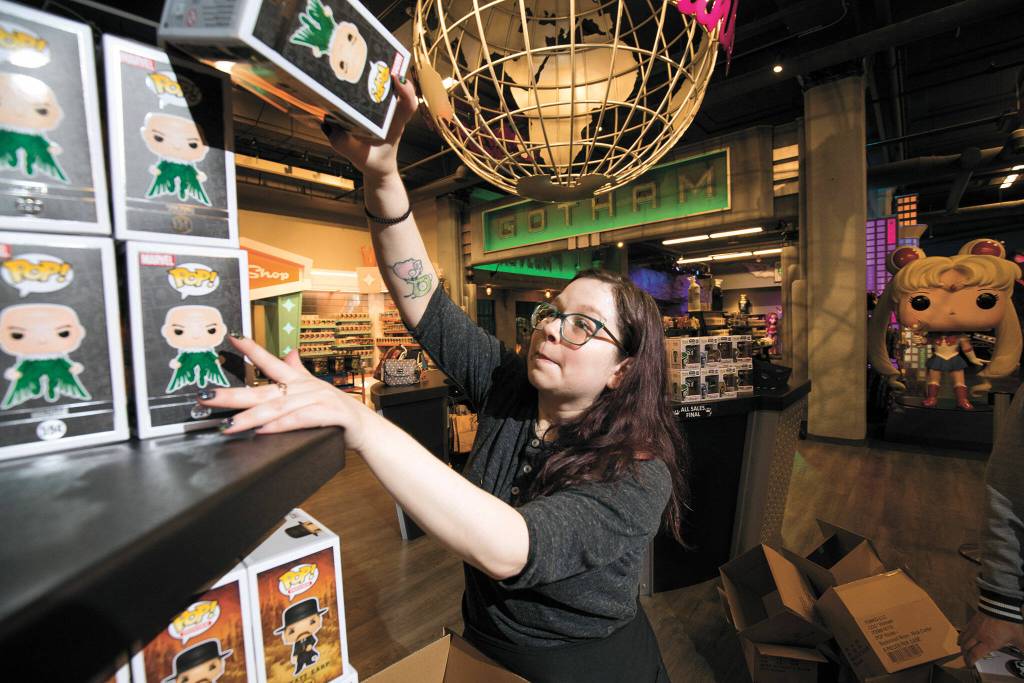
Funko’s main headquarters remains in downtown Everett, as well as a retail store that is stocked with hundreds of different vinyl figurines based on characters from movies, television and comic books. Funko also operates a retail store in Los Angeles.
The collectables company said that it had lost $1 million in the third quarter ending Sept. 30, a decline from the more than $8 million profit it had made during the same quarter a year earlier. Sales of its pop culture vinyl figures and, to a smaller extent, bobbleheads, totaled $250.9 million, a decline of more than 14% in the Sept. 30 quarter from a year earlier, Funko said.
James Zahn, editor-in-chief of industry trade publication “The Toy Book,” said Funko has been hard hit by the Trump administration’s 20% reciprocal tariff rate on exports from Vietnam, where it manufactures most of its products.
“The profit margin has become smaller,” he said in an interview Friday.
Zahn also said that some of Funko’s collectables have become “ubiquitous” and have lost their appeal.
He said some characters have been overproduced.
Representatives from Funko did not immediately respond to a request for comment.
On the same day of the Funko financial report, new CEO Josh Simon outlined a turnaround plan in an earnings statement.
“I’m only 60 days into the role, but it’s already clear how powerful the Funko brand is and how much growth opportunity lies ahead,” Simon said.
He stressed in the statement that the company’s new emphasis on quick product introductions will generate sales like Pop! vinyl figures based on characters from KPop Demon Hunters, a popular 2025 animated film about a popular South Korean girl group that secretly fights demons with their music.
“Beginning with lightning-fast launches like KPop Demon Hunters—where we’ll be one of the only licensees on shelves this holiday season—we’re moving fast to turn pop culture into products, expanding into new fandoms, delivering bold retail experiences, and celebrating the creativity that makes Funko unique,” he said
Zahn said KPop Demon Hunters should help Simon with his plan to boost Funko’s business because the vinyl figures should be on retailers’ shelves for the holiday season. “That’s going to be a big win for them because what Funko has that no other toy company has is speed to market,” he said.
Zahn said one particularly troublesome business line for Funko is its Mondo division, which manufactures high-end collectible toys such as soft vinyl figures, statues, as well as vinyl records.
“It’s hard to sell in an economic downturn,” he said.
Funko’s third-quarter financial results show that Mondo’s revenue of $5.8 million was down 67% from the same quarter a year earlier.
The Mondo website lists items, such as a one-sixth-inch Batman and Spider-Man figures for $220, but also has merchandise that goes as high as $800.
Funko reported concerns about its ability to stay in business in its first-quarter financial filing in May and financial issues have continued since then, earnings filings show.
A big continuing problem for Funko is its debt.
While Funko’s reported debt of $241 million as of Sept 30 is slightly down from the $256.6 million Funko reported as of June 30, it’s up from $182.8 million at the end of December last year. Funko announced in July that it had engaged firm Moelis & Company as an adviser to examine refinancing arrangements while it also restructured its existing loan agreement.
The last time Funko made a profit was in the second quarter of 2024, when it earned $5.4 million, according to the company’s financial reports.
The company, in its latest earnings statement, said it expected a modest increase in sales in the fourth quarter of 2025 without going into specifics.
New Funko CEO Simon is the third person to fill the role as the company’s top executive in the year between November 2024 and November 2025.
Simon was serving as vice president of consumer products at Netflix when he was tapped in August to be Funko’s new CEO
Former Funko CEO Cynthia Williams was let go in July. Williams, a former executive at Hasbro, only led Funko for 14 months before her sudden departure.
Funko board member Michael Lunsford served as interim CEO while the company searched for a permanent replacement.
In 2022, Funko laid off 258 workers in both its Everett and Puyallup warehouses when it opened a distribution center in Arizona.
Randy Diamond: 425-339-3097; randy.diamond@heraldnet.com.