Everett man’s cannabis DUI challenge rejected by state Supreme Court
Published 1:44 pm Thursday, May 12, 2022
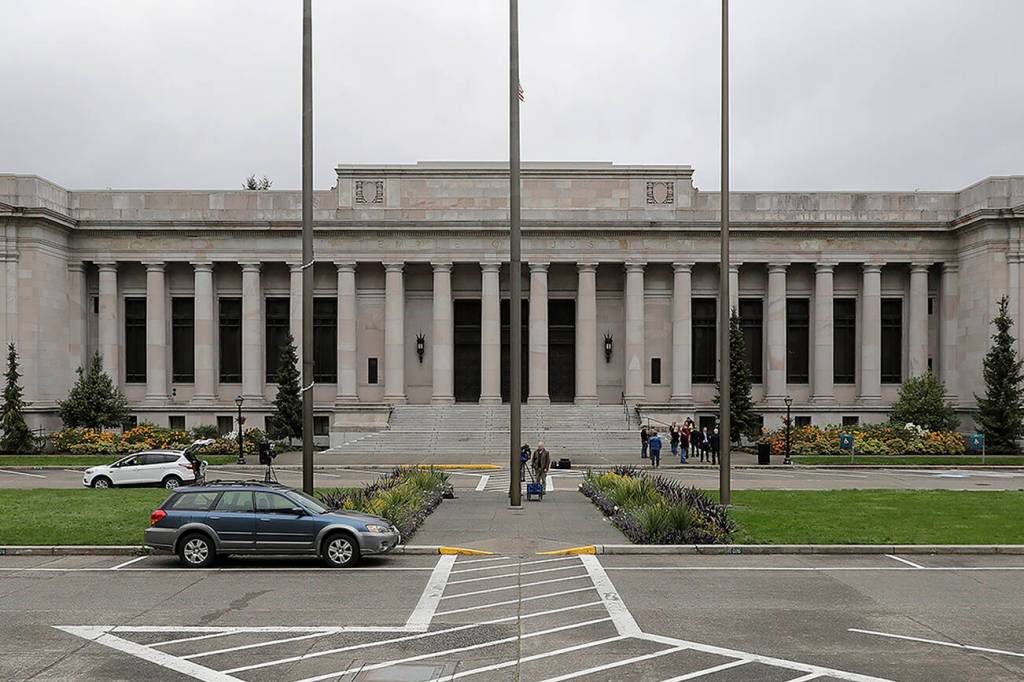
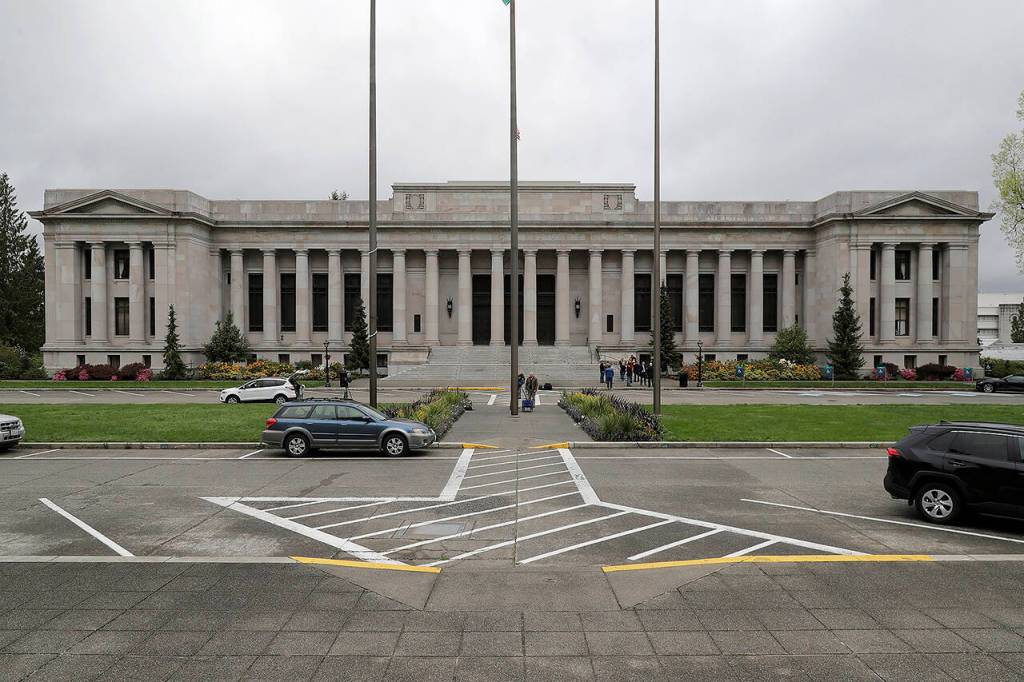


OLYMPIA — The state Supreme Court upheld Washington’s law making it illegal to drive under the influence of cannabis Thursday, a statute put in place by voters as part of the 2012 initiative legalizing marijuana.
Justices unanimously rejected a Snohomish County man’s contention that the law is unconstitutionally vague and irrational because the standard used for determining whether a person is impaired is not supported by scientific evidence.
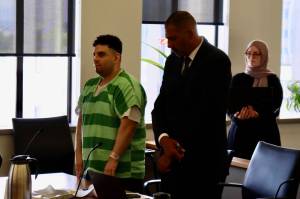
Douglas Fraser III, 29, of Everett, further argued he had a legal right to consume cannabis and drive, as long as he didn’t consume so much it affected his driving.
The court disagreed.
“While one can legally drink and drive, one can be found guilty of DUI when their driving is affected or their BAC (blood alcohol content) is above the legal limit,” Justice G. Helen Whitener wrote in the ruling. “And if someone has a BAC above the legal limit, they are guilty of DUI even if their driving is not impaired. The same is true for consumption of cannabis and driving.”
Ten years ago, voters approved Initiative 502, which legalized the growing, processing and selling of cannabis for recreational use to adults 21 years and older. The measure established regulations and taxes for the new industry.
And it modified the state’s driving under the influence so a person could be guilty of DUI if, within two hours after driving, the concentration level of tetrahydrocannabinol (THC) in their blood is 5.0 nanograms per milliliter or higher.
Around 6:30 p.m. on July 11, 2017, a trooper clocked Fraser at 81 mph going north on I-5 near the Everett Mall. The trooper reported seeing Fraser driving by himself in the HOV lane, erratically changing lanes and cutting off another driver, causing that person to slam on their brakes.
When the trooper pulled him over, Fraser was slightly sweating, had “very dark gray circles around his eyes” and had “full-body tremors,” according to court documents. The trooper didn’t smell any cannabis or other intoxicants.
Fraser apologized for driving aggressively. He said he was in a rush to pick up his son. When he saw the trooper looking at his employee badge for a marijuana dispensary, he quickly took it off and hung it around his rear-view mirror. He later testified that it’s “just general knowledge” to not be wearing anything marijuana-related.
“And so once I had noticed that the trooper saw it, I kind of realized my fate at that point,” Fraser said.
He reportedly told the trooper it had been about a half-day since he last smoked marijuana. He later testified it was nearly a day. He smoked marijuana at night, after he got home, to deal with chronic pain and help him sleep, he said in court. He had broken his legs years earlier, he said, when a DUI driver crashed into his vehicle.
Field sobriety tests indicated Fraser was under the influence of marijuana, the trooper reported. Fraser then consented to a blood draw, rather than make the trooper get a search warrant. He agreed, he later testified, because he felt he wasn’t under the influence.
“I wasn’t knowingly breaking that specific law that I was being arrested for, so I felt like I didn’t have much to worry about,” he said in court, noting he also didn’t bother to consult with a lawyer. “I felt a blood test would come back perfect and I’d never get subpoenaed, but here I am.”
Fraser said by consenting, he thought he’d get home faster, to see his family.
His test came back positive for 9.4 nanograms per milliliter, plus or minus a couple nanograms.
Fraser’s case went to a bench trial in Everett District Court in October 2019. The court found him guilty of driving under the influence of marijuana, on the basis that his blood tested to have THC content above the legal limit. Judge Anthony Howard sentenced him the same day, to 15 days of electronic home monitoring.
Fraser appealed to Snohomish County Superior Court. There he argued with the aid of an expert witness and a batch of studies that there is no scientific evidence showing all drivers are impaired at a specific concentration of THC in their blood. Thus the law’s 5 nanograms per milliliter standard is overly broad and its enforcement an improper use of the state’s police powers, according to his legal argument.
Superior Court Judge Anna Alexander denied the appeal. The Supreme Court took the case on direct review.
Justices acknowledged that while there may not be a universal THC blood level akin to the 0.08 BAC for alcohol impairment, “the studies do show that THC levels above 5.00 ng/mL are indicative of recent consumption in most users,” Whitener wrote.
That standard serves as a bright line rule that protects against arbitrary enforcement and puts any one who consumes cannabis on notice that, if they drive, they may be above the legal limit and subject to arrest.
“Detecting and preventing impaired driving and cultivating highway safety is the exact evil that this law aims to prevent and the exact public safety the law seeks to promote,” she wrote.
Without a THC standard, it would be a much more difficult task proving a person was driving under the influence of cannabis, said Seth Fine, assistant chief criminal deputy prosecutor for Snohomish County, who handled the case.
Had Fraser prevailed, an estimated 200 DUI cannabis cases in Snohomish County alone would have been affected, officials said.
This case dealt with the “mythology” surrounding one’s driving performance and the consumption of cannabis, Fine said.
“Many users think that their driving is not impaired — and some even think their driving is improved. The scientific evidence is the contrary,” he said. “The take home (message) is don’t drive for several hours after using cannabis in any form.”
Reporter Zachariah Bryan contributed to this story.
Jerry Cornfield: 360-352-8623; jcornfield@heraldnet.com; Twitter: @dospueblos.