NTSB: Everett-based Titan imploded partly because of faulty engineering
Published 10:30 am Thursday, October 16, 2025
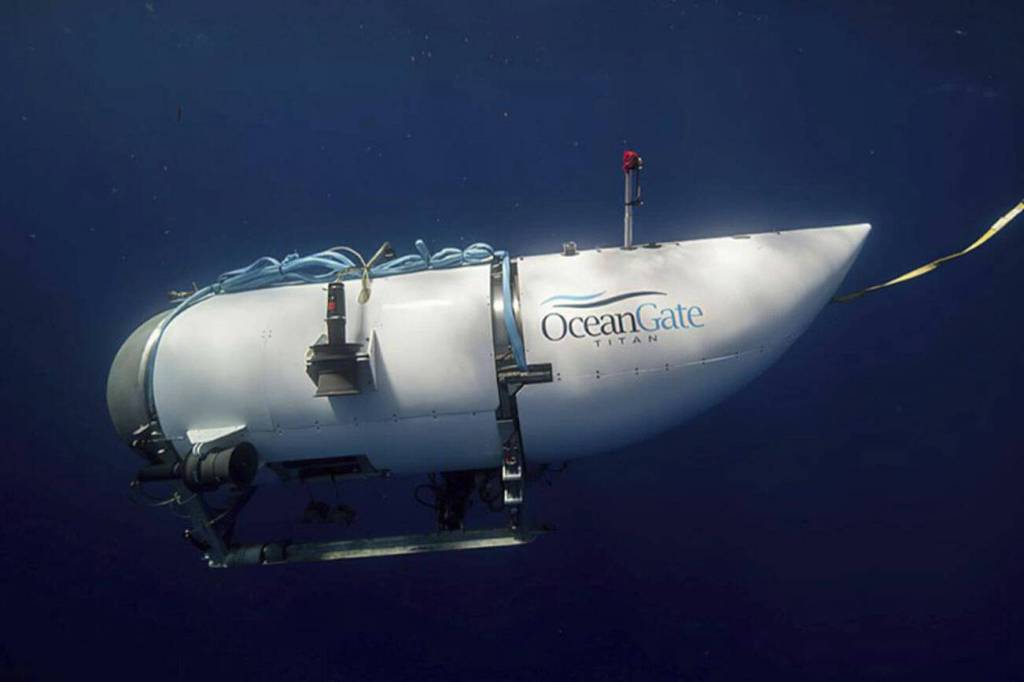


Federal investigators have concluded that faulty engineering and undetected damage doomed the experimental submersible Titan, which imploded during a 2023 dive to the wreckage of the Titanic, killing all five people aboard.
In its final report, released Wednesday, the National Transportation Safety Board found the carbon-fiber hull was compromised by design flaws and damage from earlier dives that OceanGate, the company that owns and operates the vessel, failed to investigate. The submersible, the board said, “failed to meet necessary strength and durability requirements.”
The 87-page report painted a picture of an ambitious project pursued without adequate safeguards. Investigators said OceanGate skipped critical safety testing and misunderstood the limits of the carbon-fiber material that formed the Titan’s hull, using a material with a strength “likely much lower than their target.”
The Titan vanished June 18, 2023, about 90 minutes into its descent toward the sunken Titanic, which is about 12,500 feet, or 2 1/2 miles, below the surface of the North Atlantic. On board were OceanGate’s founder and pilot, Stockton Rush, and four passengers: Shahzada Dawood, a British Pakistani businessperson; Dawood’s 19-year-old son, Suleman; Hamish Harding, a British aviation tycoon and explorer; and Paul-Henri Nargeolet, a French American maritime and Titanic expert.
As the submersible approached the seabed about 400 miles off the coast of Newfoundland, Canada, the “Titan’s pressure hull failed, and the vessel imploded,” according to the report. The implosion instantly killed all five people on board.
The submersible’s wreckage was discovered four days later by a remotely operated vehicle.
The finding echoes those of a Coast Guard report released in August, which also described the disaster as preventable.
Both reports faulted OceanGate for disregarding warning signs from earlier dives, including one in which the Titan became briefly entangled with the Titanic’s wreckage. On several occasions, investigators found, the company failed to inspect or assess possible damage to the hull before using the submersible again.
OceanGate, based in Everett, Washington, had promoted the Titan as a breakthrough in deep-ocean exploration. The hull’s central cylinder used carbon fiber, not the more expensive titanium used in other submersibles. That apparent innovation, investigators said, ultimately became its weakness.
“We found that OceanGate’s engineering process for the Titan was inadequate,” the NTSB’s report said.
OceanGate could not be reached for comment. The company’s website has been reduced to a logo and one sentence: “OceanGate has suspended all exploration and commercial operations.”
The NTSB urged the Coast Guard to convene a panel of experts to study the safety of submersibles and other human-occupied pressure vessels. It also recommended that the Coast Guard write new rules based on that study and share its findings across the private exploration industry, which has expanded rapidly in recent years.
Current regulations and voluntary guidance for small passenger vessels, the report said, “enabled OceanGate’s operation of the Titan in an unsafe manner.”
Nargeolet’s family filed a wrongful-death lawsuit in 2024 that accused Rush of negligence and misleading Nargeolet about how the submersible was built. The lawsuit remains unresolved.