Tom Murdoch gives public comment to the Snohomish County Council about his disagreement with the proposed wetland ordinance amendments on Wednesday, Jan. 15, 2025 in Everett, Washington. (Olivia Vanni / The Herald)

Tom Murdoch gives public comment to the Snohomish County Council about his disagreement with the proposed wetland ordinance amendments on Wednesday, Jan. 15, 2025 in Everett, Washington. (Olivia Vanni / The Herald)

Snohomish County delays decision on changes to habitat ordinance

The delay comes after comments focused on proposed changes that would allow buffer reductions around critical areas.

EVERETT — The Snohomish County Council postponed a decision on its Critical Area Regulations ordinance Wednesday, the county code that protects wetlands, streams and other critical habitats.

The move comes after more than 20 people signed up to speak during a public hearing about the proposed ordinance. More than 100 watched the meeting online.

Most of the testimonies focused on the amendments, proposed by council members Jared Mead and Nate Nehring.

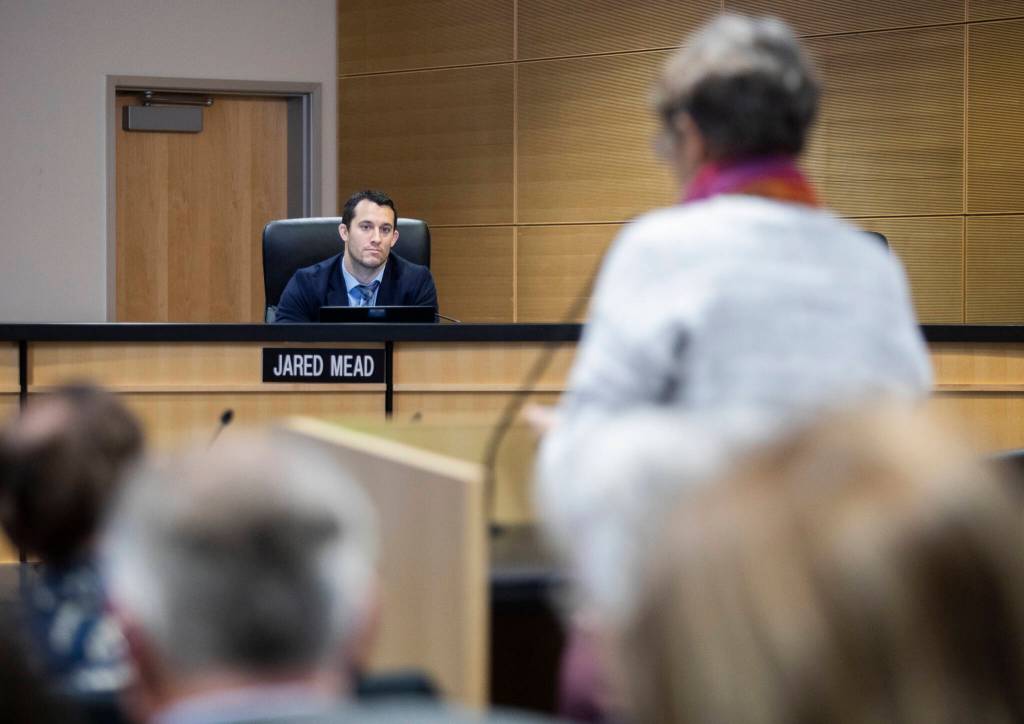
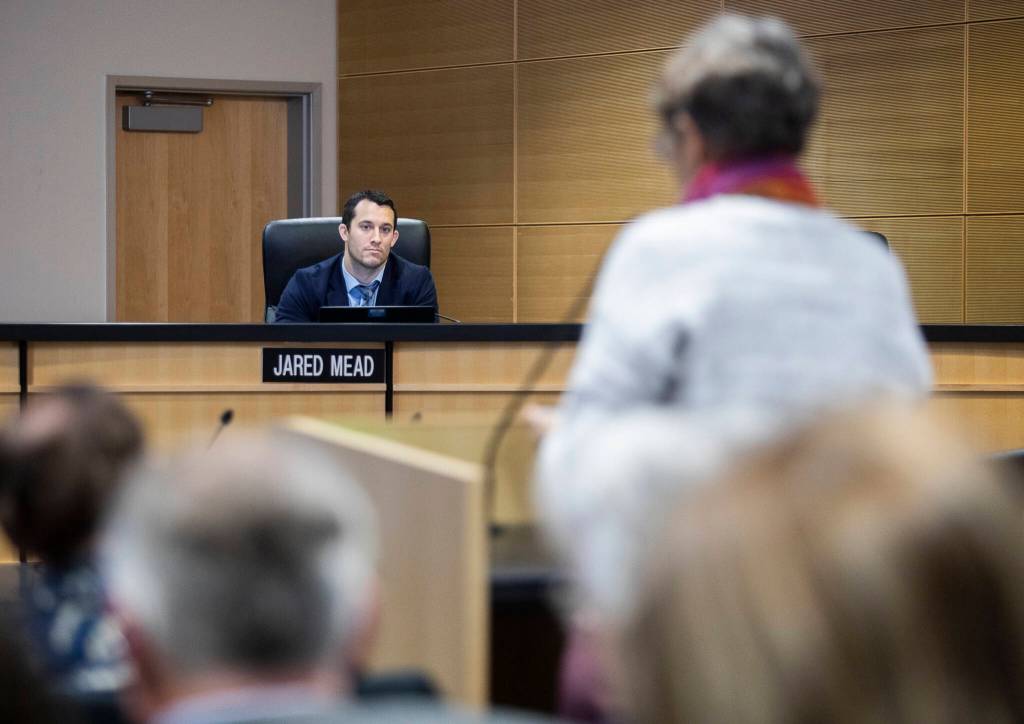
Snohomish County Council member Jared Mead listens to public comment on the proposed wetland ordinance amendments on Wednesday, Jan. 15, 2025 in Everett, Washington. (Olivia Vanni / The Herald)

Snohomish County Council member Jared Mead listens to public comment on the proposed wetland ordinance amendments on Wednesday, Jan. 15, 2025 in Everett, Washington. (Olivia Vanni / The Herald)

The proposed changes are based on the county’s 2006 Best Available Science report, a compilation of data and information local governments can rely on to create and implement policy.

The amendments would allow a 15% reduction in buffers around critical areas when a fence is built around a habitat. The language would also reduce the standard buffer requirement for streams, lakes, marine waters and wetlands over 4,000 square feet by 50% or 25 feet, meaning development would be allowed to encroach closer to fragile environments. The amendments also would allow wetlands under 4,000 square feet to be filled in some situations.

Many commenters brought up dwindling salmon and orca populations as a result to threats to their habitats.

“We also have 3 billion, 30% of our birds, gone in the last 50 years because we haven’t protected their habitat,” said Bill Derry, president of Pilchuck Audubon Society. “These birds use the very habitat and buffers you’re proposing to decrease. It’s not just fish and orcas. Northwest frogs are endangered. Our turtles are endangered. These are dependent on wetlands and the areas around the wetlands.”

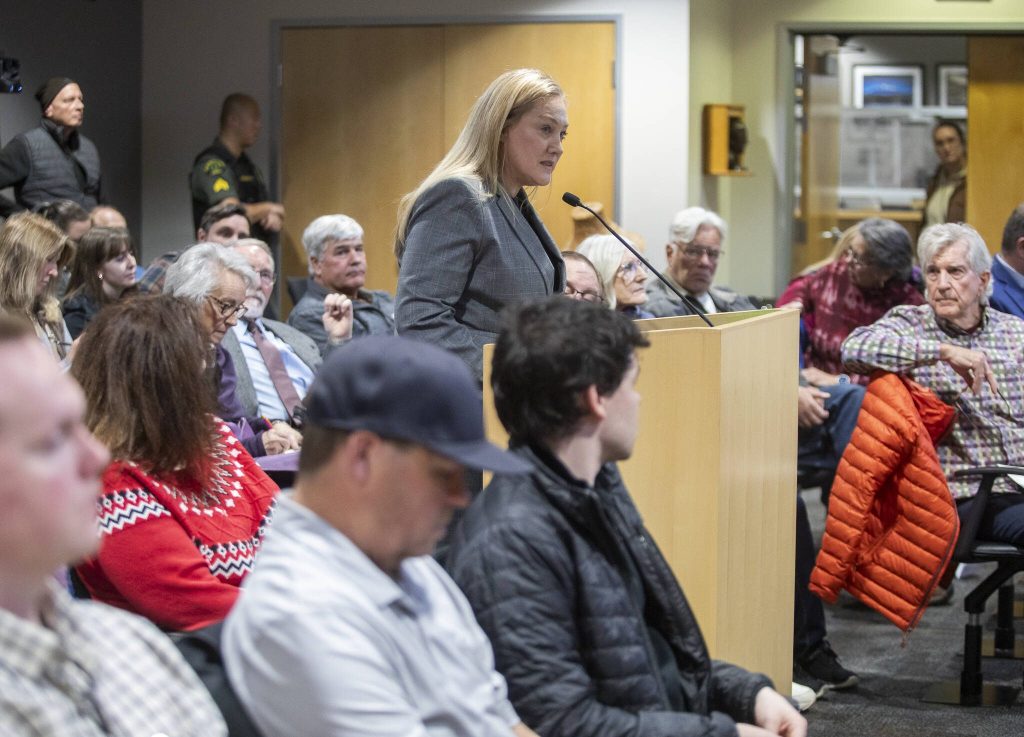
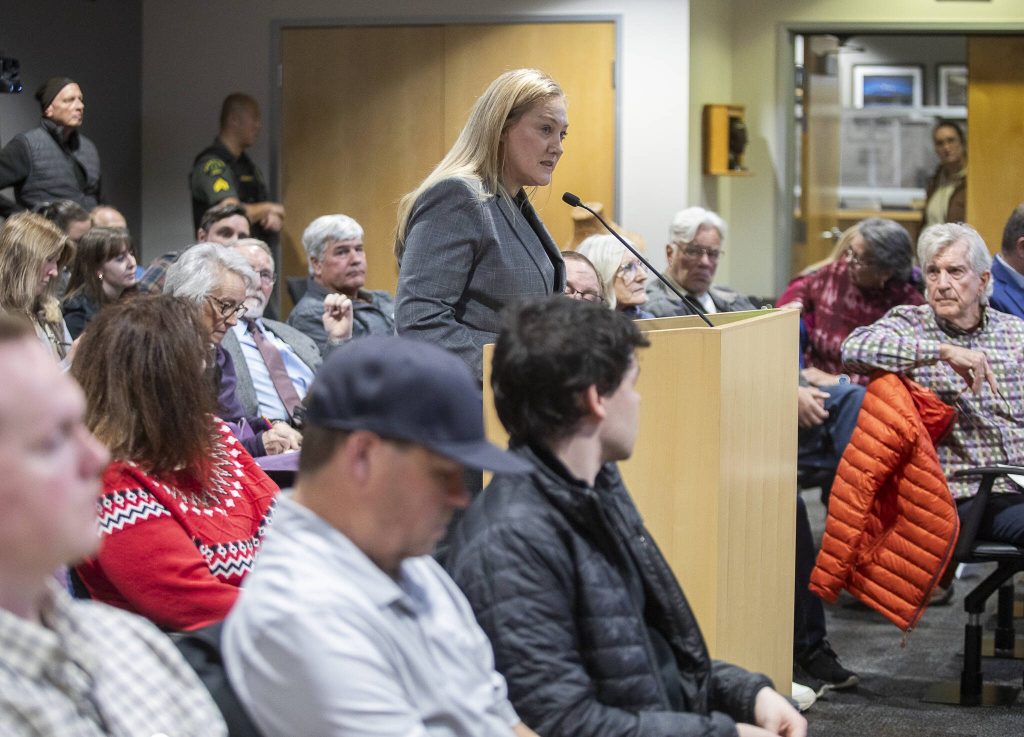
Natalie Reber, with the Master Builders Association, gives public comment to the Snohomish County Council about the proposed wetland ordinance amendments on Wednesday, Jan. 15, 2025 in Everett, Washington. (Olivia Vanni / The Herald)

Natalie Reber, with the Master Builders Association, gives public comment to the Snohomish County Council about the proposed wetland ordinance amendments on Wednesday, Jan. 15, 2025 in Everett, Washington. (Olivia Vanni / The Herald)

Natalie Reber, a representative for the Master Builders Association of King and Snohomish Counties, voiced her support for the ordinance with amendments.

“Snohomish County is facing a significant housing shortage, and it’s vital that our builders have the flexibility to address the shortage while also protecting our environment,” Reber said. “I want to point out that there does not appear to be any data in the research presented or in the Best Available Science … that justifies removing the standards that have been in practice for decades.”

Mead’s intent with amendments was to affirm the original code now in use, he said Wednesday after public comments.

“The amendment would be just referring it back to its original code that we’ve been operating under,” he said. “My intention with the amendment is to say I have not seen enough science-backed, best-available science argument, to say that what we have currently and what we’ve been operating under over the last 10 years-plus, isn’t working, and therefore we shouldn’t change it.”

The draft contains supported guidance published by the state Department of Ecology in 2022, and from input gathered over the past year from Tribes and interest groups, according to Terri Strandberg, long-term principal planner for the county.

Tim Stapleton, regional habitat program manager for Washington Department of Fish and Wildlife, said it was important to rely on best available science for the ordinance.

“Best available science is the foundation of effective regulations,” he said. “Without it, policies may appear sufficient but fail to achieve the intended results, such as protecting water quality, preventing floods and preserving habitat.”

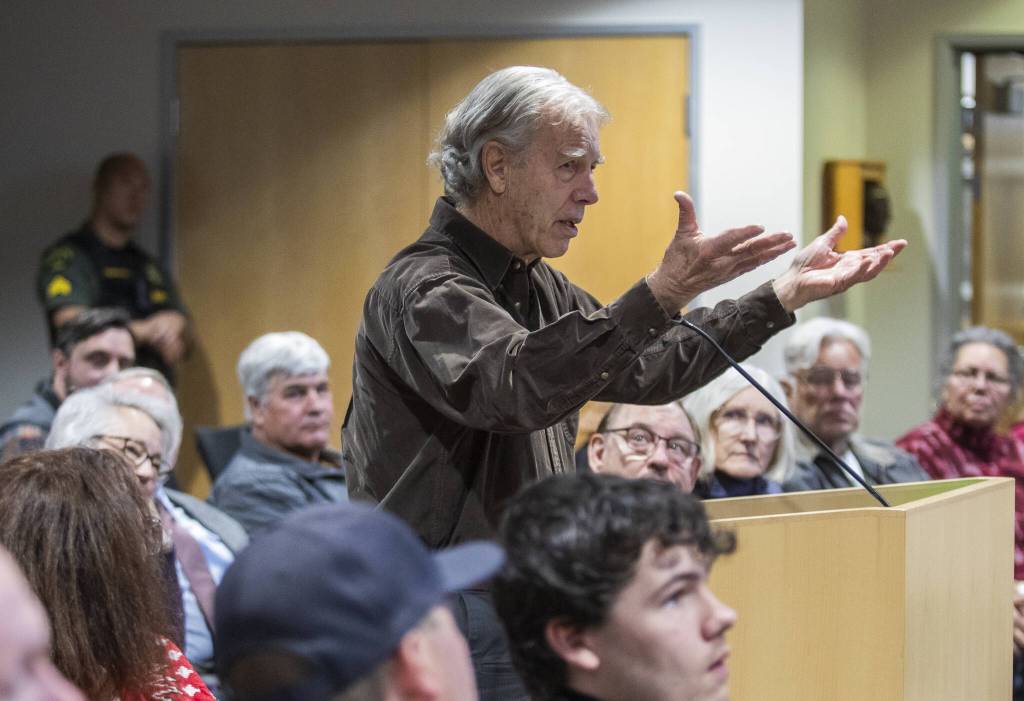
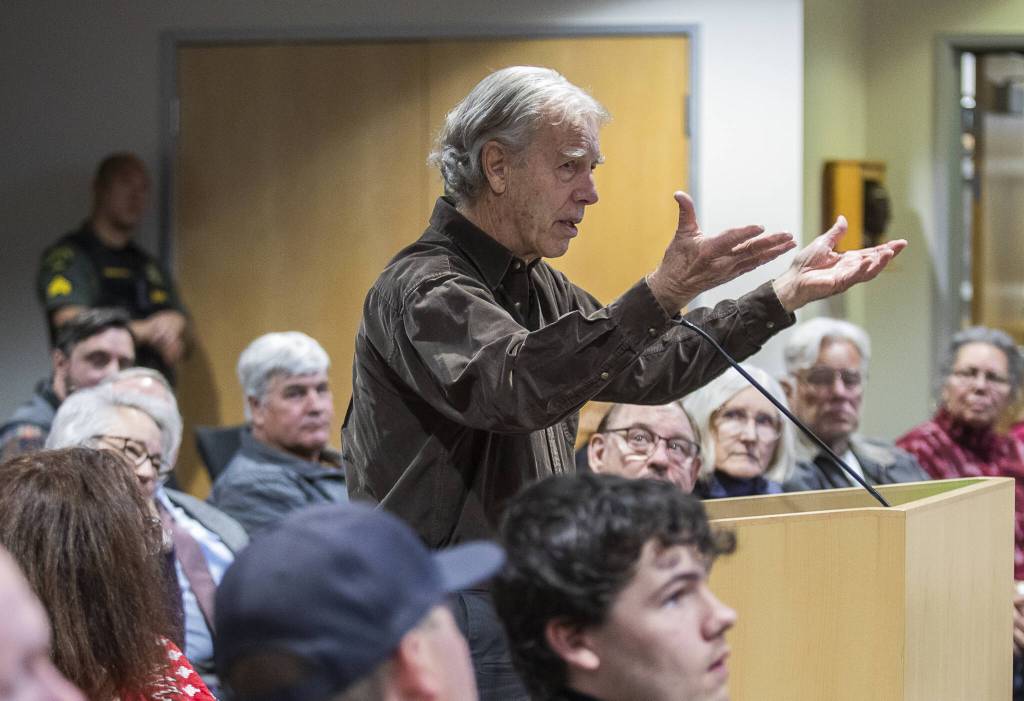
Tom Murdoch gives public comment to the Snohomish County Council about his disagreement with the proposed wetland ordinance amendments on Wednesday, Jan. 15, 2025 in Everett, Washington. (Olivia Vanni / The Herald)

Tom Murdoch gives public comment to the Snohomish County Council about his disagreement with the proposed wetland ordinance amendments on Wednesday, Jan. 15, 2025 in Everett, Washington. (Olivia Vanni / The Herald)

Tom Murdoch, director of Adopt A Stream Foundation, invited council members to attend his stream and wetlands ecology basic training classes at its Northwest Stream Center. He told the council if they want viable salmon runs in Snohomish streams, they must protect the ecosystems on which the fish depend.

“A riparian zone is that area of vegetation is next to a stream, creek, river, or wetland that determines the ecological health of that aquatic system,” Murdoch said. “The health of that riparian zone and the adjacent aquatic system is dependent on that buffer.”

The council had planned to adopt the ordinance by Dec. 31, but delayed a decision in part to decide if the amendments would be included in the updated code.

The ordinance is part of the county’s comprehensive plan, required by the state’s Growth Management Act. State law mandates that fast-growing cities and counties manage their population growth to reduce urban sprawl and prevent environmental degradation.

The council held the ordinance back for further discussion before scheduling another public hearing, allowing at least six weeks for a final decision.

Eliza Aronson: 425-339-3434; eliza.aronson@heraldnet.com; X: @ElizaAronson.

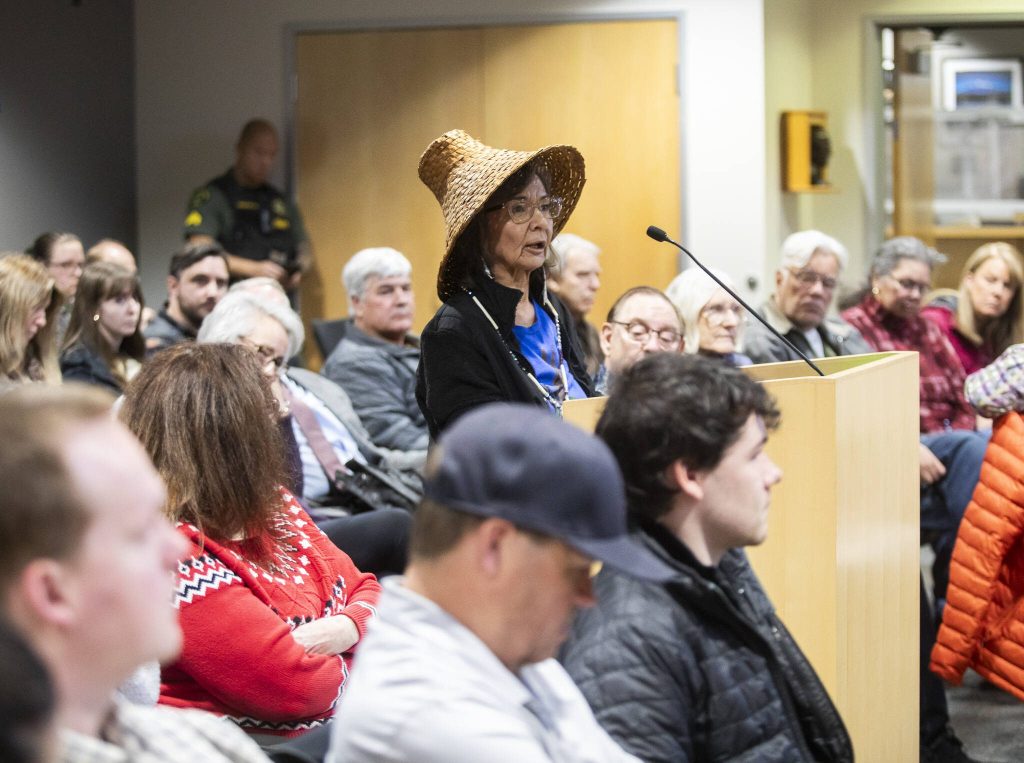
Correction: A previous version of this story included an incorrect title for Tim Stapleton. He is the regional habitat program manager for Washington Department of Fish and Wildlife. A photo caption misidentified Chris Singleterry as Chris Stapleton.

Eliza’s stories are supported by the Herald’s Environmental and Climate Reporting Fund.

Talk to us

> Give us your news tips.

> Send us a letter to the editor.

> More Herald contact information.

More in Local News

Gage Wolfe, left, a senior at Arlington High School and Logan Gardner, right, a senior at Marysville Pilchuck High School work with their team to construct wooden framed walls, copper plumbing, electrical circuits and a brick facade on Tuesday, Feb. 10, 2026 in Marysville, Washington. (Olivia Vanni / The Herald)
High schoolers construct, compete and get career-ready

In Marysville, career technical education students showed off all they’d learned at the SkillsUSA Teamworks Competition.

The Edmonds City Council on Tuesday, Jan. 6 in Edmonds, Washington. (Will Geschke / The Herald)
Edmonds issues moratorium on development in Deer Creek aquifer

The ordinance passed unanimously Tuesday, giving the city time to complete a study on PFAS in the area.

Taylor Scott Richmond / The Herald
Getchell High School students protest ICE during their walkout demonstration on Wednesday in Marysville.
Marysville students peacefully protest ICE

Around 150 Getchell High School students walked out of school to line 67th Avenue Northeast as cars drove by on Wednesday morning.

Logo for news use featuring Snohomish County, Washington. 220118
Snohomish County voters continue to approve most school levies, bonds

The Monroe School District operations levy, which was failing after initial results, was passing Thursday with 50.4% of the vote.

People fish from the pier, hold hands on the beach and steer a swamped canoe in the water as the sun sets on another day at Kayak Point on Monday, June 12, 2023, in Stanwood, Washington. (Ryan Berry / The Herald)
Kayak Point Park construction to resume

Improvements began in 2023, with phase one completed in 2024. Phase two will begin on Feb. 17.

Everett
Everett to pilot new districtwide neighborhood meetings

Neighborhoods will still hold regular meetings, but regular visits from the mayor, city council members and police chief will take place at larger districtwide events.

A truck drives west along Casino Road past a new speed camera set up near Horizon Elementary on Wednesday, May 8, 2024 in Everett, Washington. (Olivia Vanni / The Herald)
Crashes, speeding down near Everett traffic cameras

Data shared by the city showed that crashes have declined near its red light cameras and speeds have decreased near its speeding cameras.

Community Transit is considering buying the Goodwill Outlet on Casino Road, shown here on Tuesday, Jan. 6, 2026 in Everett, Washington. (Will Geschke / The Herald)
Community Transit to pay $25.4M for Everett Goodwill property

The south Everett Goodwill outlet will remain open for three more years per a proposed lease agreement.

Logo for news use featuring Snohomish County, Washington. 220118
Parent support collaborative worries money will run out

If funding runs out, Homeward House won’t be able to support parents facing drug use disorders and poverty.

Carlos Cerrato, owner of Taqueria El Coyote, outside of his food truck on Thursday, Jan. 29, 2026 in Lynnwood. (Olivia Vanni / The Herald)
Everett proposes law to help close unpermitted food carts

The ordinance would make it a misdemeanor to operate food stands without a permit, in an attempt to curb the spread of the stands officials say can be dangerous.

Clothing Optional performs at the Fisherman’s Village Music Festival on Thursday, May 15 in Everett, Washington. (Will Geschke / The Herald)
Everett music festival to end after 12 years

The Everett Music Initiative is ending the Fisherman’s Village Music Festival, the nonprofit’s flagship event that was first held in 2014.

Arlington Mayor Don Vanney tours the city’s Volunteers of America Western Washington food distribution center. (Provided photo)
Arlington food center receives 32,000-pound donation

The gift will be distributed to food banks across Snohomish County, providing more than 26,000 meals.

Support local journalism

If you value local news, make a gift now to support the trusted journalism you get in The Daily Herald. Donations processed in this system are not tax deductible.