Whale skeleton will be a star attraction at children’s museum
Published 1:30 am Sunday, June 27, 2021
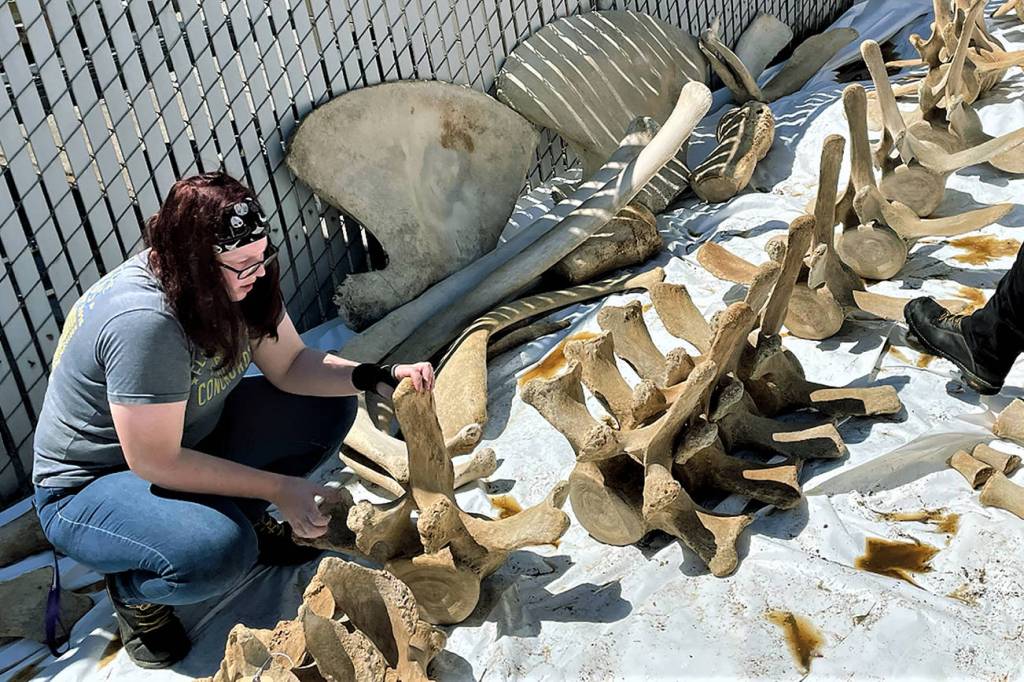
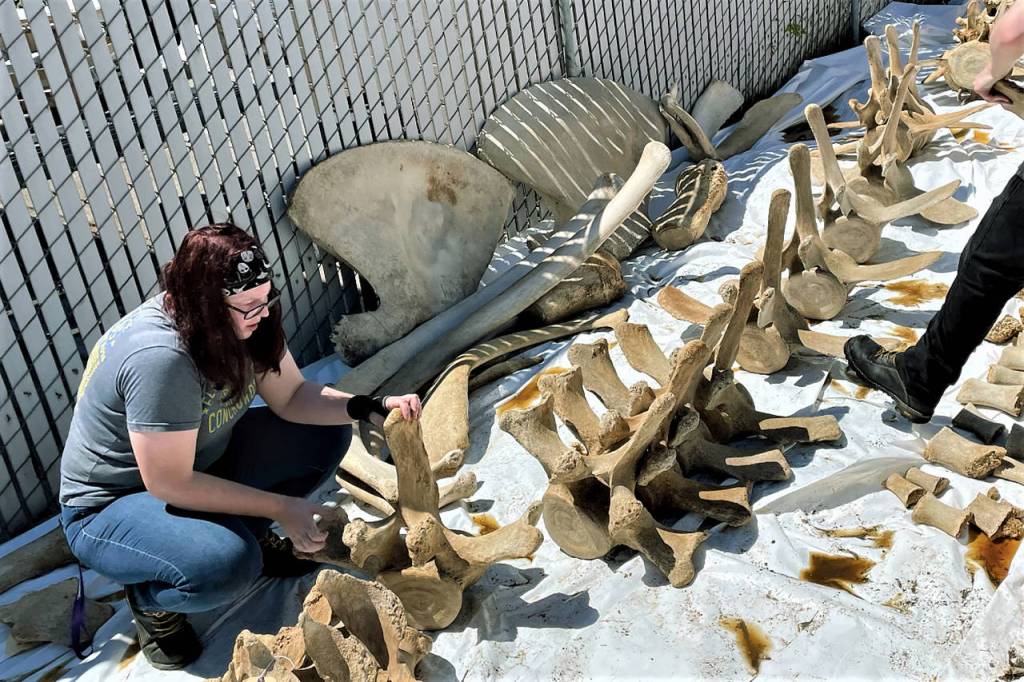
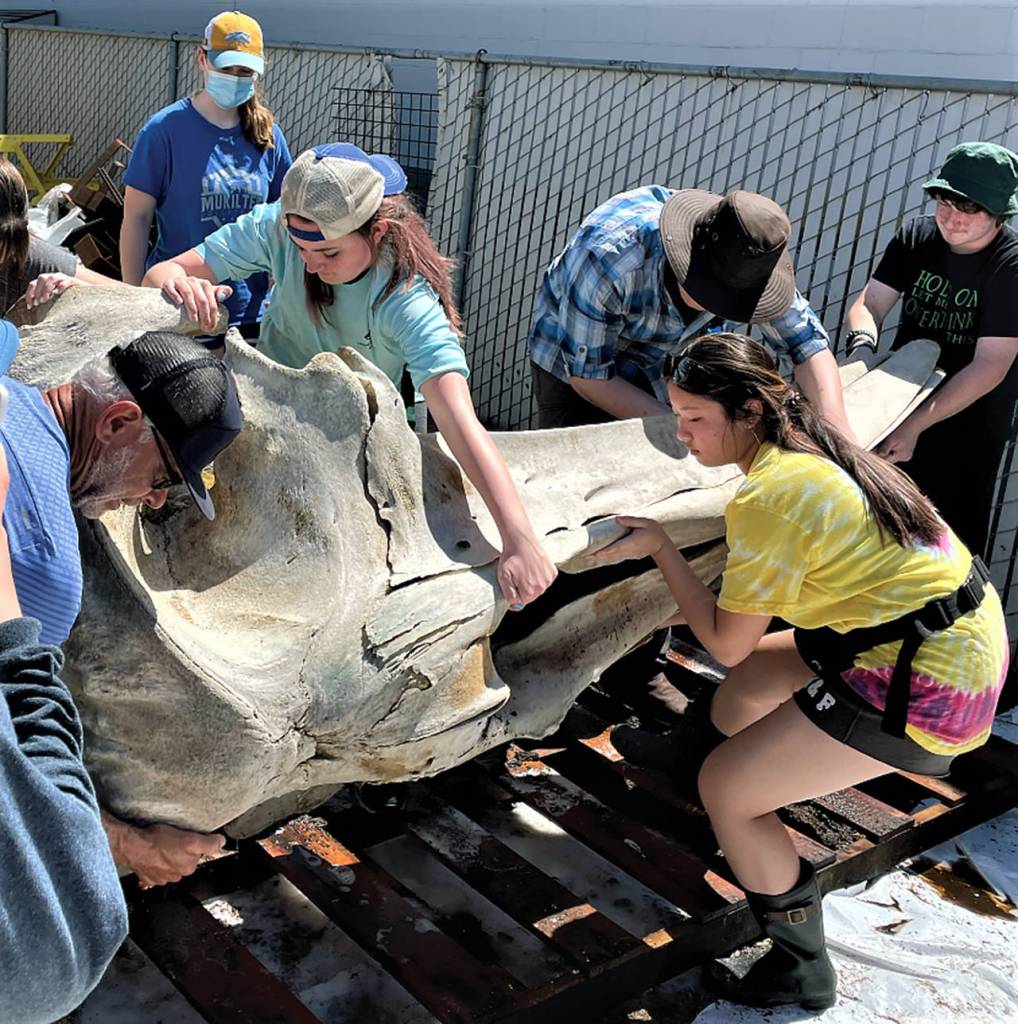


The cleaning crew, wearing dish-washing gloves and wielding scrub brushes, looked like volunteers at a car wash. But instead of polishing hubcaps and chrome, they were using Dawn dish soap on massive bones.
On a warm day in early June, the dismantled skeleton of a 41-foot gray whale — identification number CRC-1740 — was washed and laid out in the sun to dry. The bones remain in storage at Edge Concrete Construction, the business along Mukilteo Speedway where the cleaning took place.
The whale, an emaciated male, died July 3, 2019, a week after being spotted in southern Puget Sound. That might have been the sad ending to this whale tale. Instead, the giant skeleton will become the showpiece of a gray whale exhibit in the Imagine Children’s Museum. It will be part of the Puget Sound Ecosystem Gallery in the Everett museum’s three-floor, 33,000-square-foot expansion project, due to open in 2022.
Bri Gabel, who’s been an intern with the museum for more than a year, recently earned a master’s degree in museology at the University of Washington. To create the whale display, Gabel said Thursday, she’ll collaborate with Edge Concrete. The company has fabricated projects for zoos and aquariums, including what appears to be a rocky tunnel that houses the train exhibit at the Imagine Children’s Museum.
With a background in marine biology, Gabel is also working on an intertidal aquarium that will be part of the museum’s addition.
The whale bones will be at floor level so children will be able to touch them. Rather than a fully assembled skeleton, Gabel said, the display will show “the most important parts of the whale.” That means the top of the body, including the neck and arms — “whales have arms and fingers like we do,” she said. The bones in a whale’s flipper are much like those in a human arm.
Part of the rib cage will be assembled for the exhibit, which is meant to look like a work in progress. It’s a way to show children how scientists work, Gabel said.
While it’s sad to see whales washing up and dying, Gabel said, it’s a sign they are here in significant numbers. “If the skeleton is kept, the whale can teach more people about its species and the marine environment,” she said.
Whale skeletons aren’t available to anyone who may want one.
In collaboration with Olympia-based Cascadia Research Collective and the National Oceanic and Atmospheric Administration, museum staff applied for a permit to get bones for a future exhibit and last year learned the skeleton was available.
“We have a process,” said Michael Milstein, public affairs officer of NOAA Fisheries’ West Coast Regional Office. Skeletons generally go to educational and scientific organizations. Port Townsend’s Marine Science Center has one, Milstein said. The NOAA website has a detailed “Protected Species Parts” section outlining rules for obtaining any remains of animals listed under the Marine Mammal Protection Act and the Endangered Species Act.
It was June 2 when volunteers spent six hours unpacking, scrubbing, bleaching, sorting and tagging the whale bones.
Barney Peterson, who’s retired after teaching elementary school for nearly 30 years in the Everett district, described how she and other helpers scrubbed the bones with Dawn soap and warm water. They used OxyClean, too. That cleaner helped release oil from the whale bones, which are greasy due to adaptations for living in water.
“I’m a real hands-on learner,” said Peterson, who’s on the museum’s education advisory committee. For years, she taught fourth grade at Everett’s Monroe Elementary School. Her students took part in raising and releasing salmon fry.
Earlier in the journey, the whale’s carcass was buried for about six months in manure on a Marysville-area farm. Gabel said she believed the land was owned by someone on Edge Concrete’s staff.
Most of the whale’s flesh was previously removed by Cascadia Research. In May 2019, Cascadia was involved in performing a necropsy on a female gray whale that stranded itself and died on a beach near Everett’s Harborview Park.
The whale found in Everett and the Imagine Children’s Museum skeleton are included in what NOAA has termed the 2019-21 Gray Whale Unusual Mortality Event. According to NOAA, there were 34 gray whale strandings and deaths in Washington waters in 2019, 13 in 2020 and seven so far in 2021. Evidence of emaciation has been found in some, but not all, of the whales studied.
Research is continuing on the causes of the deaths, Milstein said Friday, but “strandings have tapered off some.”
Gabel and her partner, Matt Wilson, both worked at the Marine Science and Technology Center at Highline College, and Wilson was an aquarium biologist at Point Defiance Zoo and Aquarium in Tacoma. “We’ve been lucky to collaborate on a number of projects,” Gabel said.
Now Wilson is helping Gabel on the museum’s 600-gallon intertidal aquarium project.
“It will have local animals, typical in the shallows of Puget Sound,” Gabel said. On her list are shiner surf perch, striped sea perch, painted greenlings, eel-like fish called gunnels, sea stars, anemones, shrimp and urchins.
About those whale bones: If a skeleton isn’t intact, how hard is it to put it all together again?
“You find where the bones fit together. It’s pretty obvious, and quite elegant,” Gabel said. A sturdy rod and industrial glue will be used in the process.
And what about kids, the ones who just can’t wait to touch everything in the children’s museum?
“Whale skeletons are really strong,” said Gabel. And she’ll make sure the exhibit is “really, really strong.”
Julie Muhlstein: jmuhlstein@heraldnet.com