Comment: Can Europe offer insights into covid and schools?
Published 1:30 am Thursday, October 29, 2020


By Ferdinando Giugliano / Bloomberg Opinion
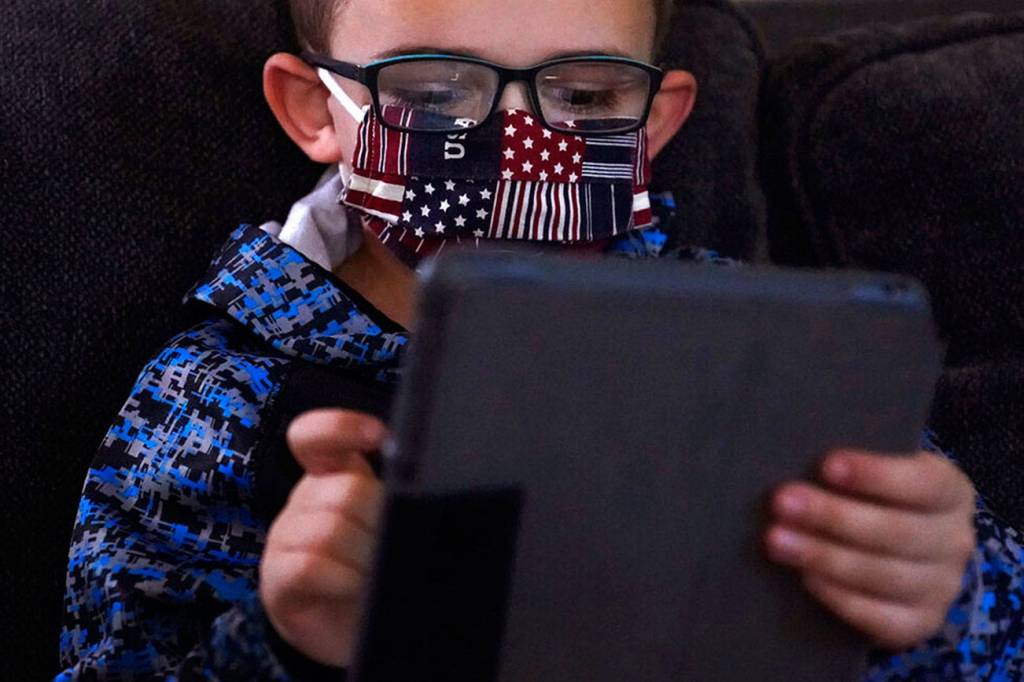
What to do about schools is perhaps the biggest dilemma facing policymakers right now. Closing them could lead to a “lost generation” of learners and make it harder for parents to get back to work. Keeping them open could further propagate the virus. Should governments choose the latter, they will need other ways to mitigate the impact on health.
After closing down schools earlier in the pandemic, many European leaders insisted on letting students resume in-person classes after the summer break. Now with new infections on the rise again, some are having to backtrack. Italy is to switch back to distance learning, at least for high school students. Other countries may be forced to do the same.
One argument for reopening schools is that kids aren’t primary spreaders of the virus. But the evidence on this is mixed at best. There are sufficient data to show that youngsters are unlikely to fall severely ill with covid-19. Most students who catch the virus exhibit few symptoms or none at all. Yet there is also ample research showing that even healthy carriers of covid-19 can be infectious. As a result, children and young adults could spread the virus to older people at home, on public transportation or elsewhere.
There are two ways to decipher the role of schools in disseminating the virus. The first is a top-down approach that looks at the correlation between when schools reopened in various regions of a country and whether infections in those areas subsequently rose. Researchers can then use statistical techniques to control for other possible explanations and determine whether local governments that sent students back sooner saw an earlier surge in infections.
The evidence here is inconclusive. A study looking at Germany suggests there was no negative public health impact from schools reopening, which the researchers say was the consequence of strict hygiene measures. A separate article on Italy, however, found that schools indeed contributed to an upswing in infections. The Italian researcher suggests that the German study may have failed to capture what was going on because it used data from the summer season, when the spread of coronaviruses was generally more limited.
The second approach is to examine bottom-up studies that focus on whether kids actually carry and spread the virus. The picture here is also uncertain. The European Centre for Disease Prevention and Control published a paper in August finding that less than 5 percent of cases reported in the European Economic Area and the U.K. involved those younger than 18. That could suggest children and schools play quite a small role in transmitting infection; however, this figure probably results from children displaying fewer symptoms and therefore being less likely to be tested.
Seroprevalence studies, which search for the presence of covid-19 antibodies in a given population to understand how many individuals were infected in the first place, find that youngsters only have a slightly smaller diffusion of the virus than adults, though these estimates are shaky. The study concludes that transmission in schools is limited but does occur; especially when the virus is circulating widely in a community.
In any case, reopening schools causes important logistical problems. As soon as a positive case is identified in a school, this can put track-and-trace systems under pressure, as several families begin demanding tests at once. It is hence no surprise that many epidemiologists suggest in-person schooling can play a decisive factor in magnifying contagion. Last spring, simulations from official scientists in Italy showed a menu of policy choices and their impact on infection: Sending kids back to school had one of the largest effects on the number of cases and hospitalizations. A cross-country study on 131 nations published this month in The Lancet found that reopening schools can increase virus transmission (as measured by the reproduction factor “R”) by 24 precent four weeks after the decision is taken, while closing them can reduce it by 15 percent over the same time frame.
Governments should have explored different routes for education. It may have been better to have brought kids back to school in the warmer months of June, July, August and September, when people were outside more. There should have been more thought about alternatives to holding classes in the winter as well as greater investment in online learning. Instead, many politicians simply committed to keeping schools open.
Of course, governments can decide that face-to-face education is too important to renounce. After all, the costs of not attending school for a full year — especially for kids from underprivileged backgrounds — are high. Younger kids may not learn much through a computer or a tablet.
But if classrooms must stay open, leaders must consider tougher constraints on other areas of economic and social life as a counterbalance. This doesn’t just mean forcing students to wear masks, social distance and stagger their classes; politicians might also need to increase the number of buses to limit crowding, ban nonessential movement and close down businesses if health-care systems are overwhelmed. France, Spain and Italy are introducing several such measures.
The pandemic is bound to leave long-lasting scars on society. Governments will have to make hard choices about where to minimize them.
Ferdinando Giugliano writes columns on European economics for Bloomberg Opinion. He is also an economics columnist for La Repubblica and was a member of the editorial board of the Financial Times.