Comment: Justice Kavanaugh could become powerful swing vote
Published 1:30 am Friday, October 30, 2020


By Noah Feldman / Bloomberg Opinion
The confirmation of Justice Amy Coney Barrett means that Chief Justice John Roberts is no longer the Supreme Court’s swing voter.
Roberts had a good run in the seat of power, deciding cases against on the census citizenship question, the rescission of DACA and abortion rights. Now, however, he won’t be able to determine a case’s outcome by joining the court’s liberals. With only three liberals left on the court, Roberts would have to convince another conservative to join him to produce a liberal result. The justice who provides that fifth vote becomes the swing voter.
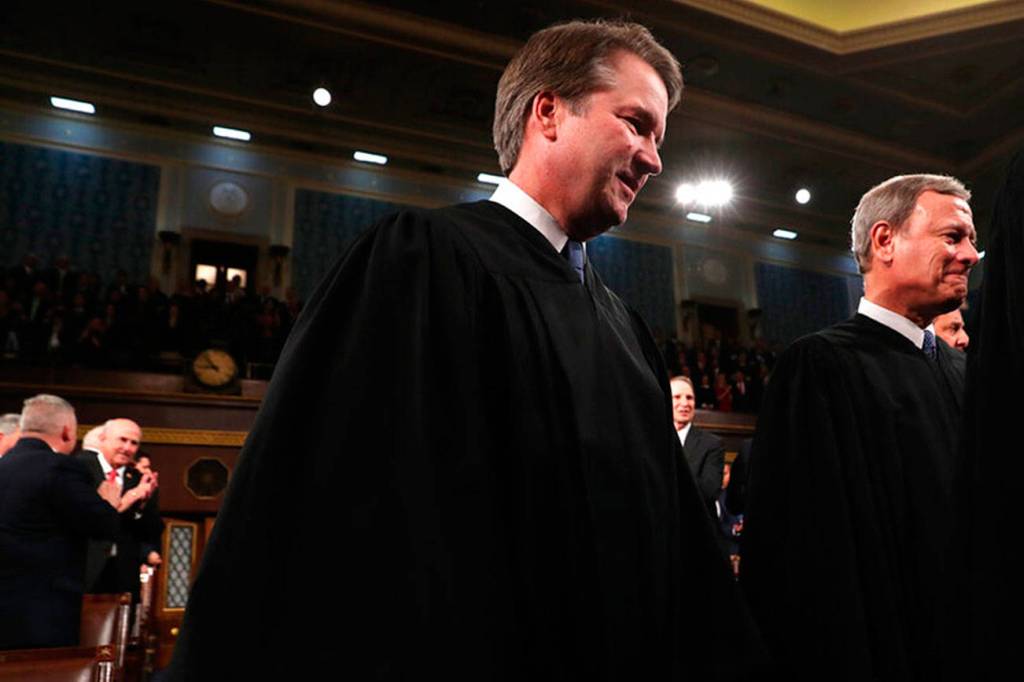
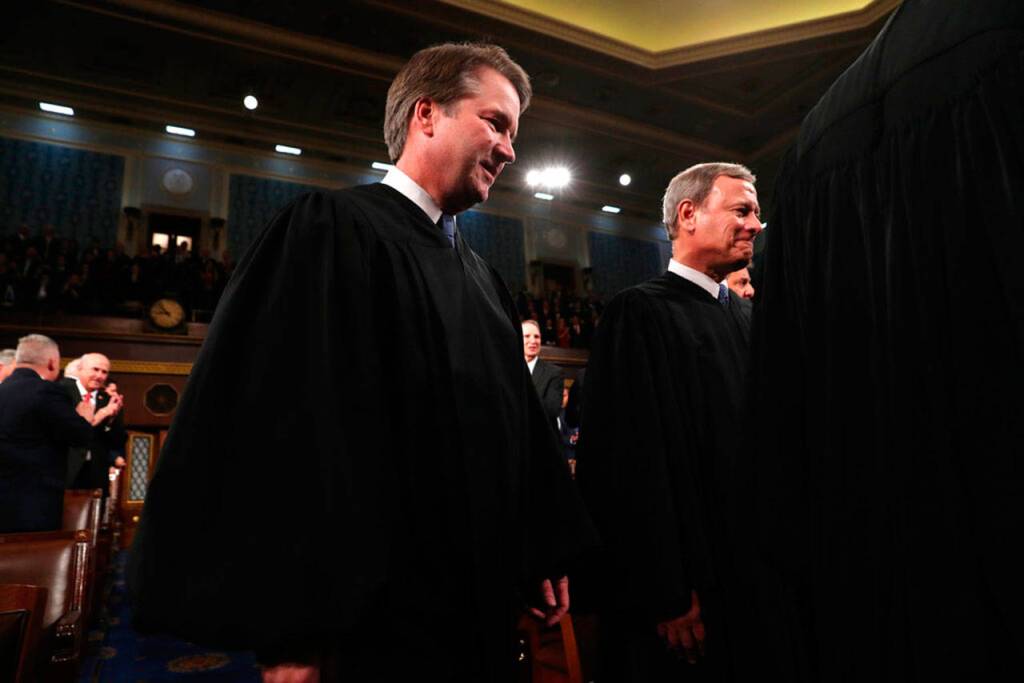
Who will now occupy that powerful role? Justice Brett Kavanaugh.
Kavanaugh is much less ideological than the court’s other conservatives. He’s a conservative pragmatist; he cares about power and how it is deployed. The only way for a conservative like Kavanaugh to exercise power as the swing voter is to cast some votes that make liberals happy. Otherwise, you are just another reliable member of the conservative majority; one without much power or influence.
He won’t be centrist in partisan election cases, as his opinion in Monday’s Wisconsin case shows. That was also true of Justices Anthony Kennedy and Sandra Day O’Connor, who both joined the conservatives in Bush v. Gore. But on big-ticket ideological issues, Kavanaugh could be capable of moving toward the pragmatic. He has already dropped a few tantalizing hints that he might be willing to move toward the center.
Consider this past summer’s important Louisiana abortion decision, June Medical Services v. Russo. The all-powerful swing voter in that case was Roberts. He used his decisive vote to reverse the position he had taken years earlier in a nearly identical case out of Texas. And Roberts signaled strongly that he was not interested in overturning Planned Parenthood v. Casey, the landmark abortion rights case that itself affirmed Roe v. Wade as valid precedent. Roberts’ opinion in the June Medical case put him in the camp of former swing Justices Sandra Day O’Connor and Anthony Kennedy, who, with Justice David Souter, co-wrote the controlling opinion in the Casey decision.
Kavanaugh did not join Roberts. But he did write a separate dissent in which he said that the case should not have been decided without further fact finding by the lower courts. He added that he had written the same thing a year before when the same case came to the Supreme Court in an earlier iteration.
The point of Kavanaugh’s dissent was to say that in his view, the court should have punted in the June Medical case, sending it back to the lower courts instead of rendering a decision. That view was to the right of Roberts’ opinion; but it was subtly to the left of the views of the other conservatives. (Kavanaugh joined part but not all of Justice Samuel Alito’s dissent.)
This may sound like a small matter. At the time, however, Kavanaugh’s vote wasn’t all that important. In retrospect, there is reason to think Kavanaugh may want the conservatives to be careful about overturning Roe v. Wade and creating a major progressive backlash against the court.
Similarly, last spring, in a case called Ramos v. Louisiana, Kavanaugh wrote a long separate opinion of his own describing how he believes the court should deal with the doctrine of stare decisis, the idea that courts should follow precedent. The opinion was designed to be judicious and careful. It could be read to suggest that Roe should be overturned; and that is how I read it at the time. But it also left a little room for the possibility that Kavanaugh would take a more moderate position, closer to the one that Roberts demonstrated, seeking to chip away at abortion rights while nevertheless declining to overturn Casey and with it, Roe.
To be clear, a court on which Kavanaugh is the swing voter is an extraordinarily conservative court. It is important to remember that both Kennedy and Roberts were unlikely swing voters, too. There is something about the mere possibility of that kind of centrist power that seems to affect the justices who are in a position to wield it.
It’s also possible of course that Kavanaugh will decline to become more centrist. If he voted with the liberals and Roberts, he might lose some of his conservative friends. And after his confirmation hearings, the idea of a reconciliation with liberals might be far-fetched.
Yet the bitterness of his confirmation hearings also gives Kavanaugh some reason to seek reputational rehabilitation among liberals. Becoming a centrist and saving abortion rights — and maybe affirmative action in higher education — might be just the ticket. After all, Kavanaugh did clerk for Justice Kennedy, whose swing voting ways gave us gay rights, gay marriage, and a Constitution that extended to Guantánamo Bay.
Noah Feldman is a Bloomberg Opinion columnist and a professor of law at Harvard University.