Editorial: Protect state’s youths from flavored vapes, tobacco
Published 1:30 am Thursday, December 19, 2024


By The Herald Editorial Board
With federal regulation of flavored tobacco products — cigarettes and vapes — likely to snap back from the Food and Drug Administration’s current ban of such products to the incoming Trump administration’s promise to “save vaping again,” a proposal to ban fruit-, candy- and other flavored smoking and vaping products in Washington state is expected to hear consideration in the coming legislative session.
This time it’s with the additional backing of state schools Superintendent Chris Reykdal, with concerns that vaping may be gaining among the state’s school children, particularly among younger students.
“It’s growing amongst middle school kids, which is alarming, and our districts are spending a lot of resources, both in staff time — trying to, you know, get kids to do the right thing and prevention — and then, I mean, they’re spending money on vape detection systems in bathrooms,” Reykdal said, as reported by NPR station KUOW (94.9 FM) this week.
Proposed earlier this fall by state Sen. T’wina Nobles, D-University Place, and Rep. Kristine Reeves, D-Federal Way, the legislation would bar the sale of flavored tobacco and nicotine products — including menthol cigarettes — which they and health and childhood advocates say are intended to hook kids on nicotine and develop a long-lasting and dangerous addiction.
With candy and fruit flavors, including kiwi melon, blue raspberry ice, banana freeze, creme brulee and sour grape and names such as “Jimmy the Juice Man’s Peachy Strawberry” and “Suicide Bunny Mother’s Mike and Cookies,” it’s hard to defend the notion that such flavors are aimed at anyone other than adolescents.
Or are adults really likely to load a “Blue Razz” vape cartridge to help them quit their daily pack of Marlboros?
The vaping industry has been adept at innovation in its quest to stay ahead of the whack-a-mole game played by state and federal regulators. As recently as 2022, when vaping product makers found a loophole for synthetic nicotine rather than that derived from tobacco, which got them past an initial FDA ban, the FDA again had to use rule-making to broaden its authority over all forms of nicotine, regardless of its source.
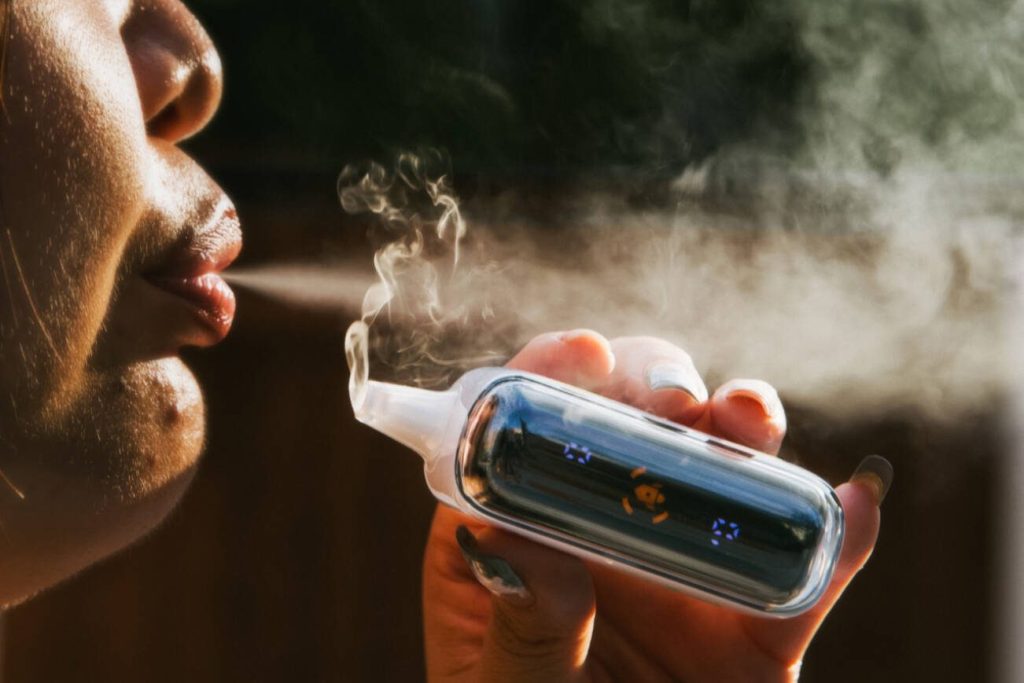
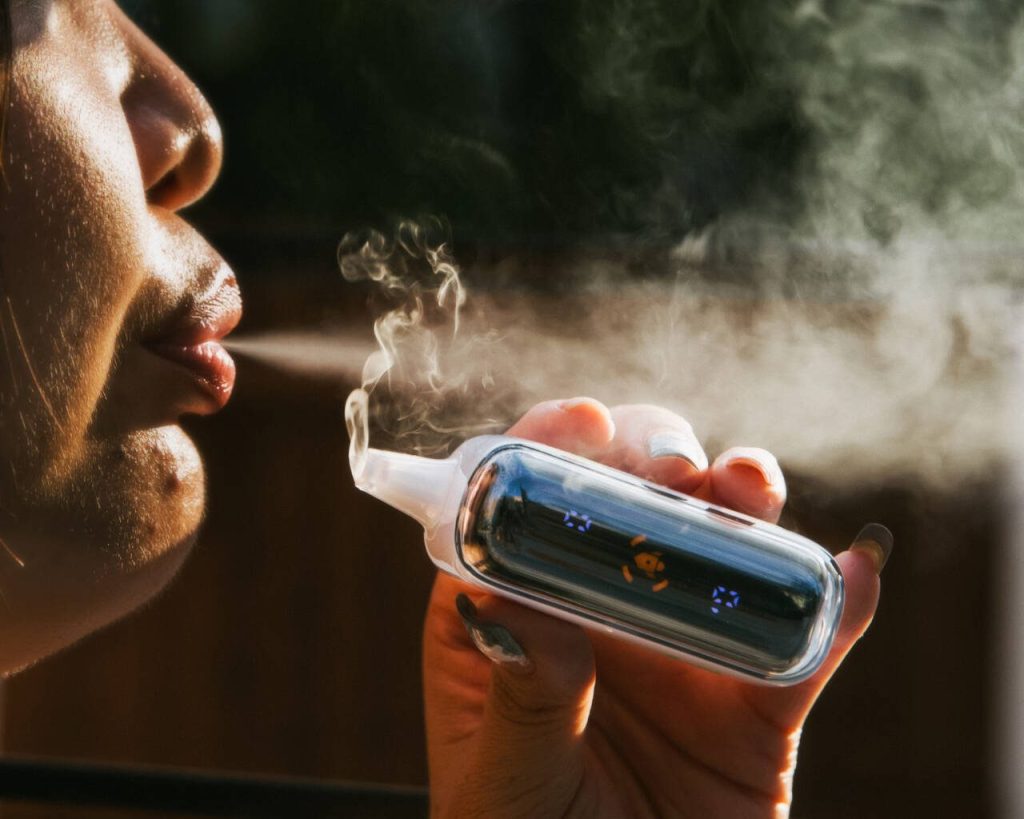
More recently vape makers have added features to what was once just a “vape pen” — and still defying FDA regulations against e-cigarettes — turning them into “smart vapes” that include touchscreens, Bluetooth connectivity, wallpaper and games, including animations with points and rankings to encourage regular use, activities that, the Centers for Disease Control and Prevention say adds to the addictive nature of the vape products.
Proactively, the legislation in the state House and Senate would also bar the sale of the enhanced devices.
Vaping products have been excused as a safer way for adults to quit smoking; as the devices allow for nicotine use without inhaling some of the more dangerous carcinogens in cigarettes.
But nicotine itself is immensely addictive and has dire health drawbacks for children and young adults, according to the Washington state Department of Health and the FDA:
Youths and young adults under the age of 18 are more likely to start using tobacco than are adults; and nearly 9 of 10 adults who smoke start by age 18;
An estimated 104,000 youths in the state, alive today, will die prematurely because of smoking; and
The rise in use of vaping products among youths raises alarms because nicotine in any form can adversely affect brain development and has long-lasting effects, including lower impulse control and mood disorders and can develop in youths a difficult-to-break addiction to nicotine and tobacco products.
In fact, some vape devices can be loaded with the nicotine equivalent of two and a half cartons of cigarettes, in a form that is easily concealed and can be used repeatedly. Even the concentration of nicotine per use can be nearly triple that of cigarettes.
To be clear, tobacco and vaping product use by Washington teens isn’t exactly rampant, and in fact may have decreased during the covid pandemic. The state’s 2023 Health Youth Survey found that about 14 percent of 12th graders were using vape products, compared to 6 percent using smokeless tobacco and 5 percent using cigarettes; those numbers for 10th graders were 8 percent, 3 percent and 2 percent, respectively.
But those rates were much higher during the lax regulation of the first Trump administration, when in 2018, 30 percent of 12th graders and 21 percent of 10th graders reported using vape products.
The U.S. Supreme Court heard arguments earlier this month regarding the FDA’s refusal to allow e-cigarette makers to sell flavored vape products, but a reversal on regulation by the incoming Trump administration may make the case moot.
In a fog of logic that resembles a vape cloud, Donald Trump has appeared to waver on a coherent position, saying in 2019 that “Vaping is coming out. … We have to protect our families. At the same time, it’s a big industry. We want to protect the industry.” More recently, Trump has said he intends to “save flavored vaping.”
Given the likely deregulation of flavored vaping products at the federal level, it will be important — as we will likely see regarding other issues — for states, such as Washington, to take the lead on setting reasonable regulations for the health and safety of consumer products, especially those that target youths with an addictive chemical.