Editorial: Slow roll on covid vaccination can’t be tolerated
Published 1:30 am Friday, January 8, 2021


By The Herald Editorial Board
The problem we face is that covid-19 is a moving — and a mutating — target.
Even after the unprecedented success to quickly develop vaccines against the novel coronavirus, we are learning that new variants of the virus, first discovered in the United Kingdom and South Africa, have developed and are spreading.
While not believed to be more deadly, they reportedly are more contagious. The U.K. variant already has been detected in patients in the United States, the Centers for Disease Control and Prevention report. With that easier spread comes the likelihood of quicker community transmission and further growth in infections, serious illness and deaths.
This is not the time for the Warp Speed development of vaccines to slow to a Sunday Drive for distribution.
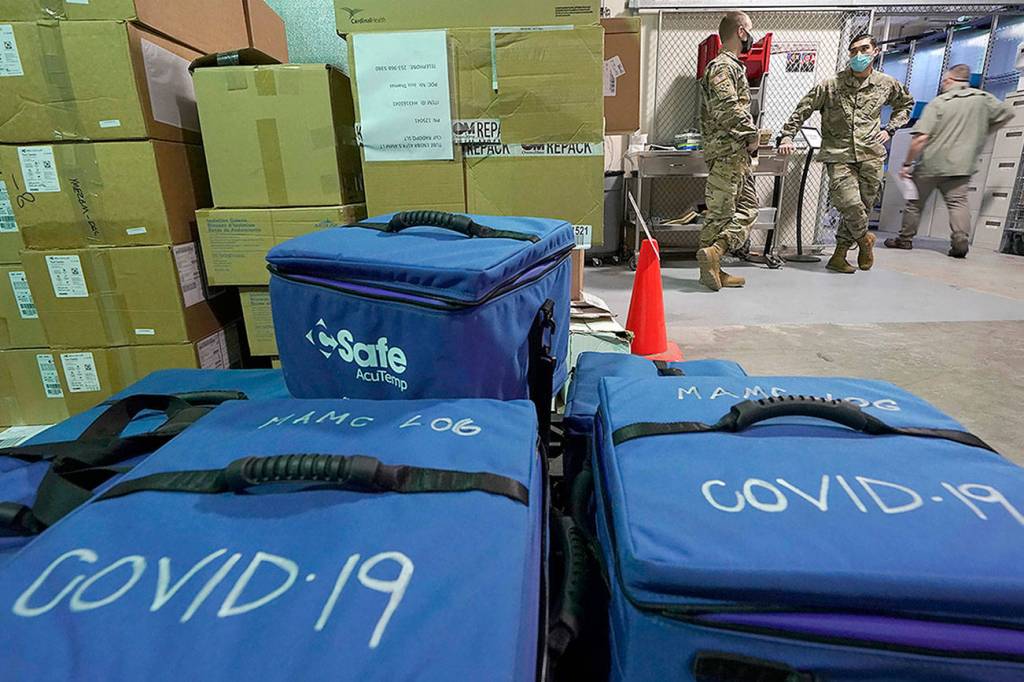
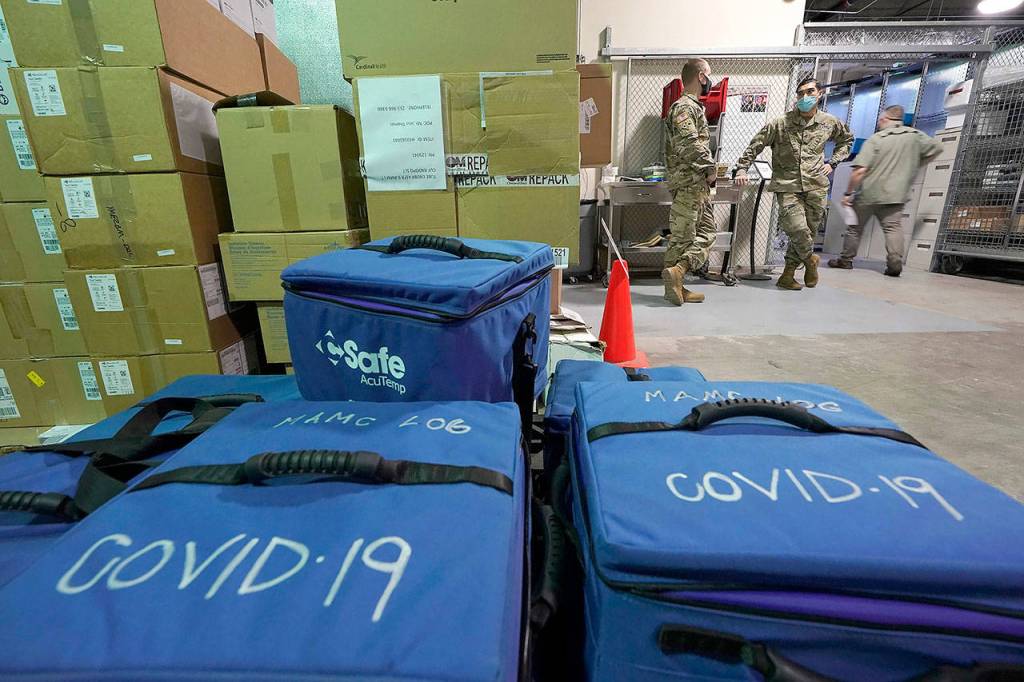
Yet, after the Trump administration promised that 20 million Americans would receive the first of two doses of one of two available vaccines by the end of 2020, the actual number of first-dose vaccinations was about 4.8 million. In Snohomish County, of 40,000 doses delivered to health care facilities — with another 8,000 on their way — 11,000 have landed in arms as of this week.
“That just speaks to the difficulty of getting the capacity to administer (vaccines) up,” Snohomish County’s health officer, Chris Spitters, told The Herald. “We’re on our way. We’re making progress, but like any process, it takes a little while to reach full speed.”
The United States isn’t the only country struggling with distribution of covid vaccines. Data shows the U.S. has inoculated about 1.5 people per 100 residents, trailing Israel (nearly 16 per 100), the United Arab Emirates (8.35) and Bahrain (3.75), but leading Canada, China and European and Latin American nations. Israel, notes Vox, benefits from a relatively small and compact population, but its health ministry and local public health agencies seemed better prepared for the challenge.
And it’s a challenge most everyone saw coming. Still not enough preparation was made.
The “difficulty in getting capacity,” that Spitters is talking about is rooted in long-lagging support for public health agencies, here and across the country. Past funding shortfalls for Washington state’s county-level health departments, such as the Snohomish Health District, have been further exacerbated during the pandemic by the demands placed on those agencies for increased coronavirus testing and contact tracing of those with positive tests.
But we’ve seen this before.
Rather than the federal government taking a leadership role in assuring ready supplies of personal protective equipment for front-line health care workers and coronavirus testing materials, the Trump administration advised states in April — during the pandemic’s second surge — to view the federal government as “the supplier of last resort.” States were left to find their own supplies, often competing with other states for limited resources.
Until only recently, the states were left to solve vaccine distribution on their own.
When it became more certain that pharmaceutical companies could have effective vaccines ready by the end of 2020, the Trump administration allocated $340 million total to all states out of the Cares Act for vaccine distribution. That was after a nationwide association of health officials and immunization managers advised Congress that at least $8.4 billion would be necessary and a proposal from Sen. Patty Murray, D-Washington, and Minority Leader Chuck Schumer, D-N.Y., sought to allocate $25 billion for emergency vaccination funding in July.
The latest covid relief package passed by Congress last month, but long delayed, at last provides $8 billion to $9 billion to the states for distribution of the vaccines.
President-elect Biden has pledged to see that 100 million doses of coronavirus vaccines are delivered in his first 100 days in office. The consensus is that Biden’s goal is ambitious, but achievable — especially if Democrats gain more control of the U.S. Senate with wins for two Georgia seats — but even then, it may not be enough.
Washington state lawmakers don’t have to wait for a change in presidential administration to see if more federal aid and leadership is forthcoming. With the Legislature beginning its session Monday, it can take steps to approve emergency funding and policy changes that can expedite distribution and facilitate information about the vaccines.
Already, the state Department of Health has set up a website, PhaseFinder, that allows people to enter basic questions and find out their vaccine group and the time of eligibility for getting the vaccine. It also will take contact information and notify people when the vaccine is available to them.
Having witnessed a medical marvel in the development and production of effective vaccines, it is now the responsibility of officials at all levels of government to deliver quick distribution of the vaccines, distribution that can build a level of immunity that will allow children to return to their schools, workers to return to jobs, and everyone to return to businesses, restaurants, churches, theaters, concert venues and our full daily lives.