Editorial: Want to keep Safe Start going? Wear your mask
Published 1:30 am Tuesday, June 16, 2020


“Don’t make me come down there.”
— New York Gov. Andrew Cuomo, in a tweet Saturday, after watching video of New York City residents squeezing into beer gardens and milling about outside diners, the large majority without wearing masks or maintaining a safe distance among themselves.
Cuomo’s tweet, whether you see it as paternalistic or humorous, makes it clear that even in a state with more than 30,000 deaths from COVID-19, there appears to be a growing level of fatigue with keeping to social-distancing practices that have been recommended during the coronavirus pandemic.
The relaxation of those practices, coupled with an increase in public interactions as nearly every state — including Washington state — has moved to allow a reopening of businesses and public facilities, is resulting in increases in virus transmission in several states. At least 21 states last week reported an increase in average daily coronavirus infections as compared to the week previous, The Washington Post reported over the weekend; as well, hospitalizations for COVID-19 also increased in some states.
Oregon’s Health Authority reported 178 new confirmed and presumptive cases of COVID last Thursday, its highest one-day total since the outbreak. A week ago, The Oregonian compiled data that showed the state’s seven-day rolling average of new infections at 32 or fewer; that figure now stands at more than 100 new cases.
That was enough for Oregon Gov. Kate Brown to put a hold on that state’s plans to reopen more of its economy, just as Multnomah County and Portland were preparing to join the state’s other counties in reopening businesses in a phased plan similar to that of its neighbor to the north.
Not that Washington hasn’t seen its own increase in cases. Saturday, the state Department of Health warned of marked increases in Eastern Washington — specifically in Yakima, Spokane, Franklin and Benton counties — that are now comparable to King County’s worst days of the epidemic. The increases, the health department said, were likely the result of community spread that occurred during the Memorial Day weekend.
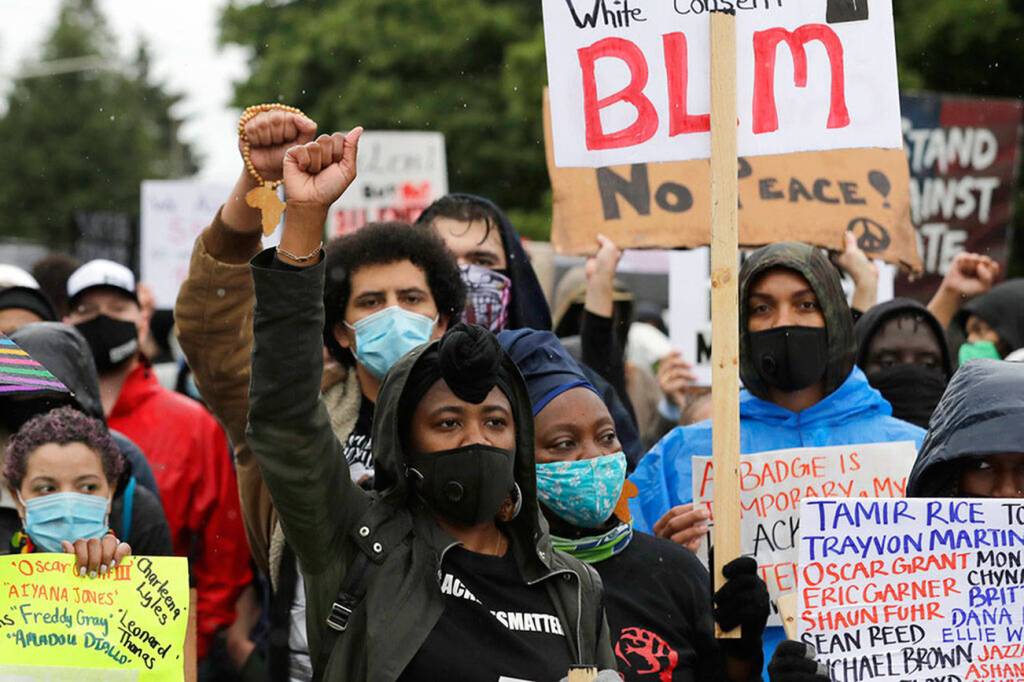
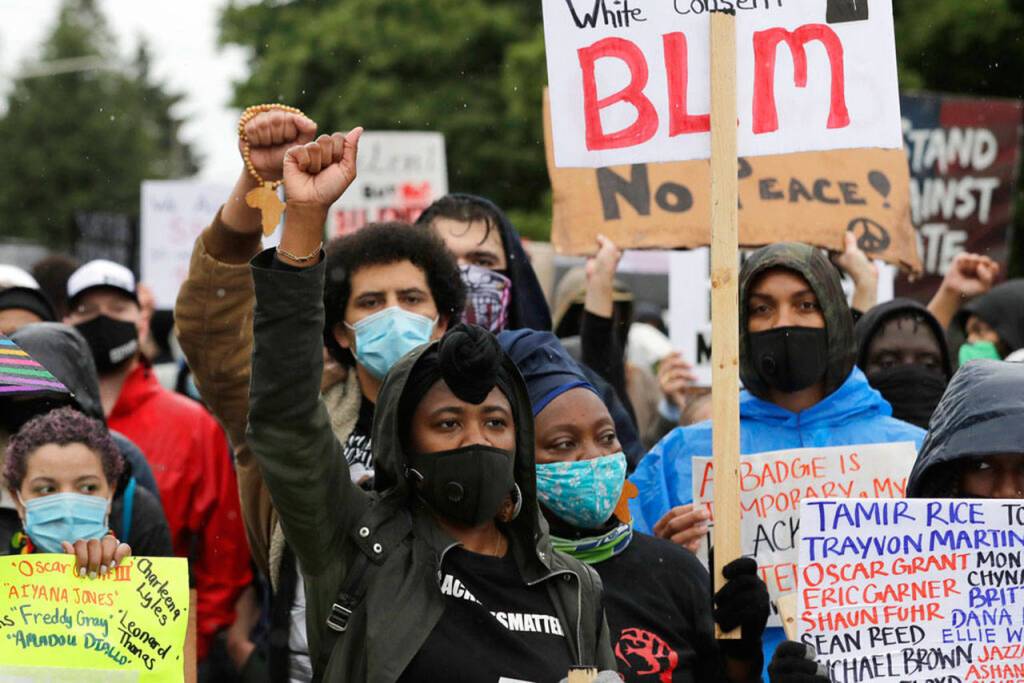
Western Washington, especially the Seattle area, may also soon see a jump in infections, following the protests staged nationwide after the deaths of African Americans in the custody of police. After exposure to an infected person it can take five to 14 days for symptoms to appear.
No one wants to see a slowing — much less a reversal — of Washington state’s Safe Start plans. With Snohomish and other counties now in Phase 2, which has allowed a reopening of most businesses with restrictions on capacity, a return to stay-home orders would bust morale as well as local and state economies that already are struggling.
There is a way, however, to keep a lid on coronavirus infections without having to again retreat nearly full-time to our homes: Wear your face-hugging, ever-loving mask.
While the public debate has continued — and even taken on partisan overtones — there’s more confirmation from scientists and researchers that wearing a mask along with the other social-distancing practices, can be effective in reducing the spread of coronavirus and has allowed other countries to end the most severe restrictions on everyday life.
A recent review of more than 170 scientific studies, published by the medical journal, The Lancet, concludes that face masks along with hand-washing and physical distancing reduce the risk of infection in both health care and community settings, The Washington Post reported Saturday.
The study authors admit that the certainty of its conclusions is limited; the data used is observational and not from double-blind randomized trials, which a pandemic makes impossible to conduct; but the observations, especially from Asian and other countries where masks are more socially accepted and used more widely, offers confidence in the recommendations. Japan, for example, with less than 1,000 COVID-19 deaths, has a per capita death rate that is about 2 percent of the U.S. rate.
The Centers for Disease Control and Prevention continues to encourage the use of cloth face-coverings when in public settings where a safe distance is difficult to maintain. The masks, as we’ve stated before, are not fool-proof, but when worn by someone who carries the infection — and who may not be aware — they can limit the spread of larger droplets in the air and on surfaces that can contain the virus.
Most Americans appear to back the recommendation, even if they don’t always follow the guidance. A recent Axios-Ipsos poll found that 50 percent of Americans report wearing masks “at all times” when leaving home, with an additional 27 percent saying they wear a mask at least “some of the time.” Only 10 percent said they never wear a mask.
That 77 percent figure may be important, an indication that halting the spread of COVID-19 is achievable, at least until a vaccine is ready for wide distribution.
More research, this time by an American computer scientist, shows that if 80 percent of a given population routinely wears masks in public, the infection rate can be slowed enough to control its spread, Vanity Fair reported last week.
De Kai, the computer scientist, built a computer simulation that shows that with at least 80 percent wearing masks, COVID rates would drop to about 1/12th the infection rate of an unmasked population; those who contract the disease would recover before they could spread it widely among others.
Assuming the simulation is correct — and a infectious disease specialist at Vanderbilt University reviewed De Kai’s paper and called the simulation “a very thorough model” — it shouldn’t take much convincing among those who have used masks before to use them more frequently.
This isn’t a hard sell. If we want to continue on the path to reopening the economy and participating in public events that are vital to society — protests, worship, weddings, funerals and more — while protecting public health, we need only follow the advice we’ve regularly heard: Wash your hands, keep a safe distance and wear that mask.