Math concerns adding up
Published 11:23 am Monday, March 3, 2008
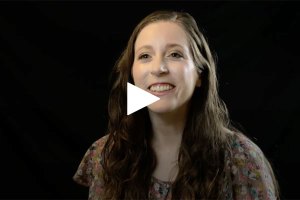
When Monica Clemans-Remmen taught second grade at Cedar Valley Community School, parents called to question the way she taught math.
“I don’t think I (teach) any math like I was taught,” she said. “When I grew up, it was all worksheets.”
Traditional math techniques, like using place value to subtract, are no longer taught.
“(Parents say): ‘This is not the way we did math,’” she said.
Clemans-Remmen, like many teachers in the district, combines traditional math teaching with what’s called “reform” or “standards-based” math. In the past decade, reform math has become common in schools statewide, as it aligns with state standards and the Washington Assessment of Student Learning, or WASL.
Now a first-grade teacher at Cedar Valley, Clemans-Remmen no longer hears parents questioning the reform approach.
But several parents, educators and legislators statewide are pushing to toss reform math and return to traditional math.
What’s the difference?
In traditional math, teachers show students how to solve a problem, then students practice it, a method called “drill.”
In reform math, students are given a problem, asked to find their way to an answer and told there is more than one way to solve it. Direct instruction happens after that. Students must explain their thinking and grasp the underpinnings of the math concept.
A real world context is often used in reform math. For example, students will calculate change to buy food or solve money problems in the context of starting a business.
“Back to basics”
Math educators, parents and state lawmakers told members of the State Board of Education at a meeting Oct. 27 that math education is in crisis, that short-term, emergency measures must be adopted and that the state’s math curriculum and instruction must be overhauled.
Earlier that month, about 450 people gave up their Friday night to hear professors and lawmakers argue for reform, to a background of frequent applause.
The event at the University of Washington was sponsored by Where’s the Math, a group of parents, educators and community members.
They argue that standards-based math doesn’t teach enough content, that students find it confusing and that high school graduates can’t do college math. Americans are falling behind in the world and have less qualified graduates, they argue.
Their solution: return to basics.
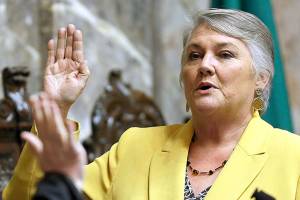
“A number of (legislators) met all summer to deal with the disaster in state mathematics,” said Rep. Ross Hunter, D-Medina, at the event. “50 percent of kids failed the math WASL, which measures an eighth-grade level (of proficiency.)”
Speaker David Klein, a math professor at California State University Northridge, listed off standard reform textbooks like TERC, Connected Math and Math in Context.
“They are the worst in the industrialized world and must be changed,” he said.
Local views
“The standards are a real challenge for kids to learn,” said Dan Wilson, president of the Edmonds Education Association, the teacher’s union. “Quite a few of our math (teachers) think the standards are so high they’re inappropriate for the age level.”
Peeple are talking about math now because of poor WASL scores, but it’s no surprise that scores were low, he said.
“The feeling is that if we have the best method of teaching math, every kid will improve,” he said. “We have not found that to be the case.”
Hawkins Cramer, principal of Cedar Way Elementary, supports reform math and a balanced approach to teaching math, but said more professional development — and funding for coaching — is needed.
“It’s hard to teach constructivist math without training,” he said.
The district’s approach
The Edmonds School District uses two of the curricula Klein called “the worst in the industrialized world”: TERC (also known as Investigations) and Connected Math.
But it lacks a unified math curriculum. Instead, many teachers use both reform and traditional methods in math, said Ken Limon, assistant superintendent.
“A kid needs to have a fluency in number skills and number sense, as well as being able to construct meaning and apply what he knows in different situations,” Limon said.
For example, TERC uses a clock face to teach students to add fractions, but doesn’t teach students how to find a common denominator, said Klein.
“I’d say that most (district) teachers who do a constructivist lesson also teach how to find a common denominator,” Limon said. “If it’s not happening, we’re going to help it happen as we proceed.”
Wilson said that most district teachers take a balanced approach.
Clemans-Remmen, for example, uses traditional and reform methods.
“Normally, I do 10 to 15 minutes of a mini lesson, they work for 35 minutes, we talk at the end,” she said.
Clemans-Remmen sometimes has students try to find their way to the answer. She also uses worksheets to give them practice, holds group discussion, asks questions to stimulate student’s thinking and gives drills for homework, a mixture of traditional and reform methods.