Some will vote again on Everett noise walls
Published 9:00 pm Wednesday, May 31, 2006
EVERETT – Homeowners along Summit Avenue who are fighting to keep panoramic views of the snow-capped Cascade Mountains are getting a second chance to block the construction of a 16-foot concrete noise wall.
The state Department of Transportation agreed Wednesday to scrap a 2004 vote that allowed for the wall to be built along a 1/3-mile stretch of Summit Avenue west of I-5.
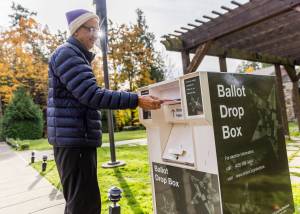
The state Department of Transportation said it will send new ballots to 71 homeowners in the Riverside neighborhood today via certified mail, giving them a chance to vote for or against the project.
The state also is proposing to shrink the wall’s height from 16 feet to 7 feet, and next week it will put up a “mock wall” in a few areas to give residents an idea of what the wall could look like, before they cast their votes.
“I think that’s a great idea,” said Corrina Napier, 33, who lives with her husband, Barry, and their son on Summit Avenue, directly across from Summit Park.
Ballots have to be postmarked by June 14. The results will be announced at a public meeting June 22.
The state’s move comes amid strong neighborhood opposition to the wall.
The Napiers were among a vocal group of neighbors on the bluff above the Snohomish River who set up a Web site that blasted the Transportation Department and threatened to hire a lawyer to block the noise wall.
“We’re doing our best to respond to the community out there,” said Mike Cotten, director for the state’s $220 million I-5 project in Everett.
The proposed noise wall, which would stretch south on Summit Avenue from 19th to 23rd streets, is just one segment of about three miles of walls planned along I-5 in the city.
When noise reaches a certain level near major road projects, federal law requires the state agency to build noise walls where feasible.
However, neighbors can vote against a wall if they choose, Cotten said.
But when the wall came to a vote in 2004, homeowners in the Riverside neighborhood narrowly approved it.
Although most people voted against it, the state’s formula for shooting down the project required a 60 percent “no” vote by the homeowners closest to the proposed wall, and a 55 percent “no” vote by those next nearest.
Since then, some people who voted for the wall have come forward, saying they would have voted against it had they known then what they know now.
Victoria Tobin of the Department of Transportation said the state was diligent in reaching out to the neighborhood.
Fliers were mailed to residents inviting them to environmental meetings, advertisements were taken out in English and Spanish, and neighborhood groups distributed information door-to-door, Tobin said.
Several walls already have been erected in Everett, with few objections, transportation officials say.
“It’s not common for us to hear from a community that doesn’t want a sound wall,” Cotton said.
On Wednesday evening, however, several residents who didn’t want a noise wall did speak up at a meeting organized by the Transportation Department.
More than 40 people attended the meeting at the Snohomish County Public Utility District’s office on California Street to hear state officials talk about the wall.
“Everybody who comes to my house says, ‘What noise?’ ” said Bee Nixon, an 86-year-old woman who has lived on Summit Avenue since 1990. “The most noise I get is motorcycles going up and down the street.”
Other Riverside neighborhood residents who live on the east side of I-5 said they were disappointed that they weren’t allowed to vote on a noise wall. The state has plans for a 16-foot noise wall on that side of the freeway.
Not all in the neighborhood found fault with the Transportation Department, however.
“When I have company, you can’t have a conversation in my front yard,” said Mary Burns, 77, who first moved to Summit Avenue in 1951. “The noise is just tremendous out there.”
M.J. Donovan-Creamer, outgoing chairwoman of the Riverside Neighborhood Association, said transportation officials have “bent over backward” to keep the neighborhood informed on the project.
“I just don’t see the DOT as the big bad wolf in all of this,” she said.