Stinky Whidbey Island bats will find new homes at Fort Casey
Published 1:30 am Tuesday, April 2, 2019




By Laura Guido / Whidbey News Group
WHIDBEY ISLAND — Parks staff members at Fort Casey can appreciate bats’ importance to the ecosystem, but they couldn’t help but notice the smell of guano from more than 300 bat mothers in their office attic.
When the maternity colony left for winter, so did the human occupants of the office building at Fort Casey State Park — temporarily — to allow the guano to be cleared, according to Chris Holm, Central Whidbey state parks area manager.
The attic cleanup is one of the first steps in a planned roof and window replacement on the historic site. The renovation includes the installation of a new home for the evicted bats.
Parks staff worked with state Department of Fish and Wildlife and local bat biologists Sarah Schmidt and Ruth Milner to try and find a mutually beneficial solution.
The bats like to roost in tight, warm and dark places where the pups can huddle together for warmth, according to Schmidt.
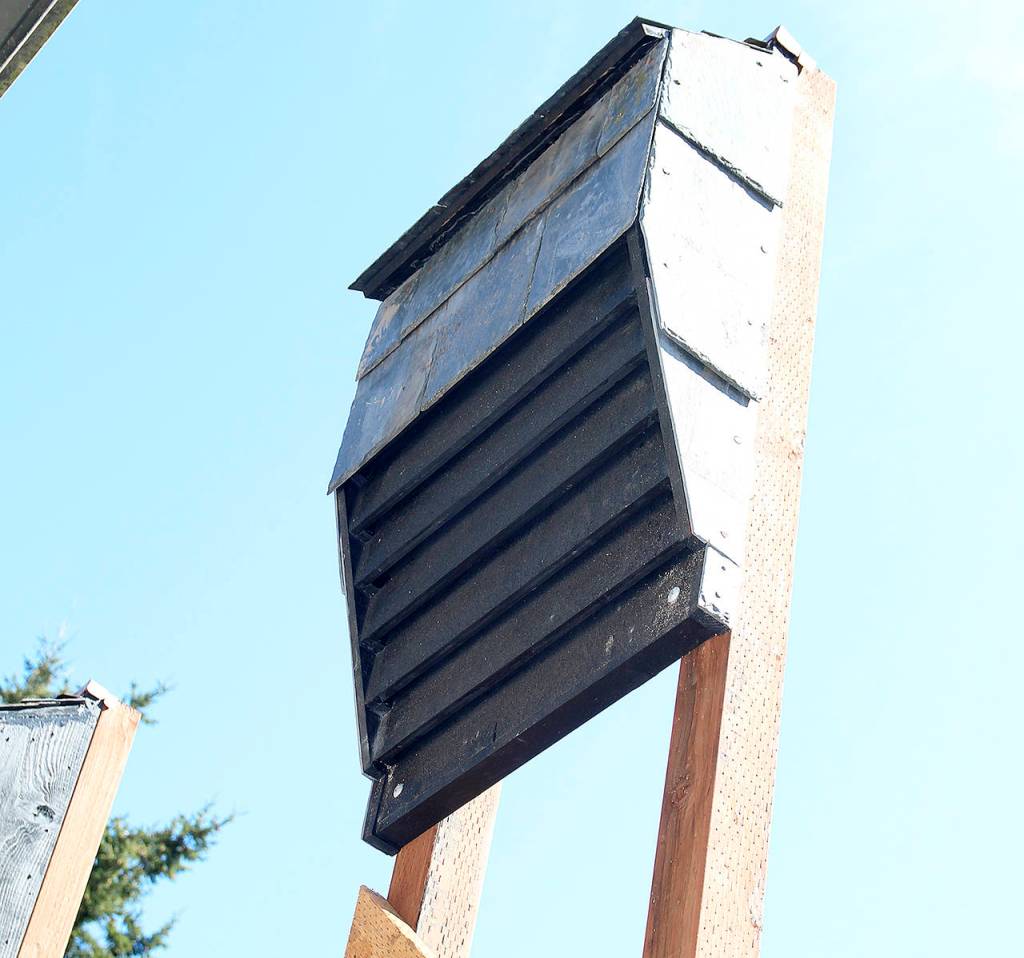
She helped pick the design of two black slatted boxes that sit about 12 feet off the ground on beams behind the office building with small slots for the bats.
The attic had housed little brown myotis and Yuma myotis species. The flying mammals serve an important role as major predators for night-flying insects, including mosquitoes. A female with a pup will eat up to half her body weight worth of insects to produce enough milk, Schmidt said.
“They’re a really important part of the balance of keeping insects controlled,” she said.
The roof and window replacement project will also include measures to prevent the colony from putting roots down in the attic again.
These measures will take on an almost festive look with more lighting, fans running and even balloons. The sound of the shuffling Mylar is meant to disrupt the echolocation, he said.
It’s more than likely the colony will try and reclaim its former home, Schmidt said.
“Bats tend to be very loyal to their roost,” she said.
It remains to be seen if the new bat boxes will be deemed a suitable alternative by the returning mother bats. Schmidt said it’s probable they will start showing up at the park again around May and pups will begin to appear in June.