Editorial: Everett must make most of pandemic windfall
Published 1:30 am Sunday, November 28, 2021

By The Herald Editorial Board
Deciding how the city of Everett should spend $20.7 million in federal funds might seem an intriguing exercise, if the task weren’t so freighted with having to make sure that every dollar is spent to ensure the highest benefit for the city’s greatest needs in the midst of the continuing covid-19 pandemic.
When you get a windfall — one most local governments have never seen before and are unlikely to ever see again — you have to make it count.
The funds, about half of which the city now has in hand and half which will be received next May, is Everett’s share of about $350 billion in American Rescue Plan Act funds to state, local and tribal governments across the U.S. in response to the pandemic. Congress kept the boundaries for appropriate projects within a range of purposes, including support for the public health response to covid-19; addressing its negative economic impacts; providing premium pay for essential workers; replacing lost public sector revenues and making investments in public infrastructure for water, sewer and broadband internet.
Mayor Cassie Franklin’s office has presented a list of potential projects for consideration by the city council in coming years, most focused on reversing the economic hits to the city that the pandemic either created or worsened and that address areas such as the city’s homelessness and shelter support; behavioral health; early learning, child care, STEM and business education; business expansion and job creation; home ownership; small business industries; streamlining city permitting and management services; and city infrastructure.
Like a lot of to-do lists, it wasn’t hard to find more in which to invest than what the funds will allow.
The mayor’s office outlined a list of proposals that range on the low-end from $18 million to more than $35 million; which means there are choices to be made. And the administration already has begun work to begin evaluating some of its own suggestions as information is presented to the council, even as the council approaches a new year and the addition of four new council members in January.
As part of that evaluation, a survey of some 700 city residents ranked several of the areas of concentration. Among needs generating the most support in the survey were:
Expanding access to behavioral health and addiction treatment;
Expanding support services for homelessness, including work ongoing to expand the city’s pallet shelter program;
Supporting local businesses and community organizations;
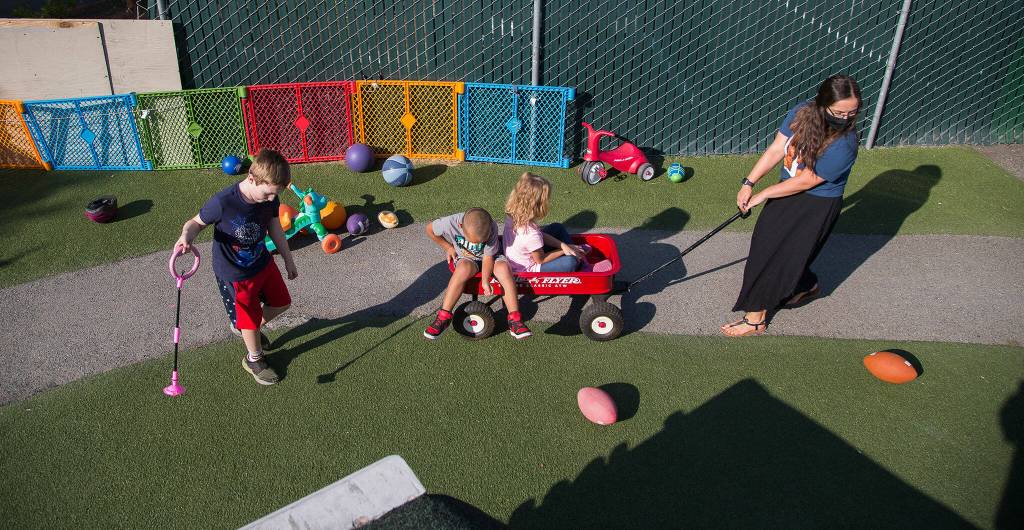
Expanding access to child care and preschools;
Community improvement grants for neighborhood cleanup efforts; and
Investments in improved outdoor spaces, such as parks.
Presented to the council last week, the proposals received interest and general support; as well as questions and a request for more details.
“There’s not a lot not to like,” about the outlined proposals, said Councilmember Scott Bader, one of four long-term members on the council who will be leaving at the end of the year.
Still, several on the council expressed wariness about the potential for some of the investments to create a financial “bow wave” and obligate the city’s support in the future, even as it confronts a structural budget deficit and has moved to wean off some of its traditional services to other agencies, such as the senior center.
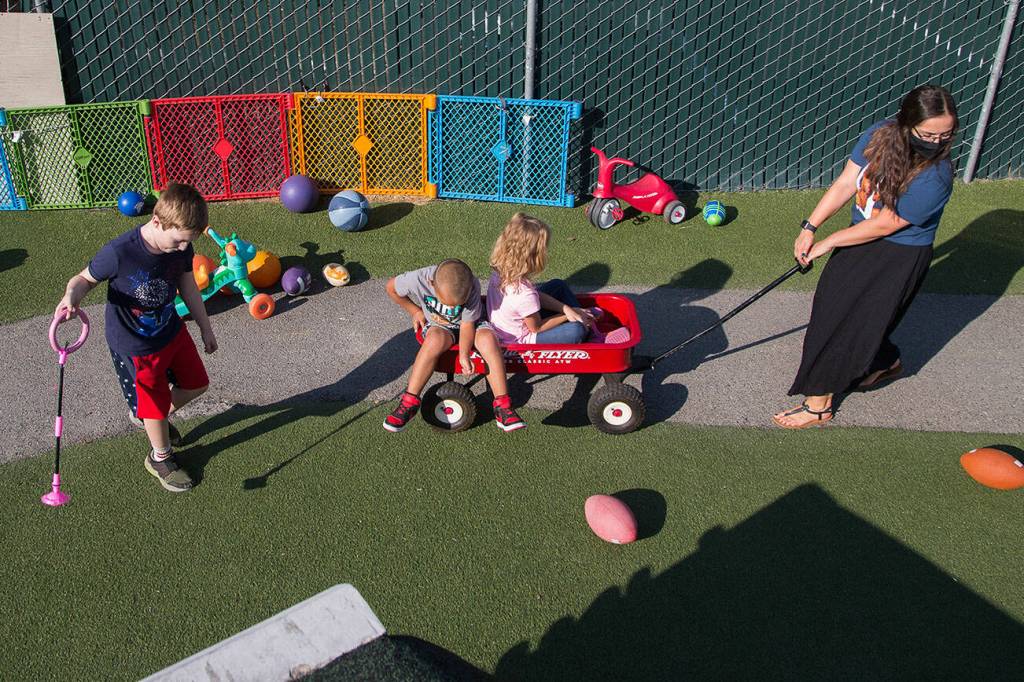
That’s one potential concern for one of the proposals, a grant of between $1 million to $1.5 million to a nonprofit to help launch a preschool program at Everett Station that would be tuition free for families earning at or below 60 percent of the area’s median income. While recognizing the need for child care and its ability to help families find and keep jobs, a few on the council voiced concerns for creating a program that might not be sustainable.
But the potential benefits for such a program — using currently unused space at Everett Station, a transit hub that would provide easy access for working parents to and from jobs — seems worth more consideration. One of the reasons many potential workers are staying out of the labor force — even as jobs go unfilled — is the difficulty for parents in finding affordable child care.
The number of U.S. families with at least one unemployed parent nearly doubled between 2019 and 2020 — the first year of the pandemic — from 4.1 million to 8.1 million, according to the federal Bureau of Labor Statistics. The labor participation rate (those working or looking for work) in 2020 for mothers with children under age 6 was 66 percent, compared with the 75 percent of mothers of children ages 6 to 17.
Another proposal worth further consideration could help the city develop desperately needed parks in the city’s south end by piggybacking on development of stormwater infrastructure. Like a supersized rain garden, a “stormwater park,” would allow the city to create greenspace that would channel, collect and clean stormwater but include traditional park facilities. That project’s cost is estimated between $3 million and $6 million.
What’s not proposed in the list of projects is renovation of city buildings and facilities. As needed as that work is, Franklin told the council, it would consume most if not all of the ARPA funds and would not provide the benefits that are outlined in other projects.
The mayor’s office and the council have some time to consider these and several other good ideas for the nearly $21 million. The ARPA funds have to be allocated by 2024 and spent by 2026; the real deadline is the immediate need in the city for this work.
Franklin’s administration has outlined a balanced list of suggested projects that — more than meeting the federal government’s requirements — can make the kind of “transformational” change that Franklin has previously advocated for the city.
With earnest hopes we never see another pandemic like this, Everett won’t get another windfall like this again. This has to make most of what the city is getting.