Department of Ecology’s proposed changes over organic waste raises concerns
Published 1:30 am Saturday, May 23, 2026
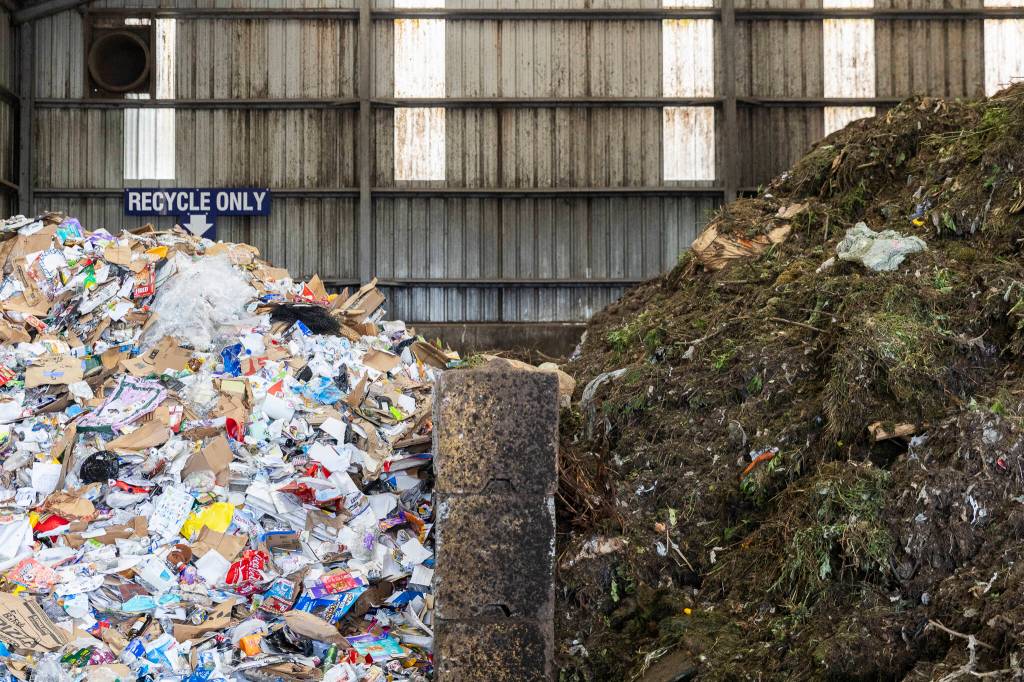
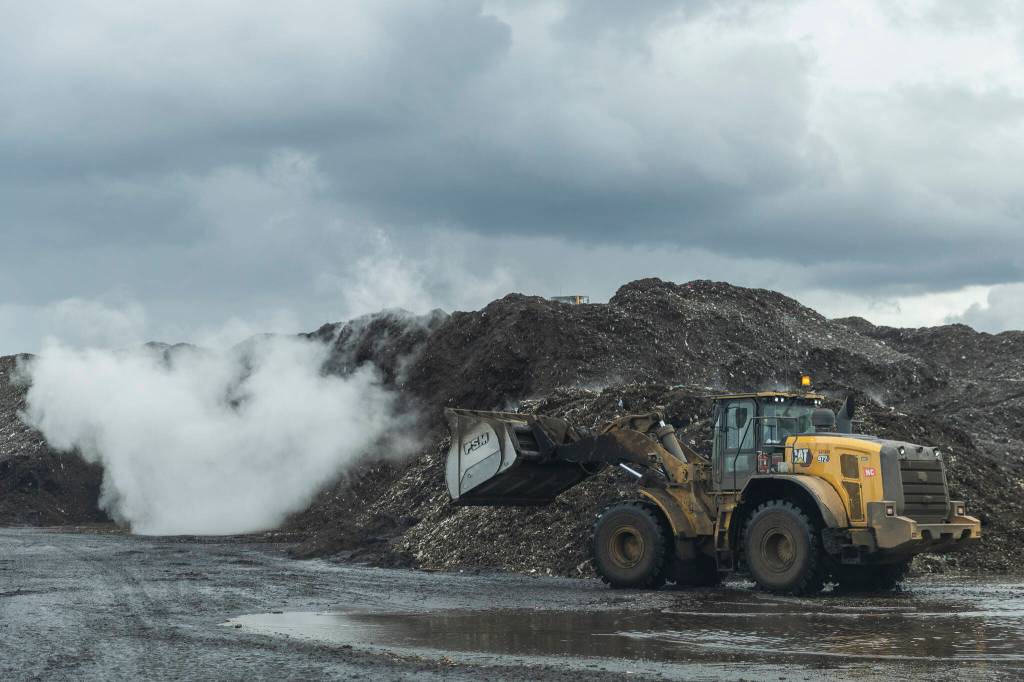

EVERETT — Snohomish County leaders, state advocates and regional stakeholders are raising concerns about changes the Washington Department of Ecology has proposed to a rule covering how organic waste is managed.
The Department of Ecology is updating its organic materials management law ahead of new state 2027 regulations that will require local jurisdictions with more than 25,000 residents to separate organic waste from other types of waste headed to landfills.
The state’s goal is to remove 75% of organic waste from landfills by 2030, a move that will support Washington’s broader fight against climate change, as decomposing material such as food and yard waste releases methane, a potent greenhouse gas.
But cities, including Everett and Seattle, as well as state nonprofits like Zero Waste Washington and businesses like Cedar Grove Composting, have spoken out against the draft the Department of Ecology has released on its proposed changes, saying the changes will roll back progress the state has made to combat climate change through organic waste management.
Formal public hearings on the draft are scheduled for July 8 and 9, with the comment period ending on July 17. From there, the state agency will review feedback and said it hopes to file a final rule by November.
A major focus of debate is how the state should utilize and regulate an emerging technology called depackaging, a mechanical process of separating organic material from nonorganic packaging, like berries in plastic containers.
Critics worry the state agency’s changes will drastically alter how organic waste is managed, relying heavily on depackaging facilities that could increase microplastics entering the food system and cause recyclable material to end up in landfills.
“We really want to protect the programs that we’ve built with our cities and counties for the last 20 years. We’re at a tipping point right now on this issue,” said Jay Blazey, general counsel for Cedar Grove Composting. “It’s not just a competitor issue, there’s environmental concerns.”
In response to the feedback it’s already received, Chery Sullivan, the policy section manager for the Department of Ecology, said, “With any kind of change, there will be a certain amount of angst. It’s going to be hard on somebody.”
‘Source separation’
While the Department of Ecology is required to update the rule for the 2027 requirements, Sullivan said the revision also created an opportunity to level the playing field for different types of organic waste management facilities.
Often, people immediately think of composters for where organic waste goes, like food scraps or tree trimmings, Sullivan said. But there are other options, like depackaging facilities or anaerobic digesting systems, airtight containers that use different types of bacteria to break down organic matter.
With the increase of waste collection on the horizon, as a way to grant more facilities and more types of facilities the ability to receive and process the waste, the state agency has proposed to change its definition of “source separation,” how different waste is separated at the point of generation, like a home or business.
The rule draft has expanded on the standing definition, adding examples of acceptable ways to organize different types of waste.
“A grocery store that places packaged or unpackaged food for purposes of recovery of the organic materials within in one container,” is one of the proposed definitions’ examples.
From the state agency’s perspective, this example grants businesses the flexibility to choose how to deal with their waste. It could even make waste disposal simpler because instead of having to pay for a recycling service, compost service, and the labor for staff to separate organics from non-organic packaging, businesses could just pay for the services of a singular depackaging facility.
And it would possibly address contamination issues because there’d be fewer choices of bins to discard waste in.
As an example, instead of opening a clamshell and discarding moldy or unsold strawberries into a compost bin and the clamshell into a recycling or trash bin, businesses could just throw the entire package into a bin being sent to a depackaging facility, said Heather Trim, the executive director of Zero Waste Washington, a statewide nonprofit focused on driving sustainable and waste-free policies. From there, machines would press and squeeze the strawberries out of the plastic container as a way to separate the two.
Depackaging “is creating two problems,” Trim said. “It’s mucking up the recyclables, and it’s also potentially creating microplastics that are going into the food stream.”
In a comment letter to the Department of Ecology detailing her concerns with the draft language, Everett Mayor Cassie Franklin explained how depackagers could end up sending the city’s recyclable materials to landfills.
Currently, the city has a “robust” recycling program, which allows businesses and residents to send materials such as cardboard, plastic clamshells and other containers to recycling facilities, Franklin said.
“Under the proposed rules, however, generators may be permitted to send these same recyclable materials to depackaging or pre-processing facilities, where they are squeezed, mixed with putrescible organics, and rendered unrecoverable. Once cross-contaminated, these recyclables are ultimately landfilled, reversing years of progress in source separation and recycling system development,” she said. “This outcome would undermine local and state recycling goals and introduce inefficiencies and environmental harm that run counter to the Legislature’s intent.”
Trim and other critics of the drafted rule also worry that depackagers will increase the amount of microplastics entering the food system.
Machines have to smush and squeeze organic material out of its nonorganic packaging, meaning these surfaces grind together. If those packages are plastic, the process likely creates microplastics that end up in the food slurry product, Trim said.
If the food slurry makes its way to a composting facility and ends up being used at a farm, that’s microplastics being integrated into the food system, she said.
During an initial feedback period, the Snohomish County Health Department wrote to the Department of Ecology about its microplastic contamination concerns.
“Even advanced depackaging equipment generates residual microplastics and fine particulates that can enter compost feedstocks, potentially reversing progress made by Washington’s compost industry in reducing contamination,” the statement said. “Clean, source-separated organics continue to provide the highest-quality feedstocks. Policies that unintentionally shift clean food waste toward facilities that commingle packaging with feedstocks risk increasing microplastics, reducing compost quality, and normalizing contamination rather than preventing it.”
The Department of Ecology said it was unsure of how or if depackagers would affect microplastics entering the system.
“Our response is that we don’t know. We truly don’t know,” Sullivan said. “We don’t know how much microplastic is in the existing compost operation because existing compost operations also shred material, which may include plastics, not necessarily food packaging plastics, but this is kind of an unknown for us.”
In regard to recyclable packaging being thrown out due to food contamination, Sullivan said that the agency doesn’t believe that to be the majority of the cases.
“Think about Mylar bag around chips, or the net bag around oranges, or the plastic clamshell around baked goods, the majority of that packaging is not actually recyclable,” Sullivan said. “We felt like that particular argument in this time and place didn’t rise to the level to say, ‘Oh no, no depackagers, throwing away recyclables.’”
Lessons learned
Blazey also worries that widespread use of depackagers could form bad habits.
“‘Take-all bins’ are just problematic because people will throw whatever in there,” he said.
The state agency said education is a component of all rule development.
“Any new rule will be communicated out to all of the entities, such as local government, solid waste providers, haulers, service providers, the people that pick up the material,” Sullivan said. “They’re already engaged in this rule-making process, they will also have that opportunity to share the information about the changes that are happening that will directly affect their customers.”
While Washington’s organic waste management future is still in limbo, other states have already started to grapple with the unforeseen effects depackaging facilities have had on their organic waste management landscapes.
In 2020, Vermont began fully implementing its 2012 Universal Recycling law that banned sending food and yard waste, as well as recyclables, to landfills.
To support the ban, the state’s Agency of Natural Resources began encouraging depackaging, saying source separation wasn’t needed and the depackaging facilities could take both packaged and unpackaged food simultaneously.
But the move hurt composting facilities and many criticized the state, saying depackagers introduced contamination such as microplastics into the system.
The feedback was so strong that, in June 2022, Vermont placed a moratorium on permitting new depackaging facilities until new regulations were put in place. The state also mandated a study on microplastics and PFAS contamination in food waste and packaging. PFAS, per- and polyfluoroalkyl substances, are a group of highly toxic chemicals.
In July 2025, the state released new policy drafts that would prohibit depackagers from accepting source-separated food with packaged food unless pre-approved.
The new version of the rule is still in a public comment period.
“Vermont has identified some key policies that can help protect and encourage source separation, because that’s a best practice, while also allowing for some foods to go to the depackagers, because the depackagers have a role,” Blazey said. “We’re not asking our grocery stores to scoop out a little yogurt cup, that’s perfect for a depackager. But the easy stuff, it’s silly to put it in a depackager when all you got to do is open it up and get your recyclables out and get your food in.”
To learn more about the organics waste management law and sign up for updates, visit https://ecology.wa.gov/waste-toxics/reducing-recycling-waste/organics-and-food-waste/2022-organics-management-law.
Eliza Aronson: 425-339-3434; eliza.aronson@heraldnet.com
Eliza’s stories are supported by The Herald’s Investigative Reporting Fund.