Drill prepares first responders for disaster at Big Four Ice Caves
Published 1:30 am Friday, May 29, 2026
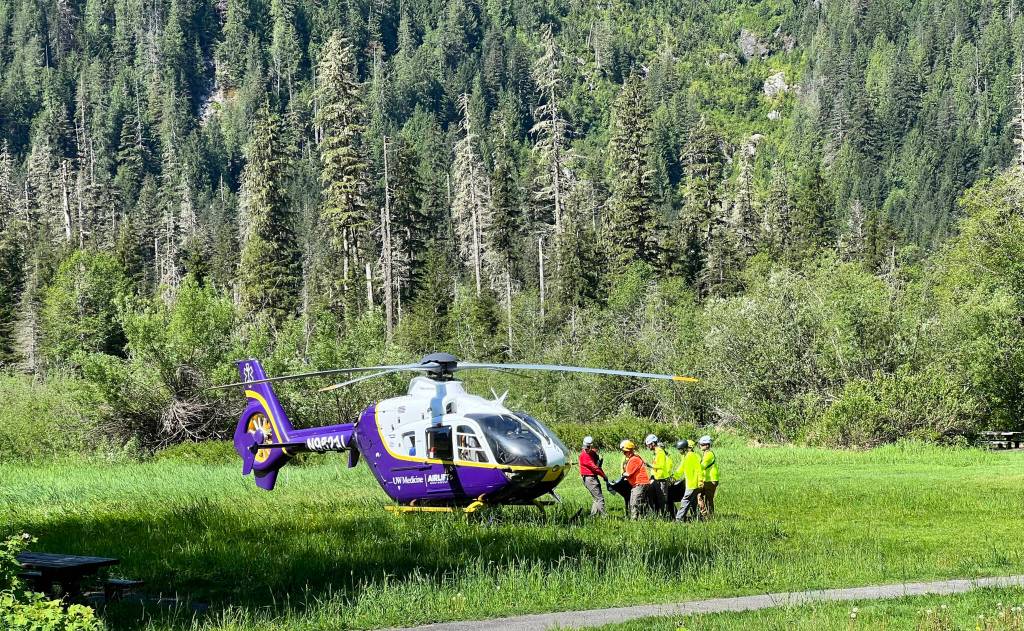
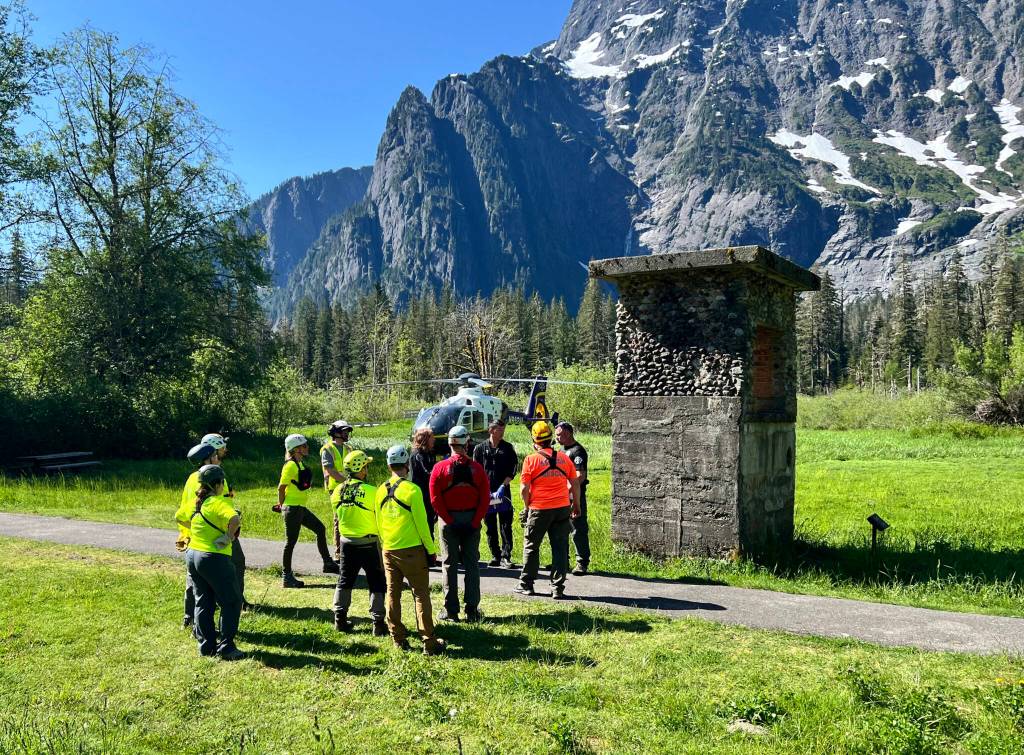
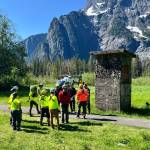
EVERETT — First responders swarmed one of Snohomish County’s most popular nature destinations on Thursday, not because something went wrong, but in case it does in the future.
More than 100 emergency rescuers participated in a safety drill led by the Snohomish County Sheriff’s Office at the Big Four Ice Caves, about 20 miles east of Granite Falls off the Mountain Loop Highway.
Helicopters flew overhead while mountain rescue volunteers, firefighters and law enforcement scaled the trail on foot, practicing their response to a major avalanche at the ice caves.
It’s an exercise in being ready for anything, at a place where the worst has happened before.
Two people died in a collapse at the ice caves in July 2015, according to previous reporting from The Daily Herald.
They were among at least four people who have died at the ice caves since the late 1990s. An 11-year-old Marysville girl was killed by falling ice in 2010 and a 27-year-old Bothell woman died in 1998 from snow and ice falling at the mouth of the caves.
“We are fairly certain from past activity out there that it’s going to happen again at some point,” said Deputy Einar Espeland, a commander with the sheriff’s office’s air support unit and the man tasked with organizing the annual drill. “Just having a plan is nice, but if you don’t practice it, if you don’t put it into play and see where your problems are, then when it comes time, it’s not going to be nearly as smooth.”
Volunteers played the roles of victims, giving first responders from as many as 10 different local agencies the chance to prepare for a massive mountain catastrophe with multiple people trapped or hurt.
Crews practiced every stage of a rescue effort from the first notification something went wrong through a preplanned response checklist that included putting teams onto the mountain, triaging the scene and extricating people both on foot and by emergency helicopter.
Espeland said this was the first time the training exercise included overland rescue efforts.
“Integrating it with the aviation side is something different, we’re just drilling both sides,” Espeland said. “We know it’s going to happen, so lets make the drill a little more realistic and add the ground packouts this year.”
With so many responders descending on the scene, one of the main concerns is staying in touch.
Espeland described the area near the Big Four Ice Caves as a communications black hole.
The typical radio systems fail that far east in Snohomish County, Espeland said, forcing first responders to use back-up channels and patch radio networks together to connect with dispatch outside of the immediate response area.
“You just can’t simulate the problems you’re going to run into out there,” Espeland said. “Actually doing it just helps people figure out exactly what they need to do, if it were to actually happen.”
The safety exercise is one of several disaster trainings held regionally throughout the year.
The ice caves parking lot and trail reopened Thursday evening after being closed for about eight hours to accommodate the drill.
Ian Davis-Leonard: 425-339-3097; ian.davis-leonard@heraldnet.com