Edmonds hears presentation on fiscal impacts of Esperance annexation
Published 1:30 am Thursday, July 16, 2026
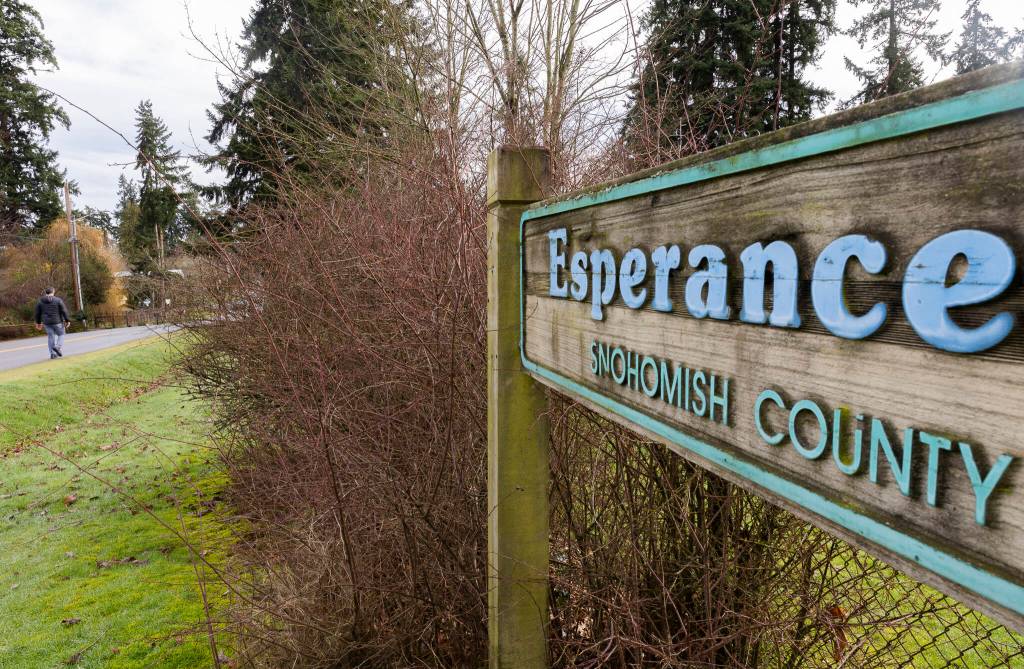
EVERETT — The Edmonds City Council on Tuesday heard a presentation on the potential impacts of annexing Esperance, the first formal council discussion in the latest round of annexation talks.
The 464-acre unincorporated neighborhood is completely surrounded by the city of Edmonds. As of 2025, the population of Esperance was nearly 4,500, which is about 10% of Edmonds’ population, according to Tuesday’s presentation.
While annexation discussions first started more than 60 years ago, the latest round began after voters struck down a $14.5 million property tax levy lid lift in November 2025 that would have helped the city’s budget deficit. Edmonds officials said that annexing Esperance could generate needed revenue for the city.
Esperance voters struck down annexation five times since the 1960s, with the most recent vote in 2005. But last year, a group of Esperance residents began advocating for annexation after raising concerns over zoning changes at the county level. Since then, some residents have said annexation could improve emergency response times, better maintain drinking water quality because of less development and protect pedestrian safety with increased services.
On Tuesday, city-hired consultant Josh Linden presented a first look into the potential fiscal impacts of annexation.
In the first year, the cash flow of annexing both areas would be about $3.8 million for the general fund, Linden said. In the first five years, he estimated about $20 million, and from years six to 15 he estimated about $50 million. That revenue would come from property, sales and utility taxes.
While those figures take into account some costs, they do not include staffing costs, he said. The police department anticipates needing four additional officers and one support staff member in the event of annexation. The parks and recreation department anticipates an additional 1.75 positions, and public works anticipates one additional position.
“If you add 4,500 more people, the phone’s going to ring a lot more often,” Mayor Mike Rosen said. “There are other sorts of strains on the system as well, and none of that is in this initial calculation.”
The reason the city is prioritizing annexation now, Linden said, is because of a potential sales tax credit the city could receive from the state. If costs exceed revenues — which could happen with additional staffing costs and future capital projects, such as upgrades to the 84th Avenue Bridge and Esperance Park — the city would receive a 0.1% sales tax credit, which would go toward providing services to Esperance. The law is in place for annexation area populations between 2,000 and 10,000. However, the city cannot impose the tax after July 1, 2028. If it submits an application to the state before then, it can continue to receive the credit for up to 10 years, or as long as costs exceed revenues.
“There may be two different ways at accounting for the costs and expenses here, depending on what you’re trying to look at in that snapshot,” City Attorney Jeff Taraday said. “Having said that, I agree that the annexation decision probably should not hinge on the sales tax credit eligibility, but I do think that there is a possibility that the city would still be eligible for some tax credit.”
To make the most of the sales tax credit, Linden presented the option of annexing Esperance in two phases with slightly more than 2,000 residents in each section. Splitting the area would also allow more time to analyze the potential costs of acquiring the 84th Avenue Bridge, which would be included in the second phase, Taraday said.
The city would also receive revenue for transportation projects through motor vehicle fuel taxes, transportation benefit district sales taxes and car tab fees. In total, this would bring in about $4 million in the first 15 years, Linden said.
In the first six years, the city would receive about $2.9 million in real estate excise tax revenue, Linden said. Rough estimates for transportation, parks and stormwater costs totaled about $2.5 million.
The consulting team, along with city staff, are working on a final report to present to the council in the next few weeks, which will include more concrete cost estimates, Linden said.
While the city previously had to put annexation to a vote, a law passed in the 2000s makes it possible for the city to annex Esperance without a vote from its residents, and instead through an interlocal agreement with the county. The law applies to “unincorporated islands,” or areas that have at least 80% of its boundaries contiguous with one city. City staff intend to use this law and not go to the voters.
Council President Pro Tem Jenna Nand said she’d prefer to put annexation to a vote.
“This has been an ongoing issue for decades, and I do think that we have a credible argument to the residents of Esperance that they would be benefited by being annexed into the city, and I think that if we can have a collaborative and bilateral process with them that includes their ability to vote, that would be more beneficial and potentially more expeditious for us to proceed with the annexation,” Nand said.
Some council members advocated for town halls with Esperance residents to explain the potential tax impacts and service level changes. Planning Manager Brad Shilpey said the city plans to begin hosting town halls in the next couple of months.
“I have always felt like Edmonds and Esperance would be better together, and being as broke as we are, we wouldn’t be able to do this if we were not either neutral or net positive,” council member Vivian Olson said. “I’m excited that it looks like it can be a winner, possibly, even without the benefit of the sales tax. I’m grateful that the Esperance residents have reasons to be interested in annexation now, and I’m hopeful that it does end up being a win-win for both communities.”
Jenna Peterson: 425-339-3486; jenna.peterson@heraldnet.com; X: @jennarpetersonn.