Edmonds extends temporary 20% utility tax through 2028
Published 2:00 pm Wednesday, July 29, 2026
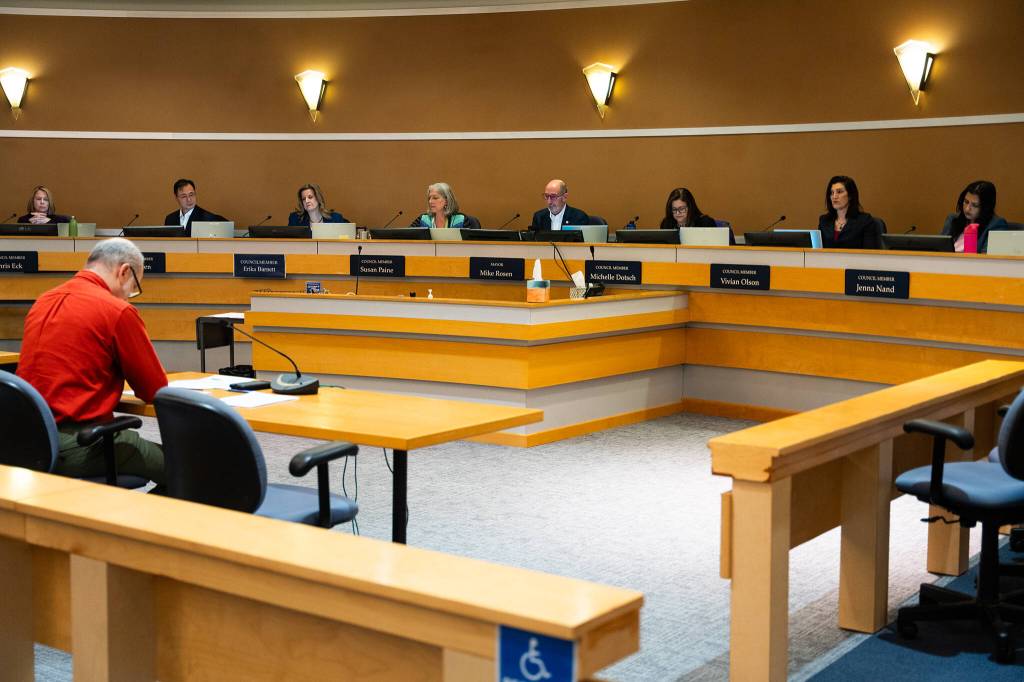
EVERETT — The Edmonds City Council voted Tuesday to extend its temporary 20% utility tax for another 18 months, until the end of 2028.
The vote comes as the city prepares to adopt a balanced budget for the 2027-28 biennium by the end of the year.
Without extending the utility tax increase, the city would have faced an estimated $4.5 million deficit in its general fund in 2027 and a nearly $5 million deficit in 2028, City Financial Analyst Kisha Post said Tuesday. With the extension, the city now faces an estimated $3 million deficit in 2027 and a $1.8 million deficit in 2028.
In December 2025, the council voted 4-3 to raise water, sewer and stormwater taxes from 10% to 20% for 18 months, until July 31, 2027. The vote came after Edmonds voters rejected a $14.5 million property tax levy lid lift, which was an attempt from the city to stabilize its budget amid a declared fiscal crisis. At the time, council members said it would give the city time to find more long-term revenue sources.
“The intention of a 18-month expiration was to allow us time to perhaps go out for another levy, and with the hope that those revenues will be coming into the city by 2027,” Post said Tuesday. “As we all know, we have not pursued an additional levy.”
The council approved the extension Tuesday by a vote of 5-2. Council member Will Chen, who voted against the original tax increase, said he still does not support the regressive tax. Council President Pro Tem Jenna Nand said that the council made a commitment to residents last year that the tax increase would be temporary.
“I was never intending to balance the budget on the backs of our ratepayers in this very regressive way,” she said.
Staff had recommended to council that they pass an ordinance to extend the tax indefinitely. Council member Susan Paine proposed an amendment for the 18-month extension, which all council members who voted for the extension supported.
“The utility tax is what is keeping the wheels on the bus … and I wish it weren’t. It’s terribly regressive,” Paine said. “Extending the sunset date by an additional 18 months I think will give the city adequate time to develop other revenue options that can be meaningful and long-term, and I’m hopeful that we will continue to work on that.”
In 2025, the city estimated that the 20% utility tax would increase the average household’s bimonthly utility bill by about $26.
The city is in the process of assembling a community task force to identify potential cuts and revenue sources. Edmonds plans to use the same consulting firm Mountlake Terrace used to conduct its community task force over the past year. In May, the Mountlake Terrace City Council decided to move forward with several of the task force’s proposed strategies, including internal reductions, development fee increases and a car tab fee increase.
According to a timeline presented at Tuesday’s meeting, Edmonds plans to take action on any long-term solutions the task force identifies by mid-2027. Any voter-approved revenue options would be considered in 2028, with 2029 being the earliest new, voter-approved revenue could begin. Post said that approving the utility tax extension now gives staff more clarity moving into the 2027-28 budget cycle.
Nand said she would be in favor of pursuing another levy before the task force’s work is complete.
Without the extension, the city would likely have to make additional cuts to balance the 2027-28 budget. Some council members said they would prefer for the city to not have to make significant cuts before the task force’s work begins.
“When we chose not to do that, it seems like it’s the wrong time to do it now, when we have a process in place where we’re involving the community to have a path forward, so I think extending it is a better choice,” said council member Vivian Olson, who voted against the initial increase in 2025.
The vote also comes as the city is raising concerns about decisions made by the city of Everett to increase wholesale water rates and raise utility taxes to 12% for all its customers — including those outside of city limits. While the wholesale water rate increase is currently in dispute, city officials say it would result in a more than $1.4 million annual impact to the city’s utility fund and could possibly lead to the city raising local rates.
Jenna Peterson: 425-339-3486; jenna.peterson@heraldnet.com; X: @jennarpetersonn.