How Snohomish County prepares for wildfire season
Published 1:30 am Saturday, August 8, 2026
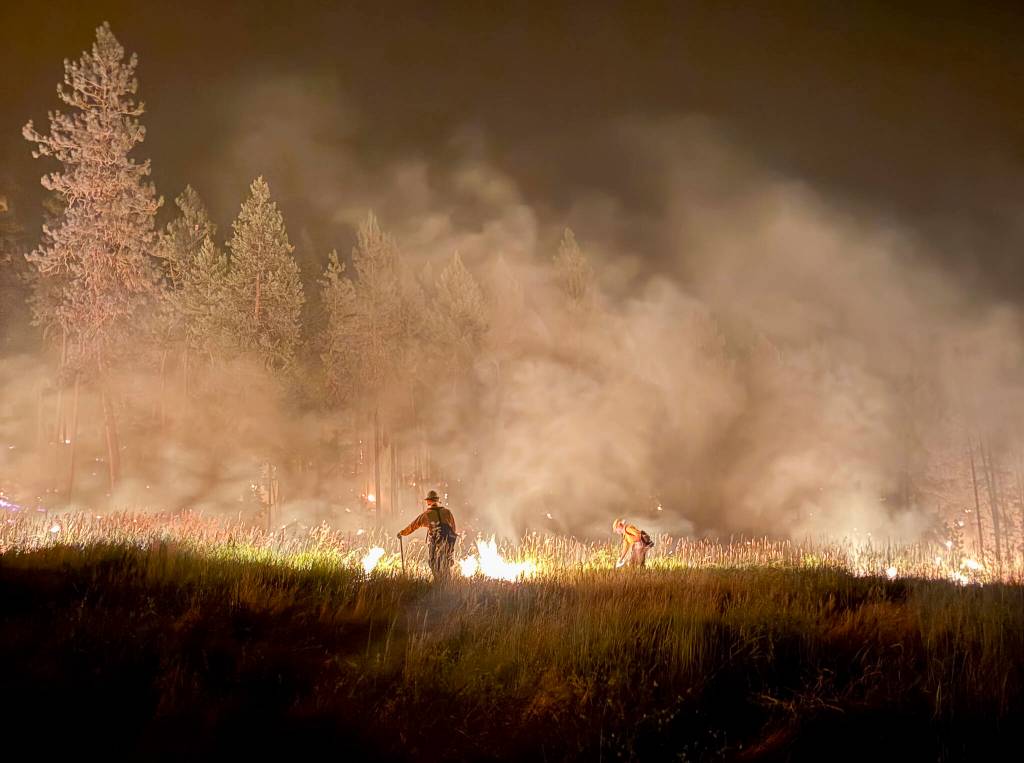

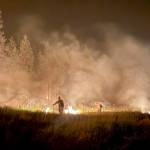
EVERETT — Firefighters and emergency management officials are taking steps to stay prepared for wildfires as a hot, dry summer has contributed to fires across the eastern part of the state.
In recent weeks, fires have destroyed hundreds of structures in and around Spokane. Wildfire smoke degraded air quality in the Puget Sound region. And on Thursday, the county announced a blanket ban on all outdoor burning, including recreational fires in fire pits or burning yard debris, until “there has been a sustained period of rainfall or if the fire risk is reduced,” the announcement read.
Local officials say that while longer, drier and hotter fire seasons in recent years are a cause for concern, they have undertaken significant efforts to prepare for wildfires if they ignite again in Snohomish County.
For Eric Andrews, the longtime chief of the Sky Valley Fire district based in Gold Bar, preparations for fire season start early in the year, as the area has seen fires as early as April, he said.
It typically starts with a refresher of wildland firefighting training — known as a red card — for the people who work at the fire department, which is made up of paid employees and volunteers. The fire department also offers resources to residents, like wood chippers, to those looking to clear up fuels around their homes before the season kicks into full gear, Andrews said.
When summer comes around in June or July, that’s when fire agencies across the state begin requesting support from other departments to fight wildfires, through what’s known as state mobilization. As the Northwest Fire Defense Region coordinator, Andrews helps reach out to different firefighting agencies within his region and tries to provide as much support to other areas when possible.
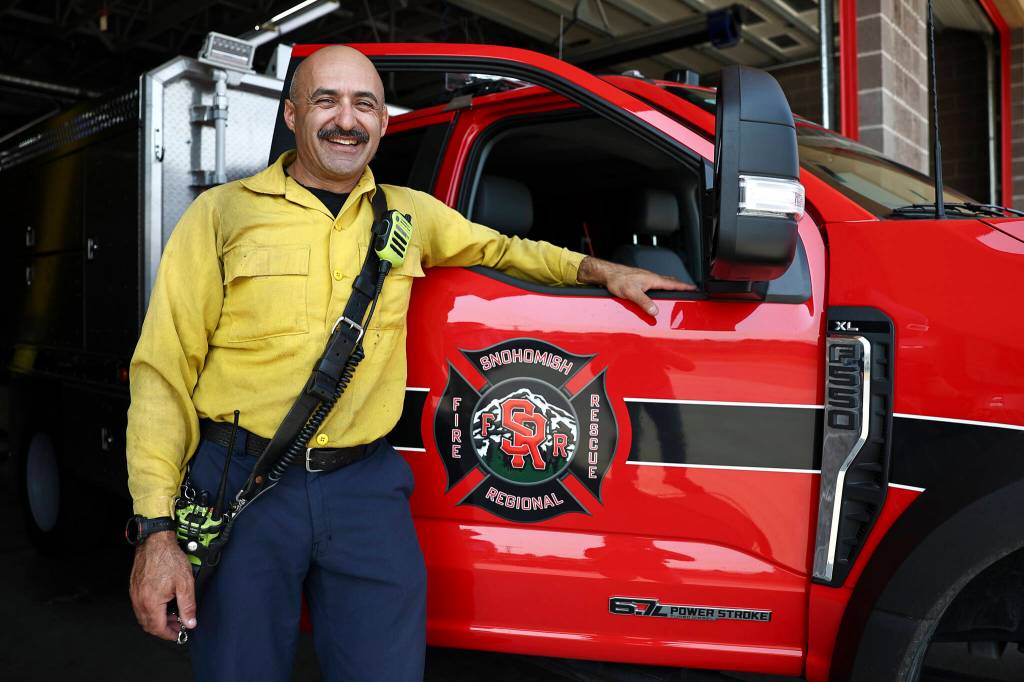
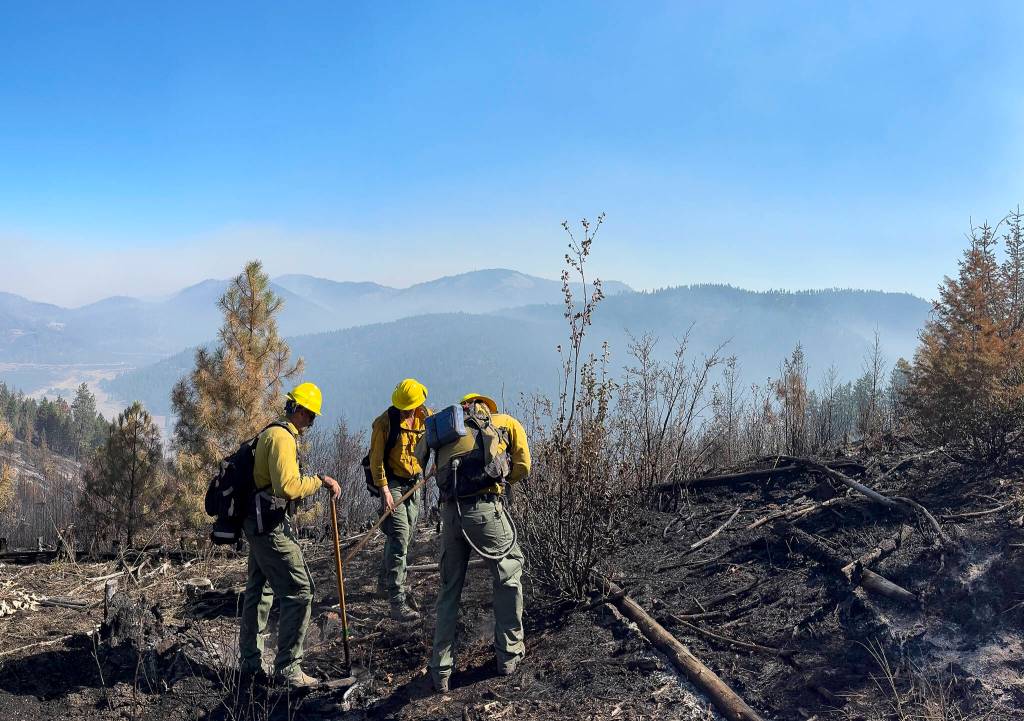
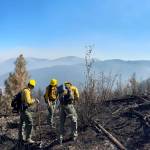
Ray Sayah, a lieutenant at Snohomish Regional Fire & Rescue, is one of the firefighters that was sent across the state this summer to support wildfire suppression efforts. He was sent to rural Stevens County in eastern Washington to help fight the Bradeen Hill fire, which has burned more than 4,000 acres since it began.
Eleven other firefighters from Snohomish Regional Fire & Rescue are currently assigned to fight both the Bradeen Hill fire and the Old Trails fire in Spokane. Sky Valley Fire has also sent eight firefighters east to help as well.
“These deployments reflect SRFR’s ongoing commitment to the Washington State Fire Services Resource Mobilization Plan while ensuring we continue to meet the operational needs of the communities we serve at home,” department spokesperson Kaitlin King wrote in an email. “Our deployed personnel are representing SRFR with professionalism and are providing valuable resources and leadership to communities impacted by these fires.”
Sayah said that being sent out to large wildfires gives firefighters experience they wouldn’t otherwise get in the western Puget Sound, where large wildfires are less common. It allows firefighters to get the hang of dealing with multiple divisions working on a single fire, and learn about using more aggressive firefighting tactics such as calling in helicopters or air tankers to drop fire retardant.
“You won’t get that experience here,” Sayah said. “You have to go on the big fires to understand how to order those resources and work with those resources.”
Sayah said it also helped to give firefighters experience with the incident management system, an organizational structure used in disaster response.
“By putting our resources out there, although it does take resources away from us, we have people with great experience that have been on these large fires, know how they act, know what to expect, and can manage them,” Andrews said.
Fire departments are the first point of response for battling a wildfire when one starts. But once it grows large enough that multiple agencies need to be involved, that’s when the Snohomish County Department of Emergency Management steps in.
When disaster strikes, the department helps send out alerts, coordinate responses from multiple agencies, and helps set up shelter spaces by activating what’s known as an emergency operations center, the department’s director, Lucia Schmit, said in an interview.
But before that time comes, the department also does important work related to planning and preparation for emergencies. Over the course of two years, the department helped create a wildfire protection plan that mapped areas in Snohomish County most at risk of wildfire damage, included best practices for evacuations, and highlighted how residents can protect rural properties from wildfire risks.
More homes are being built in what’s known as the “wildland urban interface,” where houses, farms and businesses are built amid or adjacent to large areas of trees. According to the wildfire protection plan, of the 5,000 building permits issued by the county between 2020 and 2025, about 20% were located within wildland urban interface areas.
With more and more homes being built in areas they never have been built before, it means that wildfires now endanger more structures than they have in the past, Andrews said.
Andrews said that fire agencies work to educate rural residents about evacuations and evacuation routes, particularly because there are few options for people to leave rural areas like Gold Bar or Darrington. Often, there is only one highway available for people to use, and if it’s blocked, people could be in danger in the event of a wildfire, he said.
“We just don’t have a really good evacuation system,” Andrews said. “We know that, we’ve told the state that, and it’s kind of a real bad concern for us.”
Andrews said that he, along with other agencies, works to prepare for evacuations early so people will have more time to leave the area if required.
As the burning of fossil fuels continues to warm the Earth’s surface and change its climate, severe weather events are happening more frequently. With intense weather events in Snohomish County becoming more common, like the 2024 bomb cyclone or the record flooding in 2025, Schmit said that the Department of Emergency Management now considers atypical weather patterns more often when deciding to activate the county’s emergency operations center.
“Our previous metrics for what is normal and what is manageable aren’t necessarily accurate anymore,” Schmit said.
Andrews said that in the past, the state would see about six to eight large mobilization requests per year for major wildfires. Now, the state sees about 50 to 60 mobilization requests every year, he said.
“It seems to be the norm for the last several years,” Andrews said. “Each year, it gets a little bit worse.”
While the fire season has already been devastating to eastern Washington, Schmit said that the National Weather Service had predicted that the west side of the state was going to have a severe fire season in August and September.
“We are here now,” Schmit said. “And our fuel is dry, and we have heat coming in and staying in, and it’s just going to get drier until we get a good, soaking rain.”
Most of the fires across the state have been human-caused, Schmit said, meaning residents should take precautions to prevent starting wildfires.
“This is not campfire season. Unfortunately, in this day and age, campfires are not something we can have in the driest part of the summer in this part of the world anymore,” Schmit said. “We’re just encouraging people to be very careful with their cigarette butts, with the chains on their trailers so they’re not dragging and causing sparks along the side of the road. We want to do everything we can to keep fires from starting.”
For people living in rural areas, officials at the county and fire departments stressed the importance of creating “defensible space” — an area around a home with as little dry vegetation as possible to prevent wildfires from spreading across neighborhoods. Schmit said the safety measures can be as simple as trimming nearby brushes and tree limbs, cleaning off pine needles and pine cones from trees or gutters so flammable materials are off of roofs, or by moving wood piles away from the side of homes. Residents in those areas can also consider building homes with metal roofs or building structures with fire-resilient materials.
Snohomish County offers a public safety hub that includes information about ongoing emergencies, including wildfires. For more information, visit www.bit.ly/snocowildfire. There, residents can also sign up for county alerts to be informed of emergencies in their area.
To learn more about defensible space measures you can take to protect your home, Snohomish Regional Fire & Rescue is offering a free online wildfire preparedness class at 6 p.m. Aug. 19. For more information, visit tinyurl.com/mr2k7x5c.
Will Geschke: 425-339-3443; william.geschke@heraldnet.com; X: @willgeschke.