A school guide for kids who color outside of the lines
Published 1:30 am Sunday, February 4, 2018


Forget everything you know about school. No more pencils, no more books, more teachers’ dirty looks. Consider education in its purest form. What is the point of it — to get a fancy college diploma or to learn how to live?
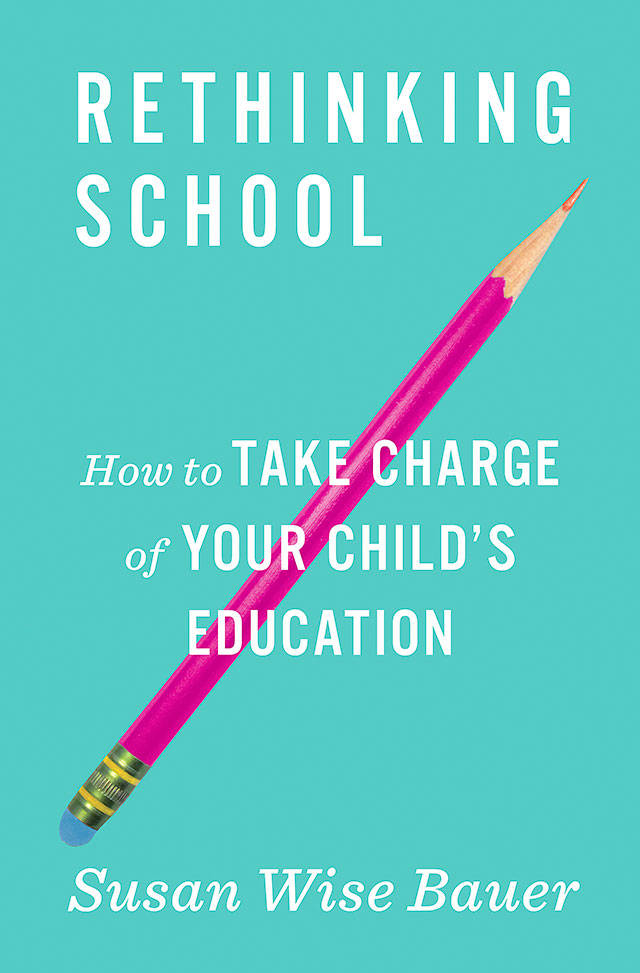
In her newest book, “Rethinking School: How to Take Charge of Your Child’s Education,” prominent homeschool educator Susan Wise Bauer empowers parents to put children first, instead of the institutions society has created to manage them.
But unlike her bestseller “The Well-Trained Mind: A Guide to Classical Education at Home,” which Bauer co-wrote with her mother Jessie Wise, “Rethinking Schools” is not a how-to guide for homeschooling. Instead, Bauer teaches parents how to flex the public school system to better meet the needs of each individual child.
If you’re the parent of a kid who leaps at the chance to skip recess and practice math facts, then this book isn’t for you. But if you have a child who has experienced school stress — peer, learning or system-created — then “Rethinking School” is a road map of how to help. It also explains how our public school system got to the point it is at now.
Why, for example, do we lump 25 10-year-olds in a classroom for six hours a day? It turns out we have Prussia to blame.
Before 1850, one-room school houses were the norm in America. Then the famous education reformer Horace Mann visited Prussia and was entranced by its militaristic system of grouping students by age. Prussia put children into platoons hoping to create a militaristic nation that wouldn’t get its butt kicked by Napoleon. Mann adapted this concept for an America eager to assimilate immigrants and equalize society. Thus, the age-based model of American public schools was born.
Mann’s goal, to make every fifth grade classroom and every fifth grader in America equal hasn’t turned out as expected. Schools in the suburbs are radically different than their counterparts in the inner cities. Some 10-year olds are academically advanced but can’t sit still. Others need specialized instruction in order to thrive. Yet virtually all fifth graders are expected to meet Common Core Standards.
No wonder some kids get stressed out by school. As Bauer puts it, “Children in school are powerless. They have been placed in a situation where they have no freedom of movement, no option to walk away or quit or leave.” Add homework to the mix and you have kids facing seven, eight, nine, or even 10-hour school days.
There are too many novel ideas in “Rethinking School” to list them all, so here’s my favorite. It’s called an “eighth-grade out” and Bauer borrows the concept from educator Kenneth Danford.
Got a middle-schooler who is struggling? Listen to struggle. Identify the underlying issues. Then give the young teen a break from the traditional school setting so she can mature. One year of homeschooling can make a huge difference. In ninth grade she can re-enter high school ready to be brilliant.
Raise your hand if you know someone who needed extra time to mature. Yup. I know someone like that, too.
Jennifer Bardsley is author of the books “Genesis Girl” and “Damaged Goods.” Find her online on Instagram @the_ya_gal, on Twitter @jennbardsley or on Facebook as The YA Gal.