KC-46: Aerial gas station, troop transport, cargo carrier
Published 1:30 am Thursday, January 24, 2019
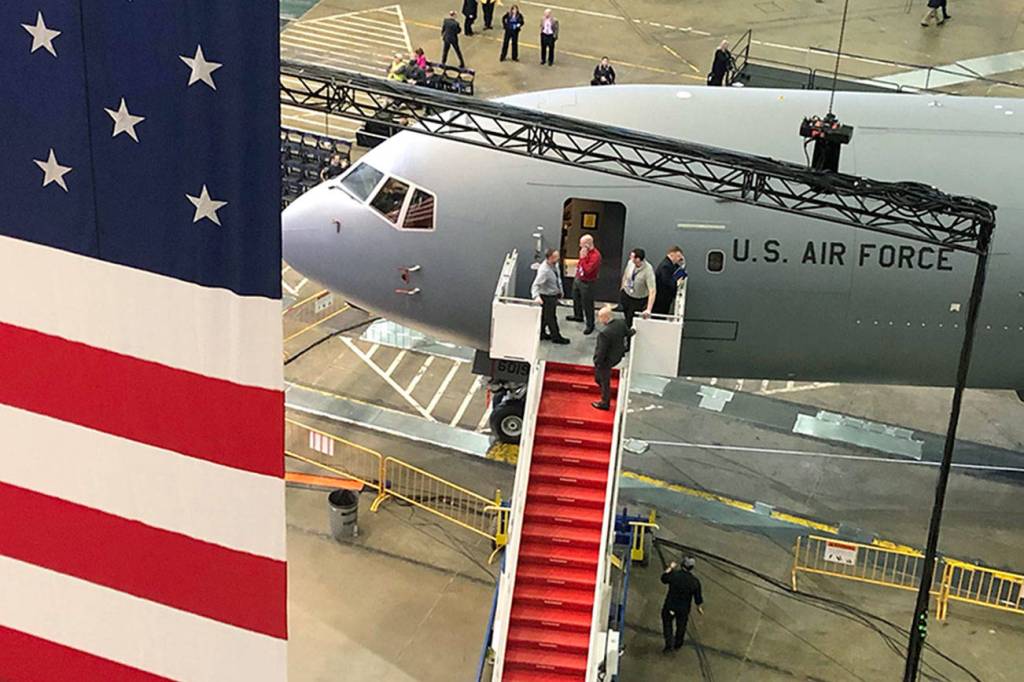
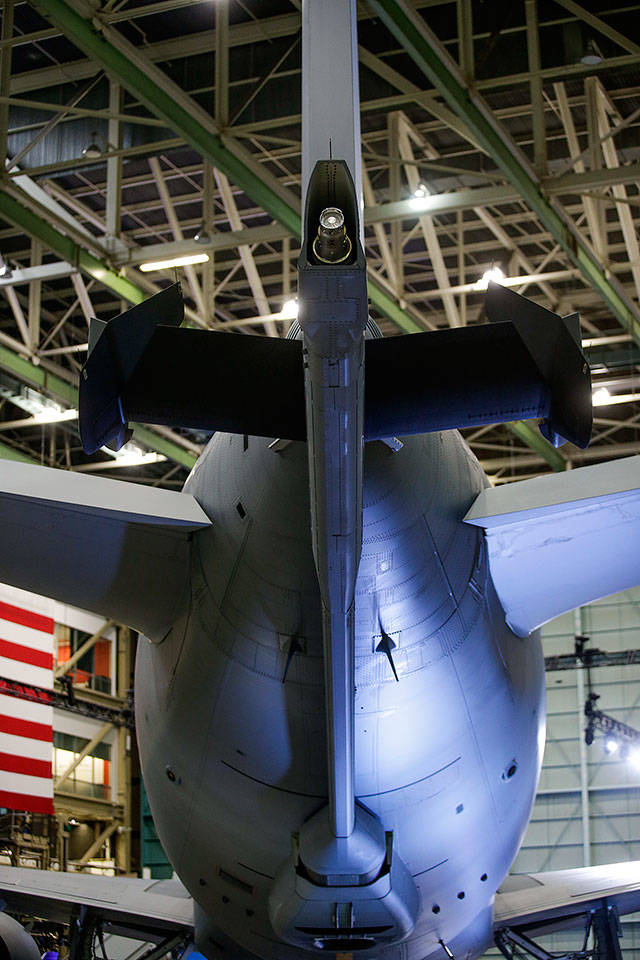
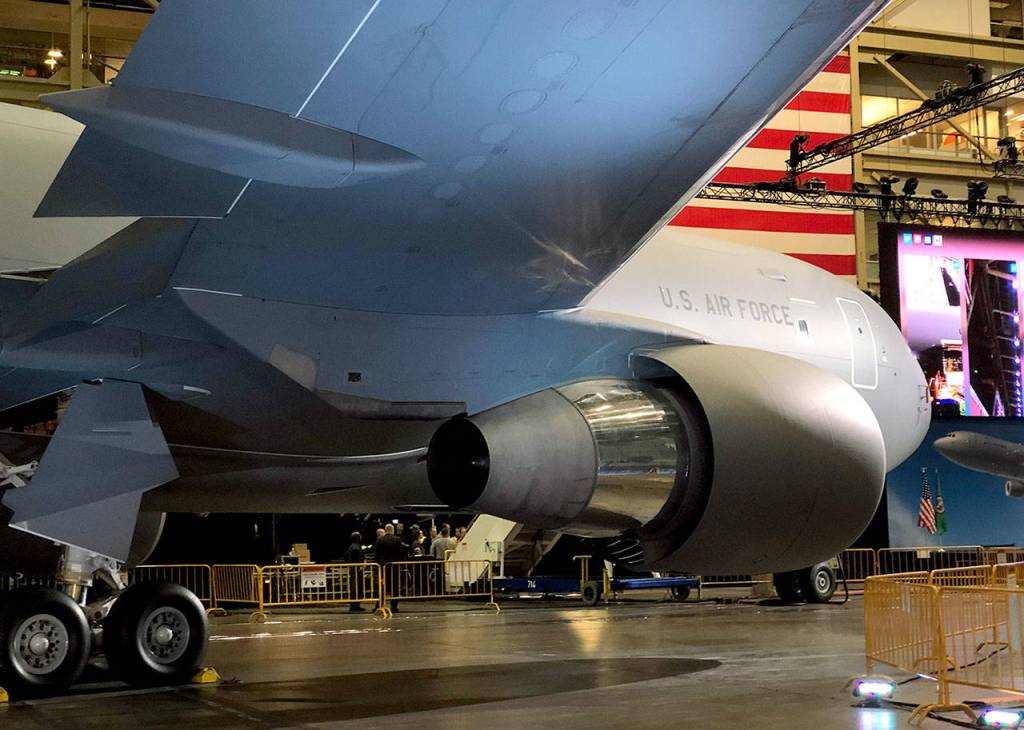


EVERETT — It’s a combat-ready aerial-refueling tanker that can top off a thirsty fighter jet at night without turning on the lights, thus avoiding enemy detection.
But it’s more. The KC-46 tanker, nicknamed the Pegasus, can transport troops, haul cargo and fly out the wounded.
Besides hauling a gas station’s worth of fuel, the KC-46 can carry up to 114 passengers, or 56 patients, or 18 cargo pallets, or a combination of those, and be fully operational with just three crew members. With two Pratt & Whitney 4062 jet engines providing 62,000 pounds of thrust, it can go from cold to airborne in 10 minutes.
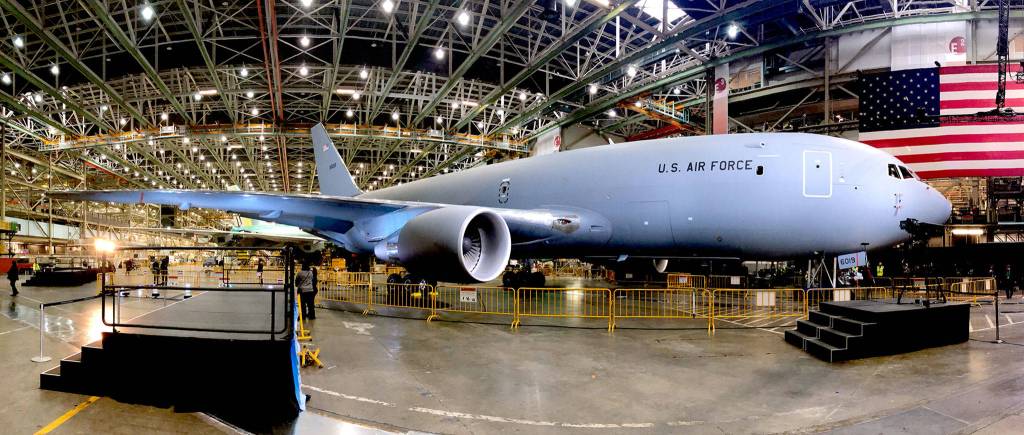
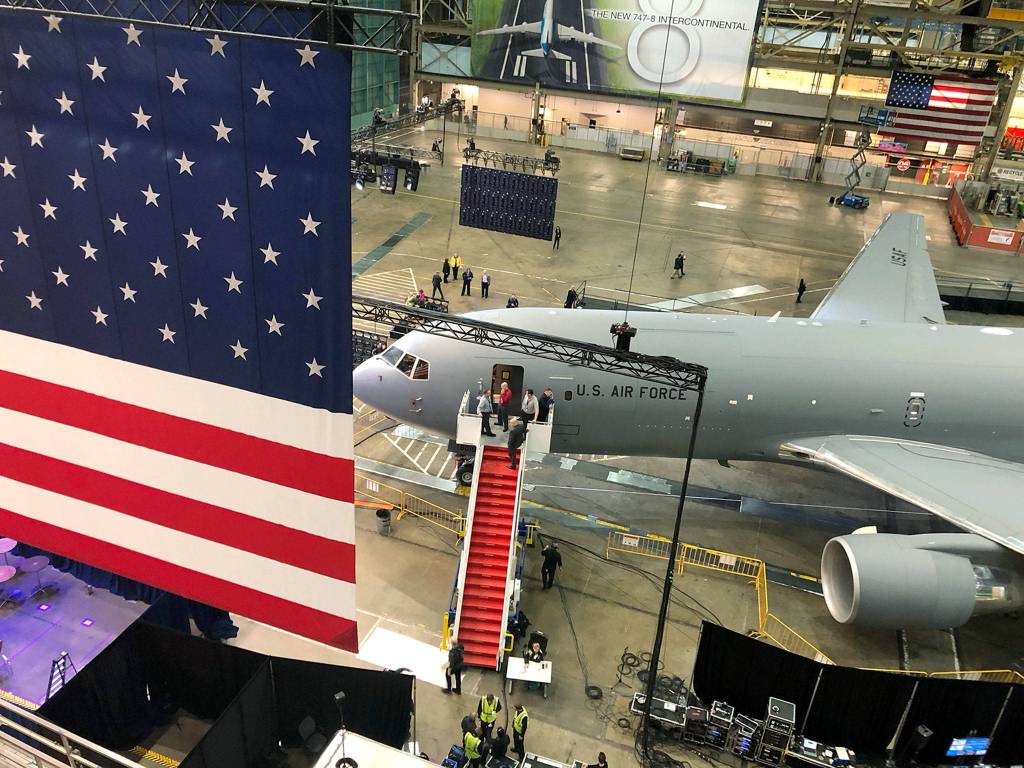
Boeing allowed journalists to see one of the first KC-46 aerial-refueling tankers up-close on Thursday at Paine Field before a hand-off ceremony with company and Air Force officials.
The plane on display and another nearby are the first of an expected 179 tankers to be delivered, but development of the Pegasus isn’t complete. The next step is feedback.
“We’re finally getting this into the war fighters’ hands — the operators,” said Mike Hafer, Boeing’s senior manager for KC-46 business development. “They’re going to shake it down and put it through its paces.”
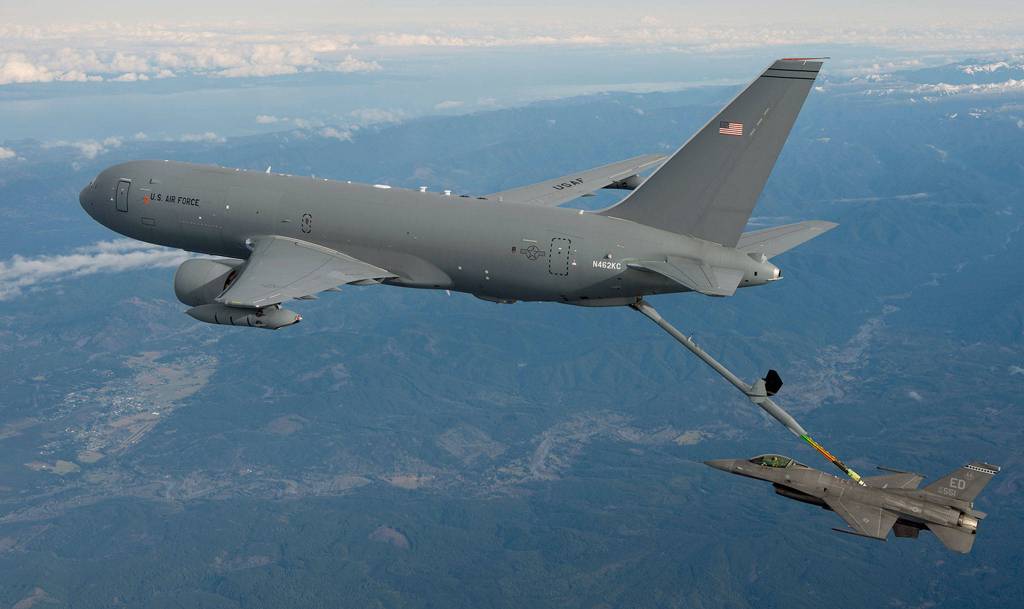
The main mission of the KC-46 is refueling planes while they are airborne — to extend the range of fighters and other aircraft.
But Pegasus also is designed to fill those other roles, as well.
That flexibility starts with the KC-46’s platform — Boeing’s twin-engine, commercial 767 airliner. Instead of luggage, there are big fuel tanks under the floor. In the main cabin, there are accommodations for cargo pallets, modular seating and medical beds.
The Pegasus differs from a commercial 767 in many other ways, too. It is armored to withstand attack — to operate in a medium-threat environment, said Sean Martin, head of Boeing boom testing, who gave a tour of the aircraft. “It can get very close” to forward combat areas, he said.
But the plane’s 767 essence means it’s not out of place in civilian settings. The Federal Aviation Administration has certified it — a first for a military tanker.
“I was in the Air Force for 25 years,” Martin said. “A lot of the time we operate out of commercial airports with our NATO partners. FAA certification allows us to use parts from a 767 commercial airliner should the need arise.”
A fully equipped KC-46 will have four aerial-fueling options: a high-capacity boom on the tail, which an operator on board remotely “flies” to assist with a hookup; a lower-capacity hose that can be extended from the tail; and a refueling hose on each wing that extends from a removable pod. The KC-46 can refuel multiple fighters at once.
It’s the first tanker in the world that can refuel an airborne aircraft without lighting up the night sky. It employs an infrared visual system. “The aircraft is not visible outside of 500 feet to the naked eye,” Martin said.
And the tanker itself can be refueled in flight. It has a fuel-line receptacle near the nose, above the flight deck.
The KC-46 is intended to replace aging KC-135 Stratotankers, which were also based on the airframe of a Boeing commercial jet — the company’s first jetliner, the 707. The KC-135 first joined the U.S. Air Force fleet in 1957.
The Air Force began mulling a plan to replace the KC-135 more than 16 years ago. In 2011, the company secured the KC-46 contract with plans to deliver the first tanker by mid-2017. Delays ensued.
Boeing has 52 Pegasus tankers at the Everett plant in various stages of assembly, Hafer said.
Janice Podsada; jpodsada@heraldnet.com; 425-339-3097. Twitter: JanicePods.