Snohomish County residents marvel at dazzling views of northern lights
Published 2:25 pm Saturday, May 11, 2024


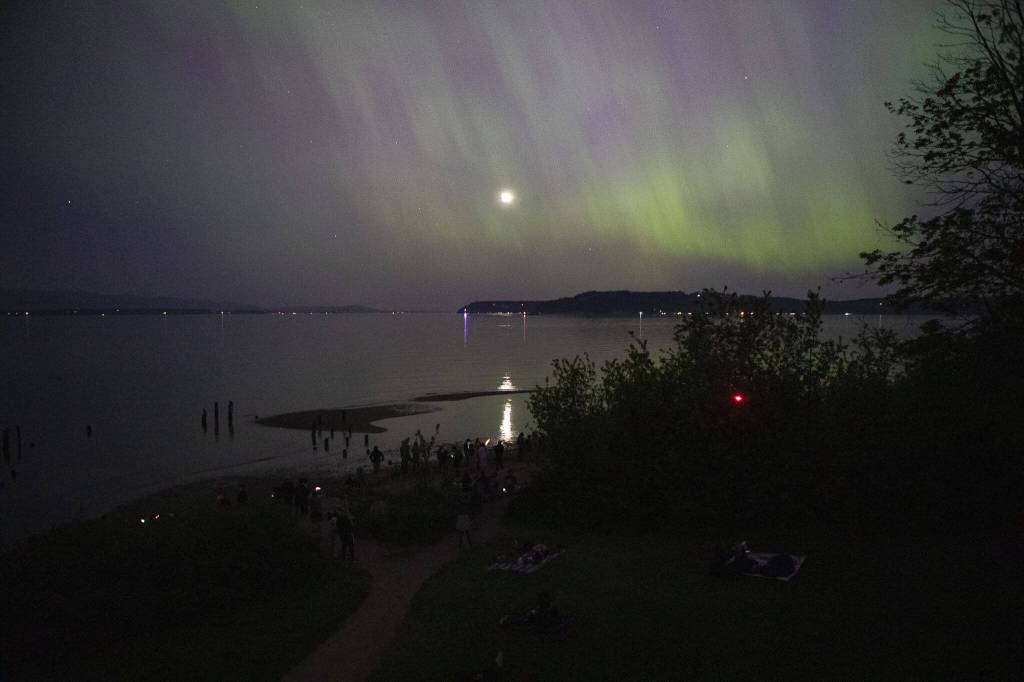


EVERETT — In a rare event, the northern lights danced across the Snohomish County sky and beyond Friday night. For those who missed it, it’s not too late.
Those out enjoying the pleasant weather after sunset Friday could see the colorful lights, also known as aurora borealis. Photos of the phenomenon, which appeared across much of the United States, flooded social media. The National Weather Service in Seattle even made a skygazing playlist for the occasion.
“This doesn’t happen often,” said meteorologist Kayla Mazurkiewicz on Saturday. “And people may have a chance to see this again tonight.”
Earlier this week, meteorologists notified the public of an upcoming severe geomagnetic storm. As the sun hits the peak of its 11-year cycle, the change in its magnetic field causes solar activity. Solar explosions send flares into space that can sometimes reach Earth. This time around, the source was a sunspot cluster 17 times the diameter of Earth, according to the national Space Weather Prediction Center based in Colorado.
Solar flares began to hit Earth’s northern atmosphere around 7 p.m. Friday, causing a level 5 geo storm — the most powerful since October 2003. It’s also the strongest aurora Washington has seen since then, Mazurkiewicz said.
The storm is expected to continue through the weekend. The aurora may be weaker after Friday, Mazurkiewicz said, but clear skies and nice weather should enhance the view.
For the most magical light show, find a viewing spot farther north and away from cities or other light pollution. Visuals are best when the sky is darkest (midnight to 3 a.m.).
Regular updates can be found at the Space Weather Prediction Center website.
Sydney Jackson: 425-339-3430; sydney.jackson@heraldnet.com; Twitter: @_sydneyajackson.