Stanwood to reactivate Flock Safety cameras in light of new law
Published 12:40 pm Wednesday, April 1, 2026
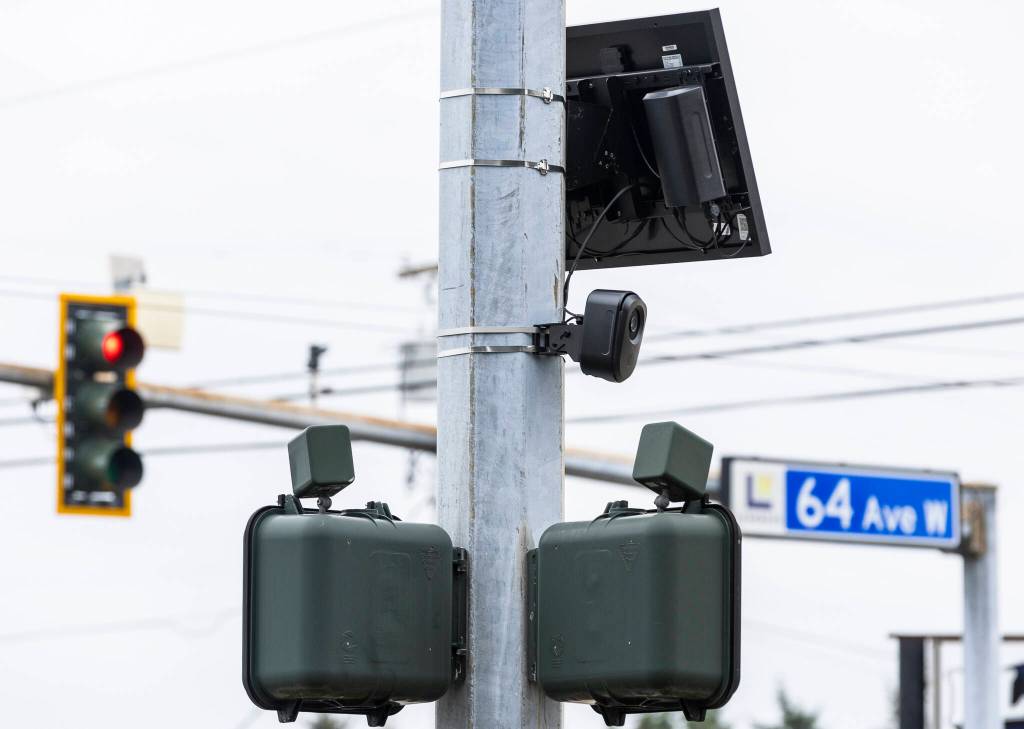
EVERETT — The city of Stanwood plans to reactivate its Flock Safety cameras after legislation regulating automated license plate readers went into effect Monday, a city spokesperson said in a press release Wednesday.
In May 2025, the city deactivated its 14 cameras after receiving a public records request for footage. In June, Stanwood and Sedro-Woolley requested a court judgment that Flock footage is either not public record or is exempt from the Public Records Act for privacy reasons. In November, a Skagit County judge denied the request, effectively ruling that Flock footage is subject to public records requests.
Flock cameras are a type of automated license plate reader that use artificial intelligence to analyze vehicle footage. Many law enforcement agencies across the country have implemented the technology as an investigative tool to help locate stolen vehicles and missing persons.
The new legislation, Senate Bill 6002, explicitly exempts automated license plate reader footage from the Public Records Act. Gov. Bob Ferguson signed the bill Monday, and it went into effect immediately.
The legislation places a number of other safeguards on automated license plate reader use, including a 21-day data retention limit. It also limits the types of crimes departments can use ALPRs to investigate, prohibits sharing data with federal agencies and places restrictions on where agencies can collect data, such as near schools or health care facilities.
“I’m pleased that the legislature overwhelmingly recognized the value of keeping residents safer through technology on the one hand while balancing the need to impose guardrails that help protect privacy rights on the other,” Stanwood Mayor Sid Roberts said in the release.
City staff are evaluating the camera locations to ensure compliance with the new regulations, Stanwood spokesperson Nicole Strachila said in the release. The city plans to reactivate the cameras in early April.
“We are committed to following state law while balancing public safety and individual privacy,” Stanwood Police Chief Glenn DeWitt said in the release. “These tools help further safeguard our city while ensuring we respect the rights and expectations of our community.”
The Flock system has helped Stanwood identify vehicles associated with criminal activity that enter the community, Strachila said.
“As a small city with limited staffing, Flock cameras act as a force multiplier, enabling officers to respond more quickly and efficiently,” she said.
Over the past several months, other Snohomish County cities have paused their Flock camera networks or canceled their contracts with the company. Community concern over the technology grew in 2025 after reports that federal agencies — including U.S. Customs and Border Protection — accessed several Flock networks in the county without police departments’ knowledge.
In December, Mountlake Terrace canceled its contract with Flock before its cameras were installed, citing community division and public records concerns.
On Feb. 23, Lynnwood canceled its contract with the company seven months after it first installed cameras. Lynnwood Mayor George Hurst had asked the council to wait for SB 6002 to make its way through the Legislature, but many council members expressed their distrust of Flock, regardless of the legislation.
In Feb. 25, Everett paused its Flock network after a Snohomish County judge ruled that the footage is subject to public records requests. The city has not stated if it plans to turn the cameras back on.
In a statement Monday, Tee Sannon, technology program director for the ACLU of Washington, said that while SB 6002 offers some key protections, the bill falls short in some areas. Sannon advocated for a retention period shorter than 21 days, barring local jurisdictions from sharing ALPR data with each other and prohibiting ALPR use for investigating gross misdemeanors.
“This new law establishes important, initial protections to guard against misuse — particularly in ways that harm vulnerable communities, including immigrants and people seeking reproductive or gender-affirming health care,” Sannon said. “However, while we appreciate the Legislature prioritizing this issue and the Governor signing it into law, it’s critical to note the Driver Privacy Act does not go far enough in terms of its protections. This law must be a floor, not a ceiling.”
Jenna Peterson: 425-339-3486; jenna.peterson@heraldnet.com; X: @jennarpetersonn.