Officials: Higher gas prices won’t impact SnoCo transit
Published 1:30 am Saturday, May 9, 2026
EVERETT — Local transit agencies do not expect to see significant impacts to their operations from the recent spike in gas prices, officials said.
Gas prices in the Seattle metro area have increased by about 25% compared to a year ago, according to AAA, following two months of war in the Middle East. As of Thursday, the average price for regular gas in the metro area is now about $5.96, compared to $4.46 per gallon a year ago.
The cost of diesel, used to fuel buses across the region, has also risen significantly more at the gas pump. That average has gone up from $4.61 per gallon in 2025 to around $7.03 today, about a 34% hike.
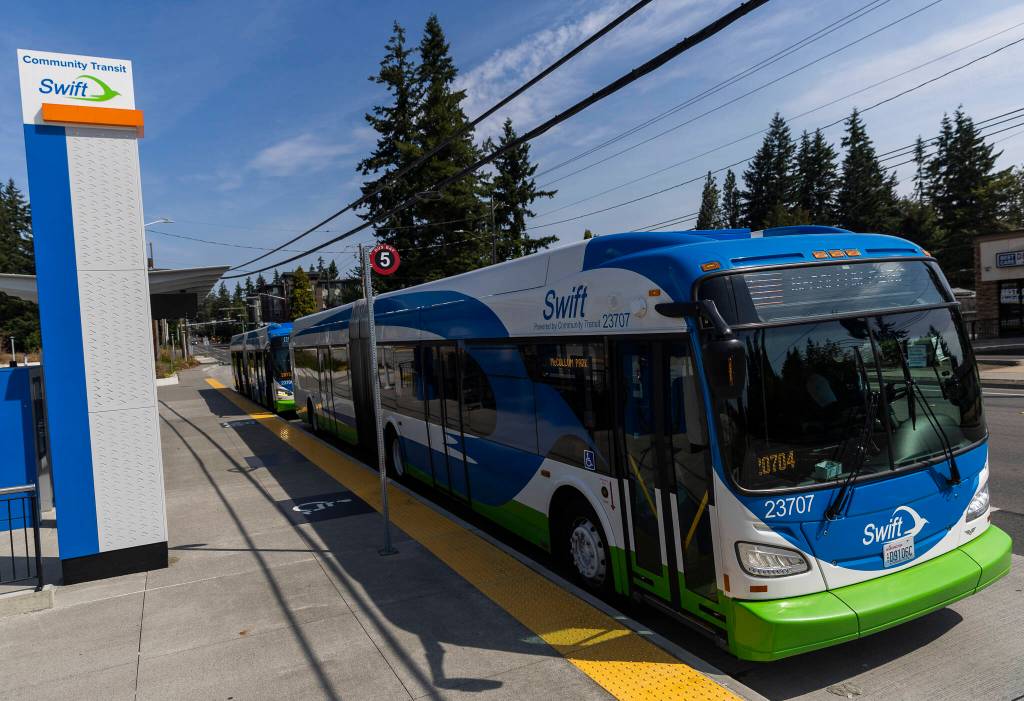
Community Transit uses as much as 70,000 gallons of diesel per week to fuel its buses, said Ryan Chase, the Snohomish County transit agency’s senior procurement specialist. It pays for the fuel through a contract with a vendor, which continually fills tanks near the agency’s bus bays. The agency budgeted about $17 million for fuel costs in 2026.
Although the agency budgets its fuel costs conservatively, it has exceeded its budgeted price per gallon, said Mary Albert, the agency’s budget director. But the agency has plan for that, maintaining a reserve of about $5.5 million specifically for unanticipated fuel price increases. Community Transit, which operates under a biennial budget, expects to take a budget amendment to its board of directors to allow the agency to spend its fuel reserves, Albert said, but that fuel reserve should be able to cover its needs.
“At this point, we’re not looking to amend the 2027 budget,” Albert said. “… We will continue to watch the budget closely, and if it looks like we need to go back to the board for more budget authority, we’ll do that. It’s just hard to predict what’s going to happen with the prices.”
For Sound Transit, which operates light rail, commuter rail and bus service across the Puget Sound region, most of the fuel costs the agency has are related to its Sounder commuter rail service, said Ryan Fisher, the executive director of finance at Sound Transit at a March committee meeting. Link light rail runs entirely on carbon-free and renewable energy.
“In terms of our system and what we run it on, the oil prices do not have a huge impact on our overall operating costs,” Fisher said.
Everett Transit, with half its fleet running on battery electric power, has not had significant impacts on its operations after the recent increase in fuel prices, according to an agency spokesperson, Matt Coomes.
“Even if prices stay at an elevated rate for an extended period of time, we would still be somewhat insulated thanks to our electric buses,” Coomes wrote in an email.
The agency buys its diesel monthly. In March, it spent about $76,000 on diesel for gas-powered buses and about $20,000 on charging for its electric buses.
In 2010, Everett Transit spent about $1 million on diesel for its operations, compared to about $780,000 in 2025. That reduction, even as gas prices have risen over the past 15 years, was thanks to its battery-electric fleet and the introduction of more hybrid buses, Coomes said. If high gas prices continue through the end of the year, the costs of diesel would amount to about $900,000, a figure the agency could absorb without making changes to service, he added.
City data shows that Everett Transit’s electric buses cost less per mile to operate compared to diesel vehicles.
Community Transit is planning to introduce 10 battery-electric buses into its fleet in the coming years. That won’t have an immediate impact on the agency’s process for purchasing fuel, Albert said.
“We will use information from the first 10 buses to understand how it’s going to change our utility costs and decrease our fuel costs,” Albert said. “Initially, it’s not going to be a huge switch.”
Both Everett Transit and Community Transit use R99 Diesel, a form of diesel made from used cooking oil and repurposed animal fats originating from restaurants and supermarkets, that has significantly lower carbon emissions compared to regular diesel. R99 reduces carbon emissions by about 50% to 70% compared to regular diesel, at the cost of about 10 cents per gallon more, Chase said.
Economists have posited that since fuel prices have risen, some lower-income households have cut back on the amount of gasoline they have been purchasing by either carpooling or substituting with public transportation when available, The New York Times reported.
“Everyone feels the pinch right now,” said Monica Spain, a Community Transit spokesperson. “… This is a good time to try leaving the car at home.”
Everett Transit and Community Transit both offer free travel training and education to new riders.
Will Geschke: 425-339-3443; william.geschke@heraldnet.com; X: @willgeschke.