‘Crime reporting and genealogy’: Everett officer honored 120 years after his death
Published 1:30 am Saturday, May 30, 2026




EVERETT — Charles “Ed” Ray survived a Civil War battle outside his childhood home and later treated typhoid fever patients in north Everett. He joined the Everett Police Department in his late 40s, only to be killed in the line of duty while protecting the blossoming mill town in 1906.
Ray’s story of service and sacrifice was lost to history. His name went without mention each time Everett police honored its fallen heroes.
Until last year, when a discovery in the archives of The Daily Herald united a team of Everett officers and a public library research specialist to fix the omission.
Everett police Lt. Greg Sutherland was the first person to come across the lost cop while researching other officers who died serving the city.
“There’s a phrase that you oftentimes hear at funerals in police settings, as far as when people are killed in the line of duty, ‘Gone, but not forgotten,’” Sutherland said. “Here we literally had the opposite. Here was an officer that had been killed in the line of duty and somehow, over time, had been forgotten. We found this information out and I would say it was our obligation to make sure he’s not forgotten.”
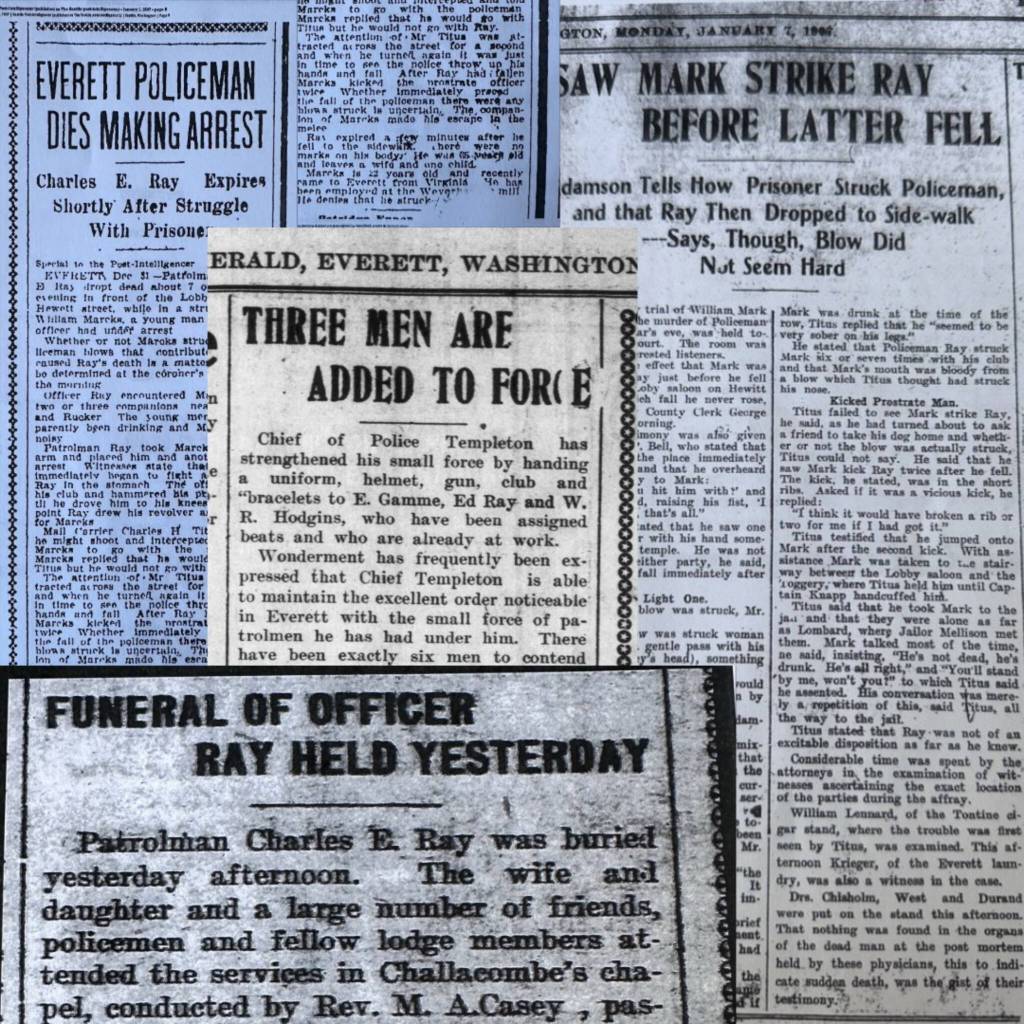
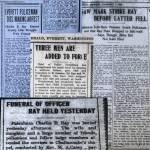
Officer Ray was killed after only a few months on the Everett police force. He was hit over the head by a 23-year-old suspect, then kicked repeatedly, while trying to make an arrest for a drunken disturbance at a Hewitt Avenue saloon on New Year’s Eve, according to reports from The Daily Herald in 1906.
Ray died shortly after. The coroner described his cause of death as “exhaustion while making an arrest,” news coverage said.
With little more than a name and some newspaper clippings, Sutherland set out to investigate Ray’s story further.
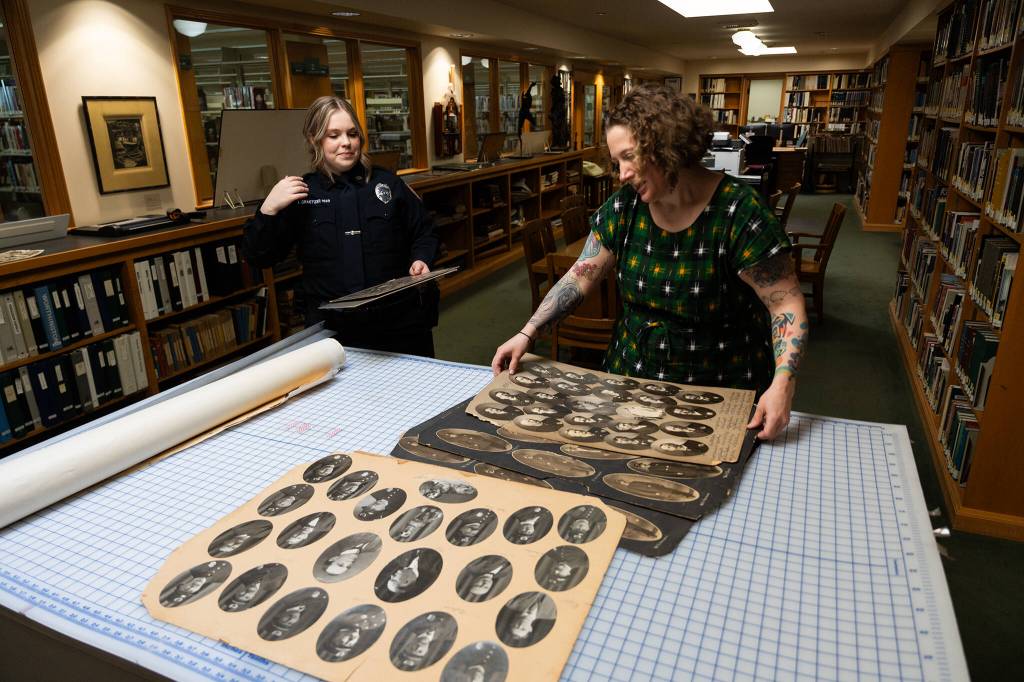
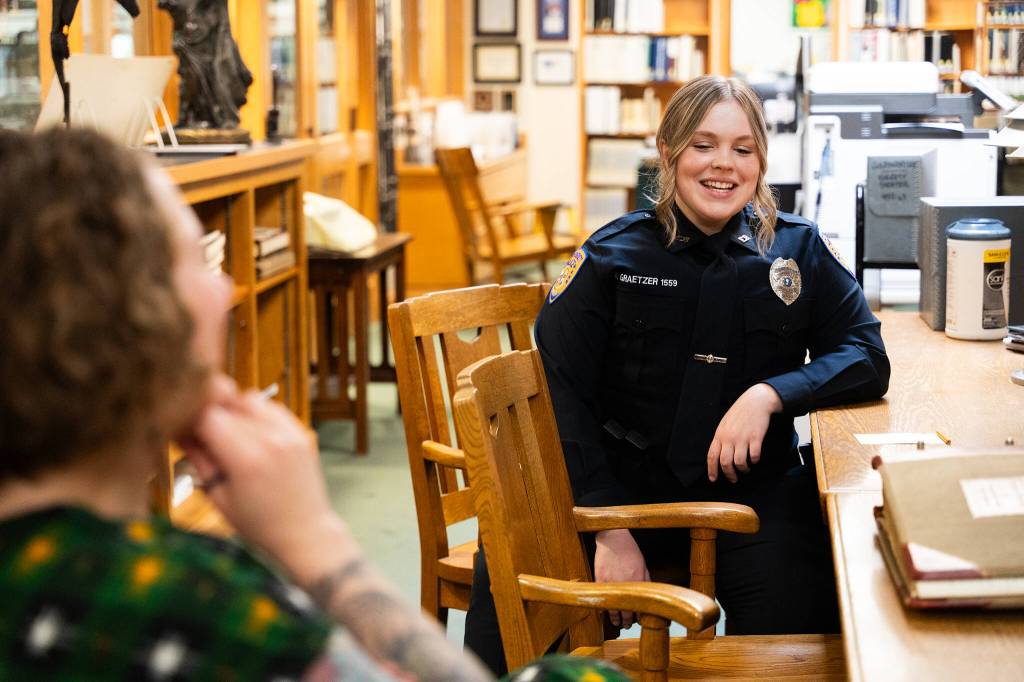
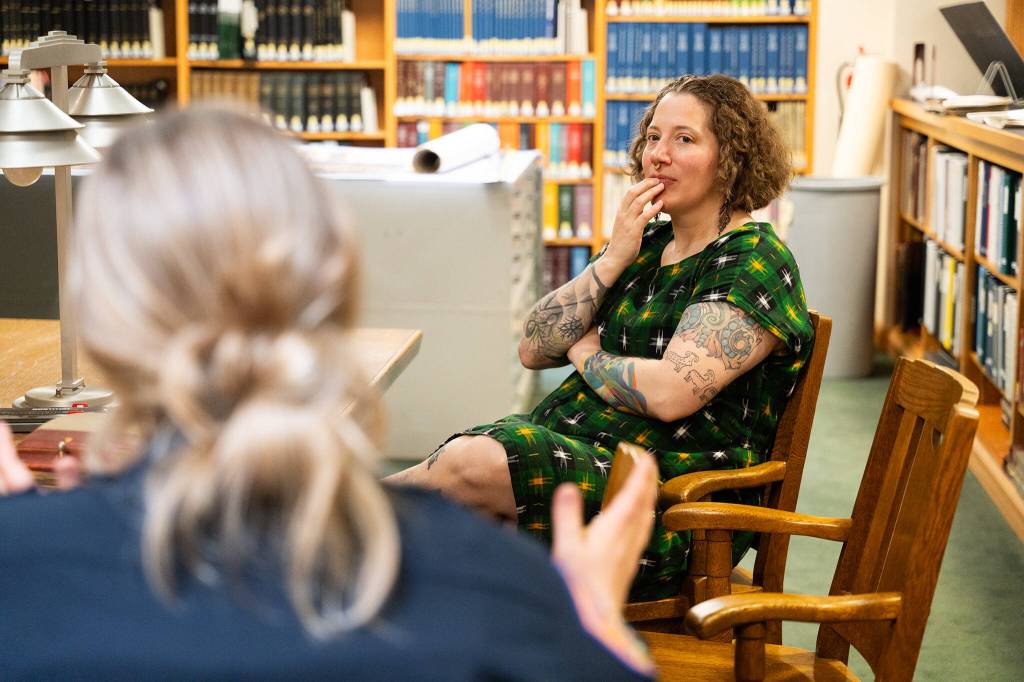
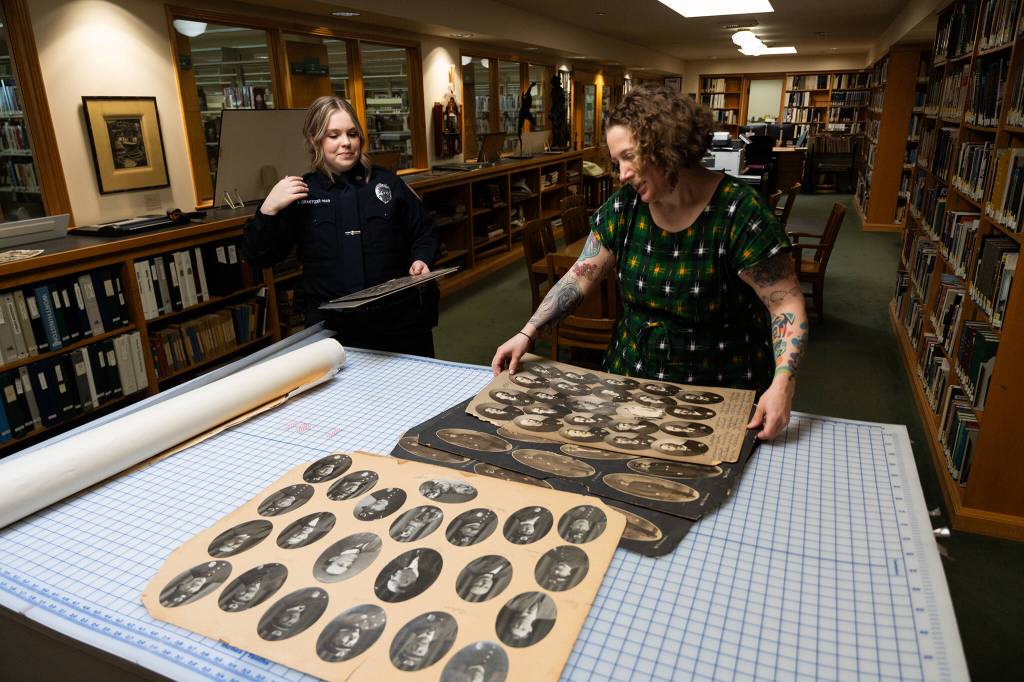
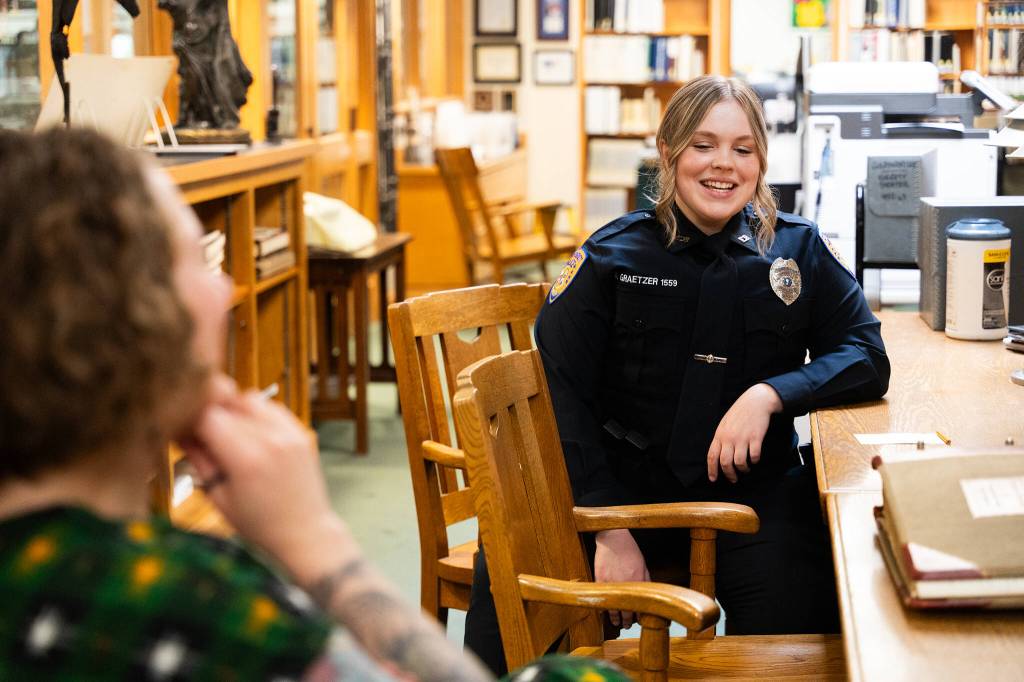
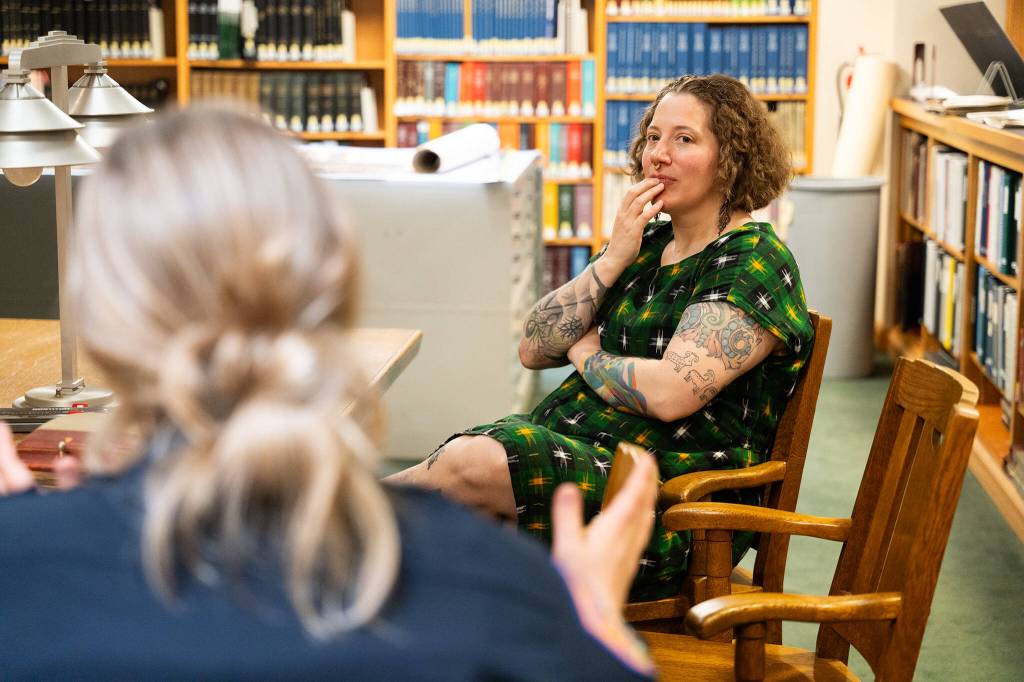
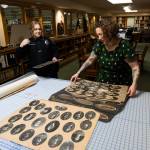
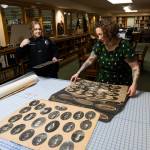
He enlisted cold case Detective Susan Logothetti and Officer Alisa Graetzer, as well as Lisa Labovitch, history specialist at the Everett Public Library, to answer the question, “Who was Officer Ray?”
“It was an interesting combination of crime reporting and genealogy,” Labovitch said.
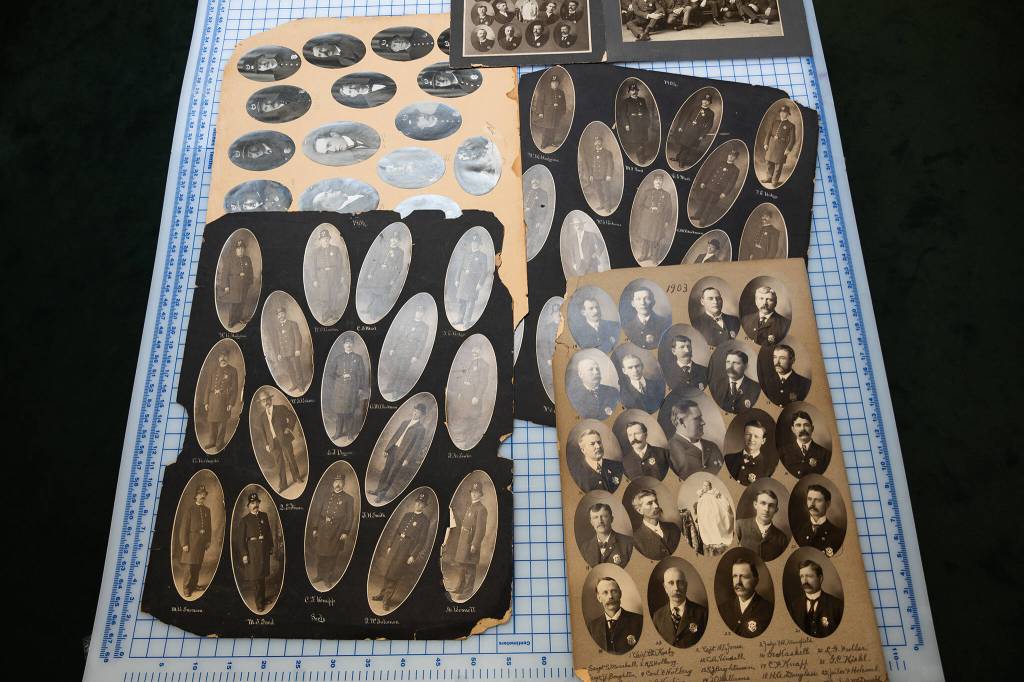
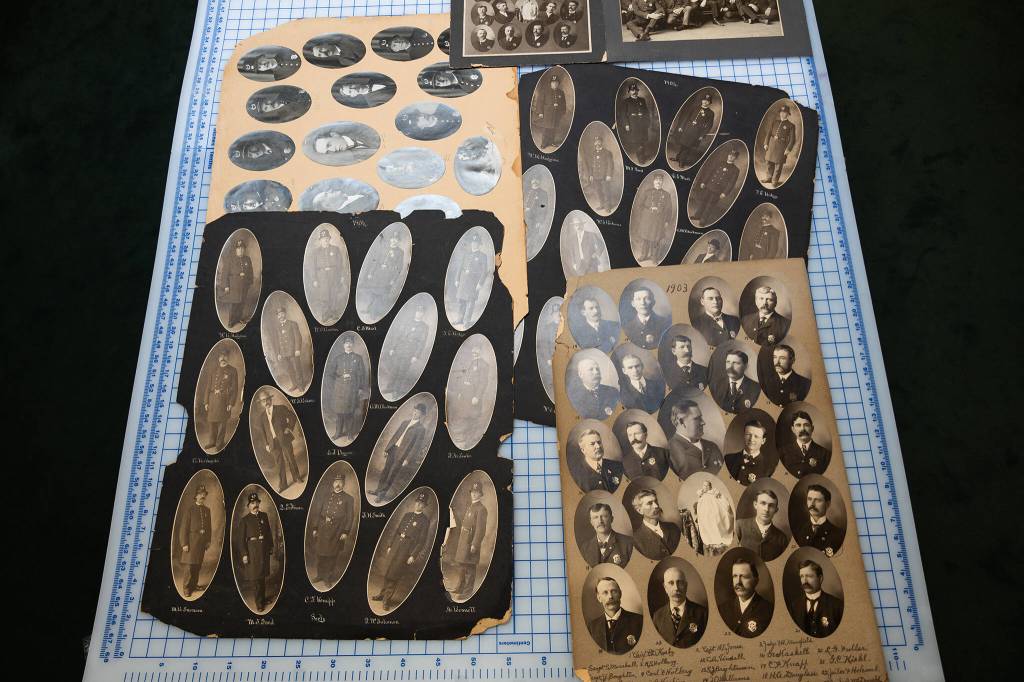
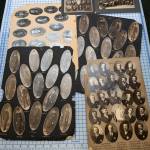
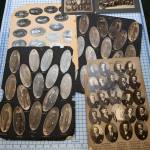
Over a matter of months, the team paired historic records from the public library with online discoveries from sites like Ancestory.com and Find A Grave. They pieced together the puzzle of Ray’s life and his kin who are still alive today.
“It was a whole web,” Graetzer said. “One person would find one little thing and then four more people would jump on it.”
The research looked like something from a Hollywood movie with new developments pinned on a dedicated investigation board in the police department’s major crimes conference room, Sutherland said.
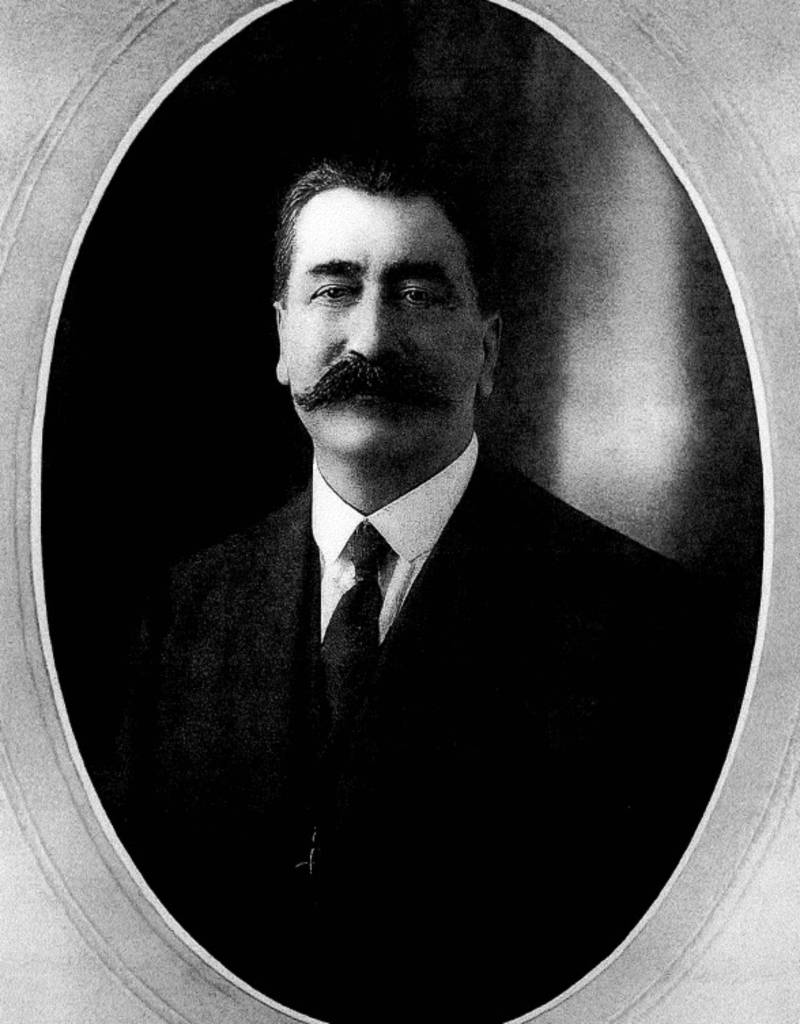
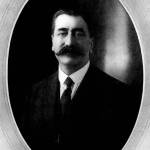
At the center of their work was a black and white picture of the man himself, Charles “Ed” Ray, wearing a suit and tie, with a tight haircut and a full, dark mustache that Tom Selleck or Burt Reynolds might envy.
The team traced Ray’s life back to his birthplace of Springfield, Mo., where as a toddler he hid in his family’s cellar as the Battle of Wilson’s Creek, the first major Civil War battle fought west of the Mississippi River, was waged nearby in 1861.
They uncovered Ray’s move to eastern Washington in his 30s where he met his wife, started a family and ultimately found his way to Everett. Before joining the police force, he served the community as a local barber and treated typhoid patients alongside his wife, Lola, out of their home on Walnut Street and Everett Avenue, according to old ads in The Daily Herald.
“Just looking up the history of the family,” Detective Logothetti said. “Every little nugget we got, you know, brought just excitement into the whole thing.”
The investigators learned Ray’s wife died of typhoid pneumonia only a few months after his death. The couple’s only daughter, Faletia, moved to the Midwest with family, where she lived to be 97 years old before her death in 1994.
Armed with a wealth of new information, the researchers brought Ray’s life into the present, building out a family tree and connecting with his living descendants from all across the country.
“We found more than just the fact that he died,” Labovitch said. “It’s like now you’ve given this whole story back to a family that didn’t know about it.”
Many of Ray’s relatives knew about their Civil War roots, but they didn’t know what happened to a family patriarch.
“There was just a little missing gap that we’ve been able to fill in for them,” Sutherland said.
How Ray’s legacy was lost can’t totally be known, but his name’s close resemblance to Everett’s first officer who died in the line of duty — Charles Raymond — left the researchers to suspect it may have been as simple as a clerical error.
According to the team, Ray’s suspected killer was arrested, but charges for murder didn’t stick and the man was let go.
While justice was elusive and Ray’s recognition was long-delayed, he finally received acknowledgement last month.
Ray’s name was inscribed on the Washington State Law Enforcement Memorial in Olympia, and weeks later, it was also added to the National Law Enforcement Memorial in Washington D.C.
Officer Graetzer accepted a medal of honor awarded to Ray posthumously during a ceremony on May 2.
“I’m just a patrol cop,” she said. “Being able to be a bigger part of history, you know, it kind of puts perspective into your mind, like, ‘This could be me some day.’”
The Everett Police Department has one more recognition planned.
Using burial records and forensic investigators, the researchers found the Rays’ unmarked grave plots at the Evergreen Cemetery in Everett.
“No matter how long we take, someone’s going to come looking for you,” Labovitch said. “Eventually, someone cares.”
Soon, new headstones will be added to distinguish the officer and his wife.
“We will properly acknowledge him for history’s sake,” Sutherland said. “That will be a nice finishing touch.”
Ian Davis-Leonard: 425-339-3097; ian.davis-leonard@heraldnet.com