Sound Transit board approves plan keeping Everett Link on track
Published 9:54 am Friday, May 29, 2026
EVERETT — A newly approved Sound Transit plan will keep the Everett Link Extension on track to open on its current schedule while delaying light rail extensions in other parts of the network.
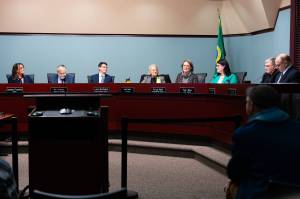
The board governing the regional transit agency voted 16-2 Thursday to approve an updated system plan for Sound Transit 3, the ballot measure voters approved in 2016 that promised light rail extensions to Everett, Tacoma, West Seattle, Ballard and Issaquah, along with new bus rapid transit service and expansions of the Sounder commuter rail network south of Seattle.
The need for the updated plan was due to a $34.5 billion shortfall Sound Transit is facing across its expansion projects, a shortfall that emerged due to inflation, tariffs, labor shortages, supply chain disruptions and increased right-of-way costs, Sound Transit staff previously said.
The plan will keep Everett Link Extension on its current schedule, said Alex Krieg, a deputy executive director of enterprise planning at the transit agency, during the marathon meeting Thursday that stretched nearly six hours in length. Sound Transit has planned to open a first phase of the extension, reaching Paine Field, by 2037. It is expected to reach downtown Everett by 2041.
The plan also calls for the Tacoma and West Seattle extensions to stay on schedule. Approving it now means that work on the West Seattle extension, like property acquisitions and pre-construction work, can continue without delay, Seattle Mayor Katie Wilson said Thursday.
Transit riders in the Ballard and Issaquah areas, however, will now likely face additional years of waiting for their rail connections to open.
The 4 Line, traveling between Kirkland and Issaquah, will be delayed six years, the plan states, with an opening planned for 2050. There’s currently no estimate as to when the Ballard extension will open, though the chair of Sound Transit’s board of directors, Snohomish County Executive Dave Somers, insisted it will eventually be built once funding emerges.
“We are currently funded to build through Seattle Center, and I know that’s not the full vision,” Somers said Thursday. “But we are committed to continuing to design the full project of Ballard, and we will keep working to find the resources to build it.”
Expansion projects in Seattle were facing the highest cost increases, particularly the Ballard Link Extension; the project’s projected cost had nearly doubled from about $12 billion to as much as $22.6 billion, according to Sound Transit. By contrast, Everett’s extension rose significantly less; It’s original projected cost of $6.5 billion had increased to as much as $7.7 billion.
In 2025, Sound Transit told its board of directors that the agency could find the savings needed to make the Everett Link Extension affordable, mostly though changes to aspects of the extension’s design. None of the six stations planned for the 16-mile extension be cut. (A seventh provisional station near Airport Road will be studied, but construction for the station is not funded).
The biggest loss will be for Ballard residents, as the extension will only be built as far north as Seattle Center for the time being due to the higher costs of that line. The rest of the extension, set to reach Market Street in Ballard, will be fully designed, but construction won’t begin until the agency can make up the funding gap through cost savings or new revenue tools.
Board members said the plan represented the beginning of work to find cost savings that will eventually allow the agency to build the stations currently without construction funding, including Ballard.
“The math doesn’t work today, but we’ll make it work,” said Hunter George, a member of the Fircrest City Council, during the meeting.
Everett Mayor Cassie Franklin told the board that the plan, which is set to complete the light rail “spine” connecting Everett to Tacoma, will bring benefits to the entire Puget Sound area.
“I really appreciate this entire board’s support of delivering on the spine,” Franklin said. “We’ve seen the positive transformational changes that light rail has brought to communities, so delivering on this proposal is about that. It’s about shared prosperity across the entire region.”
The good news for Snohomish County comes at the cost of deferments to the planned parking structures along the Everett Link Extension, as well as the eventual cancellation of the Sounder N Line commuter rail service, which has struggled to recover from pandemic-era ridership losses. Only four trains run per weekday in each direction, and the service only provided about 565 rides per day in April, according to Sound Transit data.
A Sound Transit document said the service will be canceled by 2033. The board could revisit the decision if ridership numbers improve or new funding emerges, a Snohomish County spokesperson previously said.
Ending service on the N Line would help save Sound Transit about $400 million, Krieg said Thursday.
During Wednesday’s meeting, Sound Transit approved a number of amendments to the proposal initially brought forward earlier in May. They included a new plan to fund construction of an infill light rail station in south Seattle, a parking garage in Renton, and a direction to Sound Transit to study a potential new revenue from voter-approved revenue packages at a subarea level to fill future funding gaps. Another amendment also required Sound Transit to provide a possible date or date range for the opening of the Ballard extension by August.
“This is a starting point, it’s not an end point,” Somers said. “We are directing our CEO to pursue every available tool to advance the full ST3 program, and that work does not stop today. I remain confident as ever that we will deliver what the voters approved.”
Will Geschke: 425-339-3443; william.geschke@heraldnet.com; X: @willgeschke.