Trump repeals off-road vehicle rules in national forests
Published 1:30 am Monday, June 22, 2026
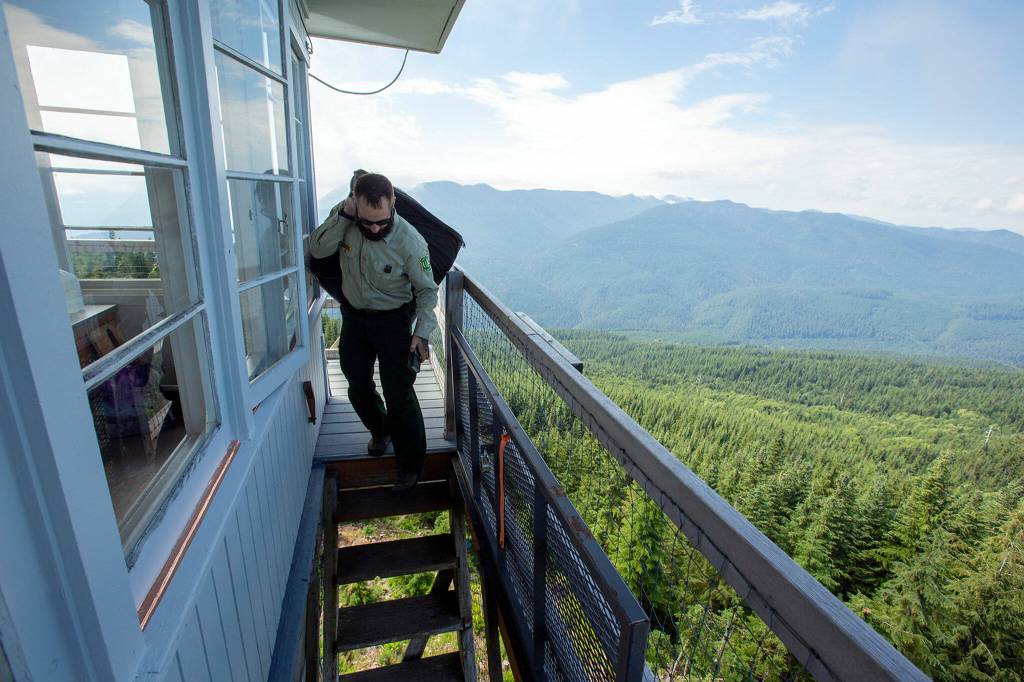
EVERETT — President Donald Trump created potential dangers for national forest land in Snohomish County’s national forest by repealing two long-standing executive orders designed to manage off-road recreational vehicles on federal lands, two activists said.
On May 29, Trump rescinded the orders that helped to reduce adverse impacts on wildlife, water quality and other resources — and reduced conflicts with other federal land uses — in the country’s national forests, including Mount Baker-Snoqualmie National Forest in Snohomish County.
The Defenders of Wildlife, a nonprofit founded in 1947 dedicated to protecting and restoring wildlife and their habitats, released a response the following Tuesday.
“This rescission is yet another loss for wildlife and natural places,” said Vera Smith, Defenders’ director of national forests and public lands, in a statement. “Removing common-sense tools for managing all-terrain vehicles, dirt bikes and other off-road vehicles on public lands is reckless and nonsensical.”
Executive Order 11644 was issued over 50 years ago by President Richard Nixon, when off-road vehicles were unrestricted. The order most notably required the creation of designated areas and trails where recreational vehicles were allowed or prohibited; it did not ban them outright.
President Jimmy Carter added clarifications to Nixon’s order with Executive Order 11989.
“Basically, they call for proactive, sensible planning,” Smith said in an interview June 8. “Let’s not have just machines going everywhere — and then we have to figure out how to restore the damage.”
Rescinding these executive orders upends a rule-making process that federal agencies have followed for decades, said Alex Budd, an organizer with the Pacific Northwest Forest Climate Alliance, in an email.
“What exactly the limits (or lack thereof) on ORV use on public lands will look like moving forward, and how they will be implemented across different National Forests, remains to be seen,” he said. “It’s safe to say that it will lead to more ORV use and the associated negative impacts.”
Trump’s order, Executive Order 14408, says both are “unnecessary regulations.” Their criteria are vague and difficult to follow, the order says, and existing measures are enough to manage off-road vehicle use on federal lands.
With this action, federal agencies must rescind or revise regulations implementing Nixon and Carter’s orders.
Trump’s goal is to rein in “government overreach,” his order says, and is consistent with past actions.
In 2025, the Trump administration rescinded a U.S. Forest Service measure prohibiting road construction, reconstruction and timber harvesting in certain federal forests.
Both repeals will make industrial action in national forests easier, Budd said.
“I think it’s important to see this EO in the context of all the other moves by the Trump Admin to roll back rules & regulations that limit industrial resource extraction,” he said.
Trump also mandated logging in national forests increase by 25% within a year, changed the definition of “harm” under the Endangered Species Act to neutralize it and created exemptions from environmental reviews, among other actions, Budd said.
The Mount Baker-Snoqualmie National Forest covers more than 336,000 acres in Snohomish, Whatcom, Skagit, King and Pierce counties.
The U.S. Forest Service’s Travel Management Rule, created using the rescinded executive orders’ authority, requires a designated system for motorized vehicles on national forests to protect the forest and its visitors, including the vehicle operator, Smith said.
“When new routes are being constructed or formulated, we’re going to do that with some real engineering, design and forethought about where they’re going to go in the landscape,” she said.
Engineered trails, roads and open areas protect against stream pollution and the creation of unintended routes, Smith said.
When a rider goes off-road and cuts through the land, it creates a trail, she said. Other riders come along, see the trail and use it, reinforcing the route, Smith said.
“Before you know it, you have a full-on route,” she said.”That keeps happening, it keeps branching off like a tree, and before you know it, you have routes that are really dense.”
These unintended routes dig up vegetation, Smith said. Plants can’t grow as easily and the ground dries out.
“That’s often where fire ignitions start,” she said. “That’s where people are, and you get campfires, cigarettes, you get sparks from trailer chains, things like that. But also the vegetation is much drier.”
Nearly 90% of wildfires in the United States are started by humans, according to the Congressional Research Service. Also, a 2022 research article studying cross-boundary fires — fires that jump between private and publicly managed land — showed more roads correlated to more fires.
Taylor Scott Richmond: 425-339-3046; taylor.richmond@heraldnet.com: X: @BTayOkay