As Everett weighs transit merger, paratransit riders want same service
Published 1:30 am Friday, June 26, 2026


EVERETT — Alice Hedges stood outside her south Everett apartment on a cloudy June morning, waiting for the phone call.
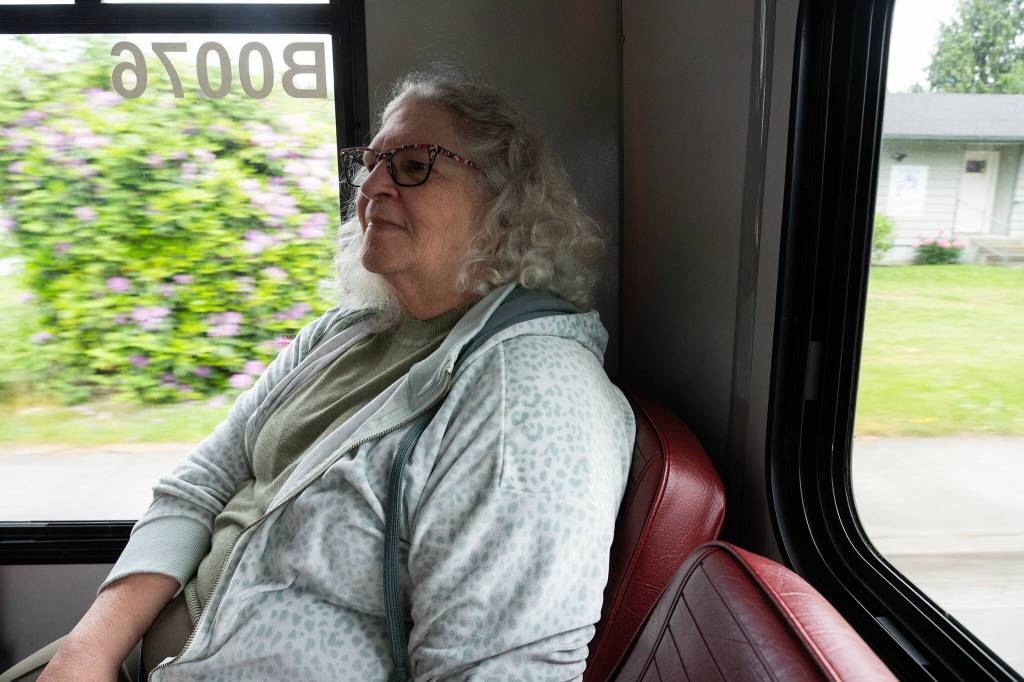
The call was automated, coming because an Everett paratransit bus was scheduled to pick her up in the next 30 minutes. She got the call, and after a short wait, climbed onto the bus with a few other passengers and took a 20-minute ride from her home to a Fred Meyer in Mill Creek to get groceries.
Hedges is one of the many Everett residents that depend on the paratransit service to get around, not just to the grocery store, but to doctor’s appointments, to work, or to see family and friends.
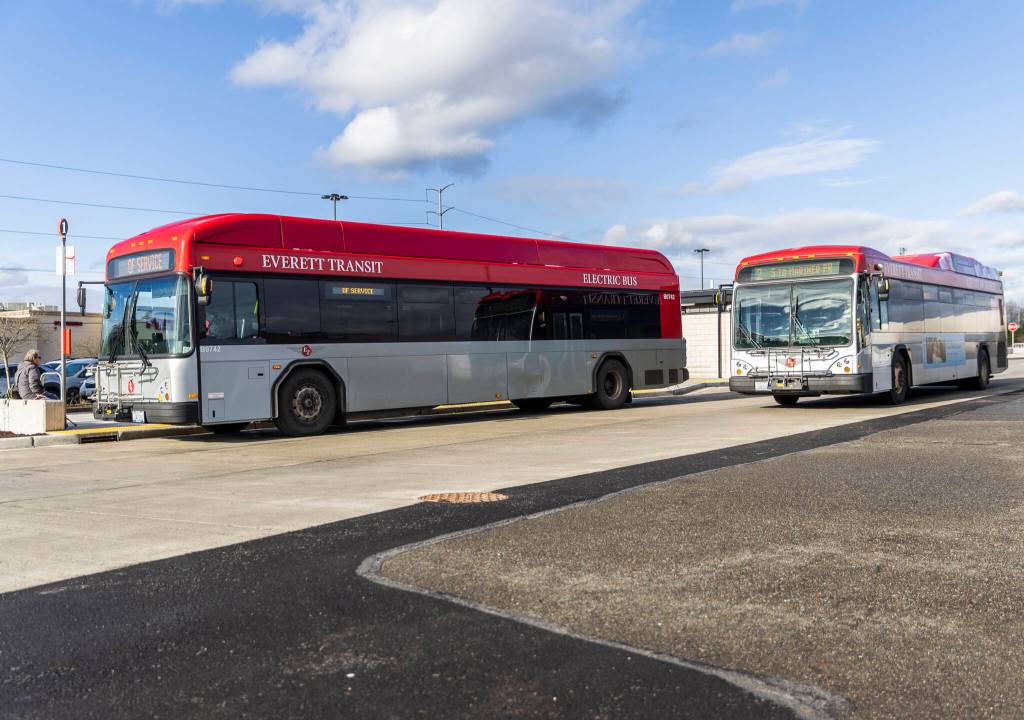
Some paratransit riders, however, worried that access to the service could be at risk, or its quality could be reduced, after the city of Everett and Community Transit announced in April they would be resuming talks over a potential merger of the two transit agencies. Under the possible deal, Everett Transit would cease to operate and Community Transit would take over its services, collecting a higher sales tax rate than Everett Transit does.
But at a June 18 transportation advisory committee meeting and in a subsequent interview with The Daily Herald, Everett Mayor Cassie Franklin and Community Transit CEO Ric Ilgenfritz said that if a merger did go forward, there would be no changes to the availability or quality of paratransit services. Everett’s paratransit system would remain in whole, with the same coverage area and amount of service as currently exists.
Franklin committed to only bringing a plan forward for the city council’s consideration if the merger would dramatically increase transit service within the city, maintain existing service levels for paratransit and protect the wages and benefits of workers transitioning from Everett Transit to Community Transit.
“I told you what I have to see before I bring this back, and we’re not there yet,” Franklin told members of the transportation advisory committee. “I have to see those three things, and I have to really believe. But if we do that, I will bring it to council and I will advocate for it.”
‘I thank God I have Everett paratransit’
Transit agencies that provide traditional fixed-route bus service are required by federal law to provide accessible paratransit services, with the goal of transporting people with disabilities who can’t use fixed-route bus or rail services. Everett’s paratransit services provided over 83,000 passenger trips in 2024, according to the most recent federal data.
The service serves more people than it is required to. Along with serving those with disabilities, it provides services to people over 65. The service also goes everywhere within city limits, while federal law only requires paratransit to serve areas within a three-quarter-mile radius of fixed-route buses.
Hedges began using transit services regularly after her car was rear-ended more than a decade ago. Now 71, she said she can sometimes make the walk to the nearest bus stop, but it can be difficult. Paratransit, on the other hand, is a door-to-door service.
“When you have limited mobility and limited energy, that extra two and a half blocks here, a block there, it’s a lot,” she said.
Riders also said that the drivers for Everett paratransit were exceptionally kind and dedicated to their work, forming friendships with the riders and checking in with them if needed.
“Our drivers, they know if you haven’t been showing up for a while,” Hedges said. “If there’s something that looks a little off, they might call for a wellness check.”
Community Transit’s paratransit service, Dial-A-Ride Transit, or DART, aligns with the federal requirements. It only services areas within a three-quarter-mile radius of bus routes and is limited to individuals with disabilities. Community Transit contracts with a private company, TransDev, to operate the paratransit service. The agency also contracts with the company to operate Community Transit’s commuter and express buses, but is in the process of phasing out the practice.
The differences between the eligibility of Everett paratransit and DART, as well as differences in the reliability of the services, led many paratransit riders to worry that a merger between Everett Transit and Community Transit could lead to a decline in the quality of paratransit service in Everett.
That’s because some riders expressed frustration with Community Transit’s paratransit service. Riders say excessively long trips and late arrivals to destinations when using DART are common.
“DART is as unreliable as [Everett] paratransit is reliable,” Hedges said.
Leonard Warnock, an Everett resident who had to begin using paratransit services after he had a stroke, had to use DART a few years ago to travel to a dentist appointment — the dentist’s office was in Mill Creek, just outside of the Everett paratransit service area.
According to Warnock, his bus ride began by traveling north in Everett to pick up another DART driver before heading south to Bothell to pick up another rider, then traveling west to Edmonds before finally arriving at his Mill Creek dentist appointment.
Warnock was 45 minutes late to the appointment, he said. He changed dentists so he wouldn’t have to use DART anymore.
Warnock said that access to reliable paratransit service is critical for those with disabilities, who may have no other means of transportation.
“There are a lot of riders that would prefer to be able to drive themselves, they would prefer another way,” he said. “But for me, I thank God that I have Everett paratransit.”
In an interview, Ilgenfritz said that the agency is in the process of conducting internal reviews of its DART paratransit service to make improvements to that service. That work, however, is apart from the conversation of consolidation, he said, because Everett’s paratransit service would continue to operate as it exists currently. Federal law would require Community Transit to continue providing the existing model of paratransit service within the city of Everett if a merger goes forward, he said.
Negotiations as to what exactly that might look like are ongoing, but he, along with Franklin, said that the agency is aiming to operate two different paratransit models: Community Transit would continue to run Everett’s existing paratransit service within its current boundaries while also operating the existing DART services for areas outside of city limits, both under the umbrella of Community Transit. (Current operating agreements allowing both DART and Everett Transit vehicles to cross city boundaries would also continue, he said).
“The employees who are delivering the services today — that includes drivers, that includes schedulers, that includes inspectors and supervisors — all of those folks will transition to Community Transit under this potential draft agreement,” Ilgenfritz said in a June 22 interview. “The infrastructure that’s in place today delivering that service would transition in whole under Community Transit leadership.”
Those employees would also retain their jobs without any reductions in pay or benefits, Franklin and Ilgenfritz said, due to federal laws that govern mergers of transit agencies.
“Even if that law didn’t exist, there’s a commitment from both of us,” Franklin said. “Certainly a demand from me.”
‘Transit will grow, quite a bit’
The merger has been opposed by members of the Amalgamated Transit Union 883, the union representing most of Everett Transit’s employees. Daniel Simonton, an Everett paratransit driver, wrote in an email that a major concern is the sales tax increase that would come with the merger. Everett Transit collects 0.6% while Community Transit collects 1.2%.
“For better or worse, most people don’t ride the bus, and most people don’t want to pay more taxes,” Simonton wrote. “It is also a terrible time to be increasing the cost of living on everyone.”
Franklin said the increased tax rate, higher than what Everett Transit could legally collect on its own, would allow significant increases in service and frequency, with the goal of attracting more people to ride transit services. That will be critical, she said, as the city is expected to gain 65,000 residents over the next 20 years.
“I do not want to see 65,000 more cars on our roads, I think that would be really difficult. We don’t want to build 65,000 more parking spots,” Franklin said. “We need to transition more people to bus.”
Everett would also lose a lot of autonomy with the merger, Franklin said during the committee meeting. While the mayor can exert significant control over Everett Transit, Community Transit is governed by a board of directors made up of city and county officials from across Snohomish County. Everett would have at least one seat on the Community Transit board, possibly two because of its higher population, Franklin said.
“I will push for two,” she said.
Planning documents from earlier studies on a potential merger show that a significant increase in transit service could come from a merger, including more frequency along Everett Transit’s existing routes, as well as five potential new routes within the city on top of that. Community Transit could continue to provide services like shuttles to local events, as it has in the past with events in Lake Stevens, Ilgenfritz said at the committee meeting.
“There’s no scenario where we are shrinking Everett Transit service,” Franklin said in an interview. “The only scenario in this is growing transit service in Everett. That’s been a common misconception that somehow we’re not going to grow transit. That is absolutely not the case. Transit will grow, quite a bit, through this merger.”
Simonton expressed concerns that voices of union members and Everett residents were unable to have a direct say on the merger. A 2025 state law allows public transit benefit areas like Community Transit to annex city transit agencies via a vote of the boards of both governing bodies, rather than a public vote.
“The state crafted legislation which took away the citizen’s right to vote on this matter,” Simonton wrote. “There is bad precedence all around.”
Franklin said she planned to use the tool provided by the state law.
“If we just said everything that we do has to go to a vote of the people, regardless of the new tools that the state has given us, we’re not doing our job,” Franklin said during the June 18 committee meeting. “I have accountability. My accountability is when I run for office, and if the community doesn’t like that, I will get unelected.”
Ilgenfritz and Franklin said they hope to present a plan to their respective governing boards by the fall. If a merger is approved, the transition will likely be phased over time while Community Transit continues planning work, Ilgenfritz said. Franklin said community feedback is vital to the process.
“We will continue to listen, and that listening has helped us prioritize paratransit,” Franklin said during the meeting. “I basically told Ric [Ilgenfritz] we can’t even have this conversation unless we get a solution for paratransit, because that will be a dead stop. That was because of the community saying, ‘Hey, this is not something we can risk.’”
For those who use Everett’s paratransit services, they want elected officials and community members to understand that it is essential for their daily lives, and that any possible cuts to that service would harm people in need.
“I want people to know that we depend upon it, that it is more than just transit,” Hedges said. “… It’s a safety net for the seniors. It’s a way for us to be included in the community.”
Will Geschke: 425-339-3443; william.geschke@heraldnet.com; X: @willgeschke.