Marysville roundtable discusses state childcare crisis
Published 4:56 pm Monday, August 10, 2026
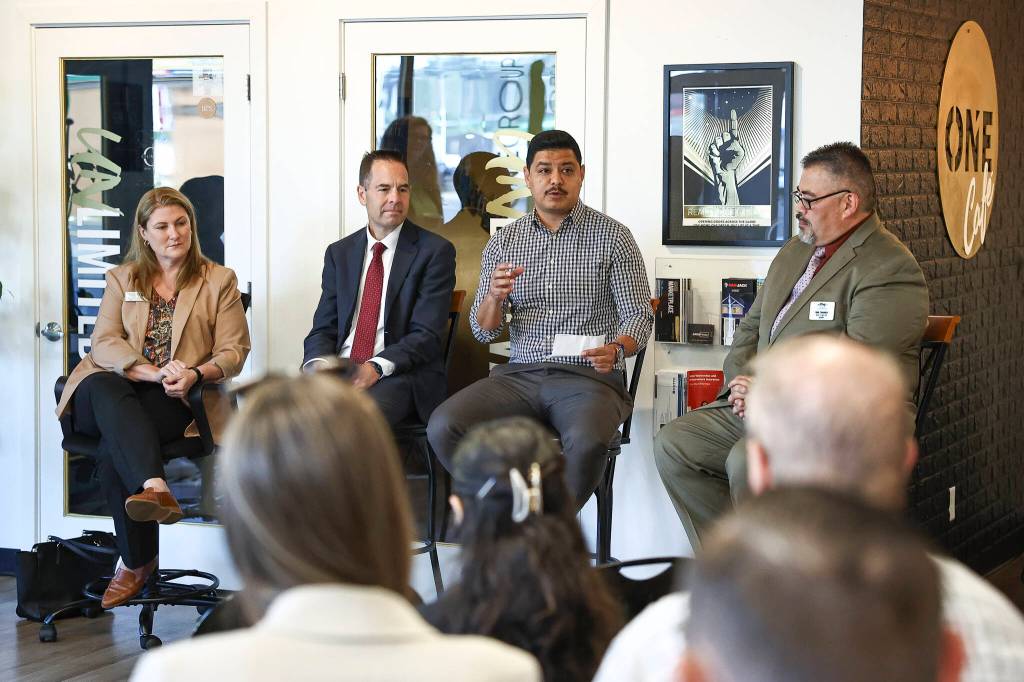
MARYSVILLE — Elected officials and childcare service experts discussed Snohomish County’s childcare crisis, its economic impacts and possible solutions during a roundtable on Friday in Marysville.
About 60% of Washington residents live in a childcare desert, meaning there are more than three times as many children as licensed childcare slots available. Snohomish County has more than 50,000 children under age 5, yet fewer than 21,000 licensed childcare slots available, according to the roundtable host Debbie Carlsen of Washington Families Thrive, a childcare benefits services provider.
“We recognize that childcare is the literal foundation or the floor of our regional economy,” she said during the event. “Today is about the blueprint to fixing the floor. The solution lies in a public-private partnership. We know that for our regional economy to grow, our childcare capacity must grow with it.”
A 2019 report found employee turnover and missed work due to childcare access issues cost employers in the state about $2.08 billion annually.
To combat the issue, state legislators have taken steps to reduce regulatory burdens for opening a childcare facility, said Rep. Julio Cortes, D-Everett, during the roundtable.
“It’s very difficult to open a childcare center because there’s so many different layers of policy that they first have to know about and then have to tack as providers,” he said. “It’s been a pretty heavy bipartisan issue. Both sides have come together.”
In 2025, Senate Bill 5184 passed, reducing parking lot requirements for childcare facilities, saving a potential childcare provider thousands of dollars, Cortes said in an interview after the roundtable.
Another barrier is the need to install a sprinkler system when opening a childcare facility, Cortes said. This is particularly difficult for providers who hope to care for children in their own homes, he said.
Also in 2025, Senate Bill 5509 passed, allowing childcare facilities to open in all zones except industrial and open space zones.
But more can be done in that area, said Marysville Mayor Jon Nehring during the roundtable.
“We are trying to allow daycares in close proximity to the areas where families work,” he said. “For instance, the Cascade Industrial Zone that I just referenced, allowing daycares close by could allow a parent to drop their kid off, have a short trip to work, maybe even visit on lunch, or just be nearby if something happened.”
The industrial center is a great example of how to create family-wage jobs, Nehring said, but with jobs comes a greater need for childcare.
A 2025 survey found nearly 40% of Washington parents leave work due to childcare disruptions after their children were born.
Gina Hilker, co-owner of Grocery Outlet Arlington, discussed her struggles when employees want to start a family.
“I have some team members that really want to start a family. One of them came to me the other day,” she said during the roundtable. “I asked her, ‘What is your plan to keep working? What is your plan for childcare?’ She says, ‘You’re going to watch them.’”
Hilker already helps watch her store manager’s child to reduce childcare costs, she said. For almost all of her other employees, having children is not feasible.
“One of the biggest challenges facing our workforce today is access to childcare that actually matches the way that people work,” Hilker said. “For low- to middle-wage workers, the challenge is even greater. The cost of childcare often consumes such a large portion of their paycheck.”
Cortes discussed universal childcare as an option to help provide low-cost or even free childcare, using a system New Mexico recently instituted as an example.
“What we just need to do is come together as a statewide organization to really advocate at the state level and federal level for more support,” he said.
New Mexico’s universal childcare system costs about $300 million a year, Cortes said. Washington already pays about $600 million to support childcare services, he said.
“We came away with a lot of ideas around streamlining permitting,” Cortes said. “How do we leverage our partnerships? Washington state is a very collaborative state. How do we incentivize businesses who want to offer childcare opportunities for their workers?”
Also on the panel were Olivia Burley, the Washington state military spouse liaison, and Henry Taimanglo, the Marysville military and family readiness specialist, to provide the military family perspective.
“There’s major childcare needs for single families, even for families where there’s not just one parent but two,” Taimanglo said during the roundtable. “Some of them are dual military… If both of them are drilling the same weekend, or the same two weeks, who’s going to watch that child?”
Overall, the event was an educational experience and an opportunity to begin building the partnerships needed to combat the childcare crisis, Cortes said afterward.
“I’m very grateful to have the opportunity to speak to and hear from service providers and organizations that work with service providers,” he said in an interview. “Coming to these town halls or panels helps educate me a little bit more on what the state needs to do in order to support this community.”
Taylor Scott Richmond: 425-339-3046; taylor.richmond@heraldnet.com; Bluesky: @btayokay.bsky.social